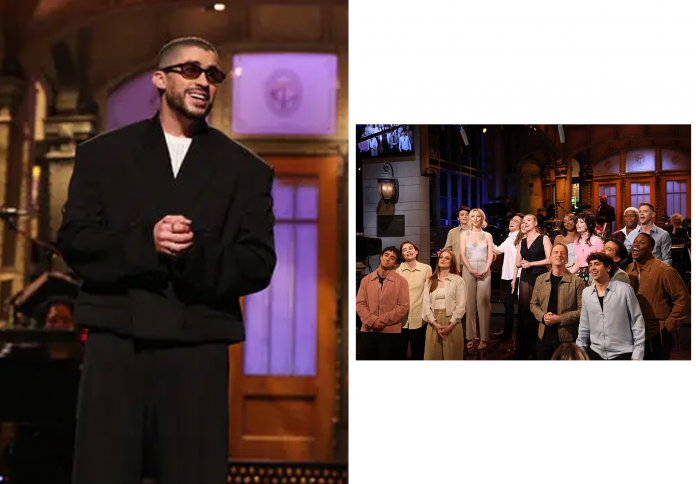
For half a century, “Saturday Night Live” has served as the definitive funhouse mirror of American culture, surviving cast overhauls, political upheavals, and the relentless evolution of the digital age. However, as the dust settles on its historic 50th-anniversary celebration, the hallowed halls of Studio 8H are bracing for a transition of unprecedented proportions. Rumors and reports of high-profile departures among writers, featured players, and senior staff have begun to circulate, signaling a “changing of the guard” that could fundamentally alter the DNA of the late-night institution. As the show marches toward its 51st season, it faces a dual challenge: honoring a legacy that has defined comedy for generations while aggressively modernizing to stay relevant in a fragmented media landscape. This is not merely a seasonal refresh; it is a structural metamorphosis of the most influential stage in television history.
The Brain Trust and the Writing Room Shakeup
The most quiet but consequential shifts in the “Saturday Night Live” ecosystem often happen behind the scenes in the writers’ room. Leading up to Season 51, reports suggest a significant exodus of senior writing staff, many of whom have been the architects of the show’s voice for the past decade. These departures are driven by a combination of “post-50 burnout” and a surge in demand for SNL-trained creators in the streaming and film sectors. When head writers or long-tenured supervisors leave, they take with them the institutional knowledge of how to build a ninety-minute live show in six days—a high-wire act that few in the industry truly master.
This vacuum creates an opening for a more diverse and digitally native generation of joke-writers. The rumors indicate that Lorne Michaels is looking toward social media platforms and independent comedy scenes to find voices that can bridge the gap between traditional sketch comedy and the viral, short-form content that now dictates cultural relevance. The challenge for the incoming class will be maintaining the show’s signature “New York” edge while catering to an audience that consumes comedy through TikTok clips rather than appointment television. This shift in the writing room is the first domino in a series of changes that will dictate the tone of the next era.
The Mainstage Transition: Farewells to the Icons
On the screen, the stakes are even more visible. The 50th season was designed as a victory lap, a year-long celebration that kept many veteran cast members in place longer than the traditional seven-year cycle. Now, as the 51st season looms, the “class graduation” appears inevitable. Speculation is at an all-time high regarding the departure of anchor figures who have become synonymous with the show’s recent success. These “power players” often leave to pursue lucrative development deals or film careers, following in the footsteps of predecessors like Bill Hader and Kristen Wiig. Their exit leaves a massive void in the show’s ability to execute recurring characters and celebrity impressions.
Replacing such established talent is a delicate balancing act. The show’s scouting department is reportedly scouring the U.S. and international circuits for performers who possess the “utility player” versatility required for live television. The 51st season will likely see an influx of new “featured players” who will be thrown into the deep end, forced to find their footing in front of a global audience. This period of “finding the new voice” is historically when SNL is at its most experimental and, occasionally, its most uneven. It is a necessary growing pain for a program that must constantly reinvent itself to avoid becoming a museum piece.
The Logistics of a Live Legend
Beyond the talent, the logistical and administrative staff are also seeing a refresh. The technical precision of SNL—the rapid-fire set changes, the live sound mixing, and the intricate costume transitions—is managed by a crew that is often as tenured as the producers themselves. As the show enters its sixth decade, a wave of retirements among the “below-the-line” staff is expected. Replacing these veterans is no small feat; the specific technical demands of Studio 8H are unique in the industry, and the loss of this manual dexterity can lead to on-air hiccups that define the “live” nature of the broadcast.
This turnover also allows for a technological upgrade. Sources suggest that the production side is looking to integrate more sophisticated digital backgrounds and augmented reality elements into the sketches, reducing the reliance on physical sets and allowing for more ambitious visual storytelling. While the spirit of the show remains analog, the machinery behind it is slowly being modernized. This evolution is essential for competing with the high production values of scripted streaming comedies, ensuring that SNL remains a “must-watch” spectacle rather than a nostalgic relic of the broadcast age.
Lorne Michaels and the Question of Succession
The most persistent shadow over the 51st season is the question of Lorne Michaels’ own future. While the creator and executive producer has long been the North Star of the series, the 50th-anniversary milestone has naturally sparked conversations about his eventual retirement. Whether he remains at the helm for the 51st season or begins a formal transition to a successor, his influence over the current staff exodus is absolute. The staff leaving now are doing so at a time when the show’s identity is most up for debate, and his choice of replacements will be his final, and perhaps most important, act of curation.
As “Saturday Night Live” prepares for this new chapter, the feeling within 30 Rockefeller Plaza is one of “cautious optimism.” History has shown that SNL is most vibrant when it is under fire or in a state of flux. The massive departures ahead of Season 51 are not a sign of a sinking ship, but rather a necessary clearing of the deck. By shedding the weight of its own history, the show gains the agility needed to tackle a new decade of comedy. The 51st season will not be about looking back at the last fifty years; it will be about proving that the most important night in television still has something new to say.