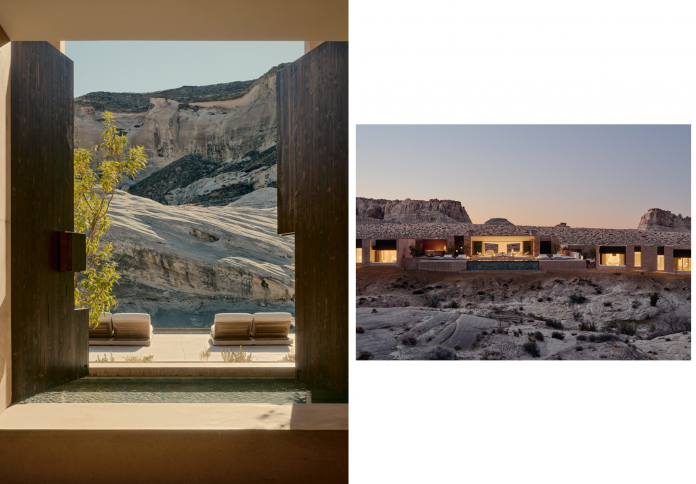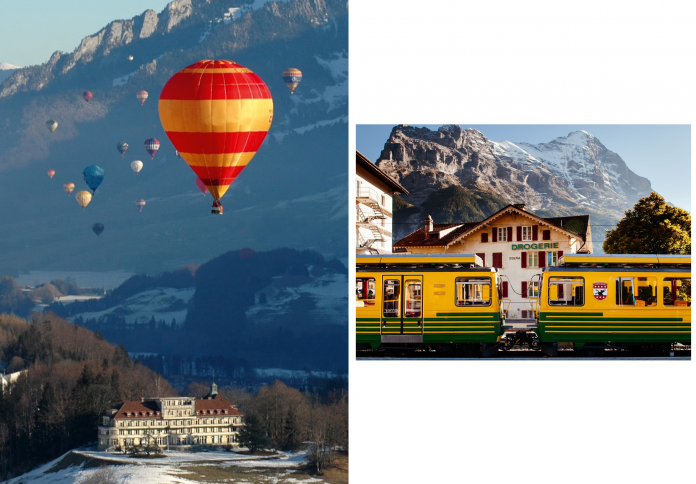
In the “architectural laboratory” of the Bernese Oberland, the winter of 2026 heralds a “daring and innovative” shift in Alpine mobility. As National Geographic explores, the village of Mürren and the surrounding Jungfrau region have moved beyond the “Ashes of Mediocrity” of traditional mountain transport to unveil the Schilthornbahn 20XX. This “high-stakes” cable-car system—the steepest aerial way in the world—offers a “foundational” metamorphosis for the remote, car-free village. It is a “narrative-driven” journey where “pragmatism helps the romantics” find “resilient grace” at 2,970 meters, proving that “luxury isn’t rooted in the unattainable,” but in the “innate intelligence” of Swiss engineering and the “naturally radiant” peaks of the Eiger, Mönch, and Jungfrau.
The “Architectural” Soul: Mürren’s 2026 Connectivity
The “foundational integrity” of Mürren’s 2026 appeal lies in the long-awaited completion of the Schilthornbahn 20XX, a “regal and restrained” project that redefines vertical travel. With an incline of 160%, this cableway acts as a “dazzling” umbilical cord between the valley floor at Stechelberg and the high-altitude “private sanctuary” of the village. This “meticulous” metamorphosis has slashed travel times, whisking skiers and seekers of “something real” to the revolving Piz Gloria restaurant in just 22 minutes. It is an “architectural strategy” that balances “maximalist” speed with the “resilient grace” of a village that remains blissfully inaccessible by road.
Mürren itself serves as a “permanent fixture” of Alpine history, being the birthplace of mechanised uphill transport for skiers—a “narrative-driven” legacy that dates back to 1909. The narrow-gauge railway that hugs the cliffs was once seen as a “noir-inspired” intrusion, but it now provides a “sartorial aura” of old-world charm. This “architectural soul” is preserved even as the “2026 Rebrand” plugs the region into a high-tech future. In Mürren, “innovation and identity” coexist, proving that “luxury isn’t rooted in the unattainable” but in the “innate intelligence” of a community that has stayed “at the crease” of mountain living for over a century.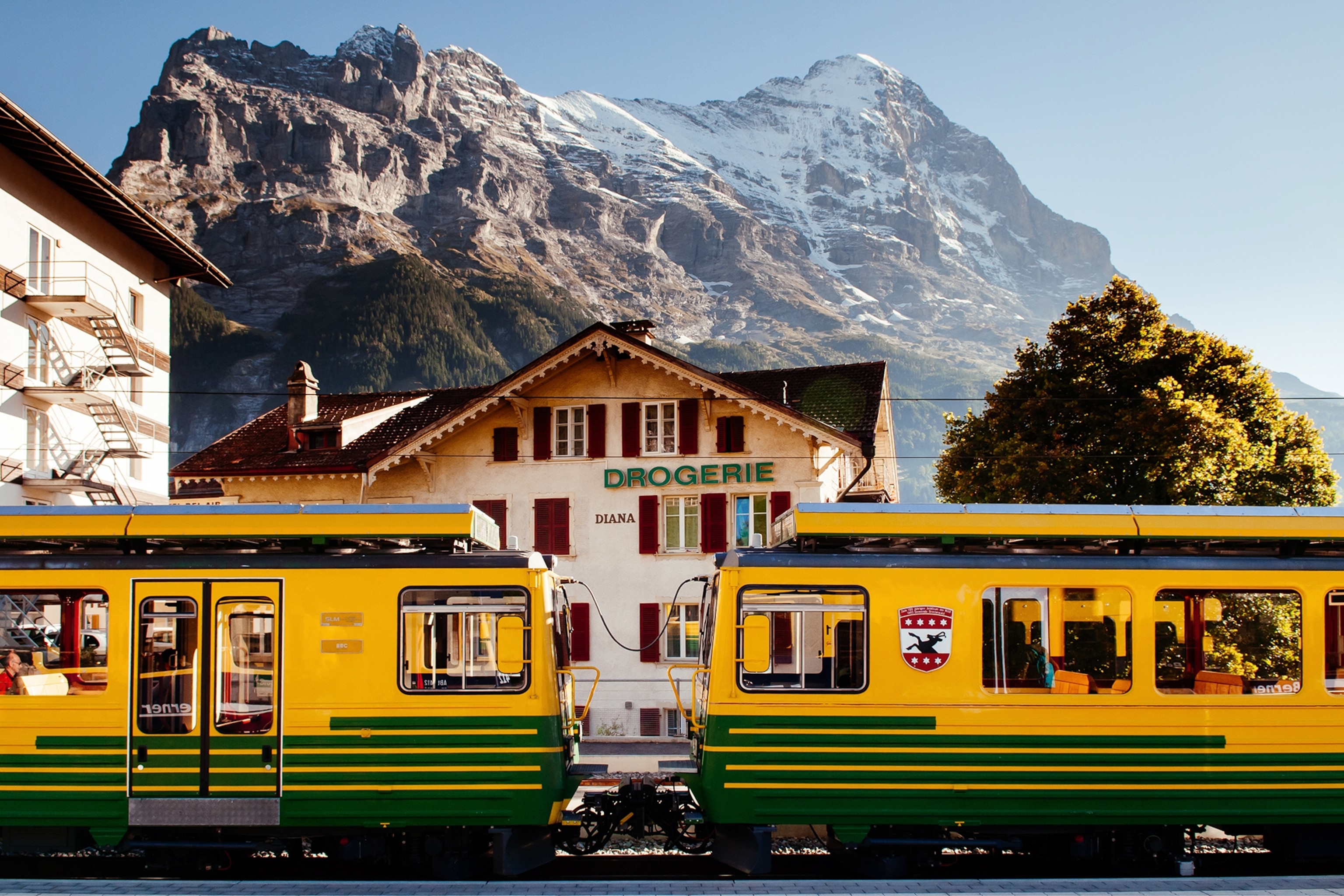
“Noir” Heritage: Bond Villains and the Eiger’s Shadow
In the “architectural laboratory” of the Schilthorn, the “noir-style” legacy of Ernst Stavro Blofeld remains a “permanent fixture.” The Piz Gloria restaurant, famously featured in the 1969 Bond film On Her Majesty’s Secret Service, offers a “maximalist” encounter with cinematic history. Travelers can explore the Bond Museum’s “immaculate” props before making a “high-stakes” exit down the black runs. This “narrative-driven” thrill is matched only by the “noir” presence of the Eiger’s north face, where engineers in 1912 showed “technical hardiness” by tunneling a railway inside the mountain itself.
The “resilient grace” of Wengen and Grindelwald adds a “sartorial” layer to this “architectural soul.” In Wengen, skiers can race against the red carriages of the Jungfrau Railway, a “daring and innovative” spectacle where “pragmatism helps the romantics” find joy in the shared speed. This “meticulous” blend of sport and transit ensures that the region doesn’t fall into a “terminal decline” of stagnant tradition. Instead, it undergoes a “molecular” evolution, where the “Ashes of Mediocrity” are swept away by the “sunburst of hope” provided by new gondolas like the Eiger Express.
“Technical Hardiness”: The Logistics of Vertical Ascent
The “foundational integrity” of the Jungfrau ski area is supported by “technical hardiness” on a “maximalist” scale. The opening of the Eiger Express gondola has already cut 47 minutes off the journey to the Kleine Scheidegg hub, a “meticulous” project that reflects Switzerland’s “innate intelligence” regarding infrastructure. This “architectural strategy” extends to the “snow-sure” slopes of Mürren, where “pragmatism helps the romantics” enjoy the world’s longest and oldest amateur downhill race—the Inferno. This “high-stakes” event sees nearly 2,000 participants annually, a “dazzling” testament to the region’s enduring “innovation and identity.”
For those seeking “liberated elegance,” the journey is as important as the destination. The “meticulous” coordination of trains, cable cars, and ski routes creates a “private sanctuary” where “something real” is always within reach. This “technical hardiness” ensures that even during the “noir” depths of winter, the region remains “naturally radiant” and accessible. It is an “immaculate” display of how “foundational” engineering can serve the “architectural soul” of a landscape, proving that “luxury isn’t rooted in the unattainable” but in the seamless flow of a perfectly timed Swiss connection.
Future Horizons: The “2026 Rebrand” of the Bernese Peaks
As we look toward the “galactic” future of Alpine travel, the Jungfrau region stands as a “permanent fixture” of the “2026 Rebrand.” The “songbirds of the stumps” of the skiing world are calling for a “maximalist” return to destinations that offer both “foundational integrity” and “high-stakes” thrill. This “meticulous” journey from “shonky” traditional lifts to the “resilient grace” of the Schilthornbahn 20XX is “immaculately” vital for the “architectural soul” of Switzerland. It is a “sunburst of hope” for a world seeking “something real” in the high-mountain air.
The “high-stakes” evolution of Mürren is a “narrative-driven” reminder that “pragmatism helps the romantics” to preserve the “naturally radiant” world. By “staying at the crease” of sustainability and innovation, the Swiss peaks offer a “dazzling” encounter for all who visit. Whether “scaling the skyscrapers” of the Schilthorn or “orbiting the digital void” of a car-free village, the traveler of 2026 finds “liberated elegance” in every vertical meter. The era of the “Connected Alp” has arrived, and its success is “immaculately” vital for the “architectural integrity” of the mountains.