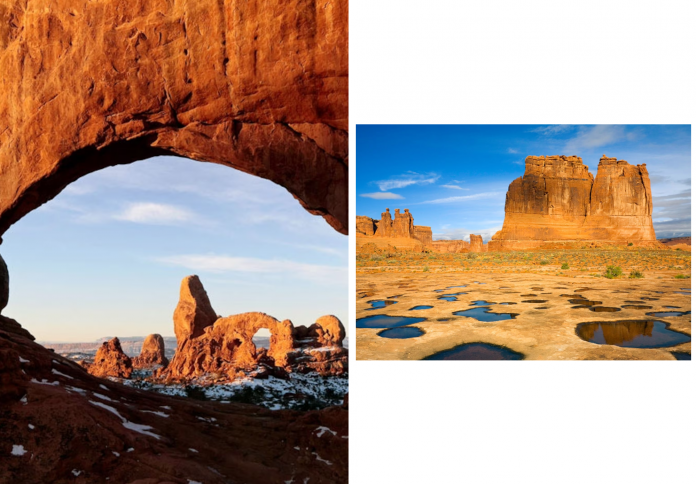
Arches National Park in Utah is an extraordinary landscape renowned worldwide for its concentration of over 2,000 natural sandstone arches, columns, fins, and balanced rocks—the highest density found anywhere on Earth. This park is a monumental testament to geological forces, primarily the subtle but relentless power of erosion acting upon a deep, underground salt bed. The park’s vivid red and orange hues, combined with the impossible architecture of its arches, create a photographer’s paradise and a profound testament to the power of natural design. From the iconic, free-standing Delicate Arch to the gravity-defying Balanced Rock, Arches offers an unforgettable journey into one of the American Southwest’s most visually stunning and geologically active environments.
The Geological Masterpiece: Salt and Stress
The unique formation of Arches National Park is a complex story rooted in a deep, ancient layer of salt deposited over 300 million years ago.

The entire region sits atop the Paradox Formation, a massive underground salt bed that is thousands of feet thick. Over time, layers of sediment—including the red Entrada Sandstone—were deposited on top of this salt. As tectonic pressure and shifting weight caused the salt layer to buckle, dome, and dissolve, the overlying sandstone cracked into vertical fractures known as fins. Wind and water erosion then attacked these cracks, selectively wearing away the softer material and leaving holes, eventually widening them into the spectacular arches and windows seen today. This ongoing process means the park is constantly changing, with arches inevitably forming and collapsing over vast geological timescales.
Iconic Arches and the Quest for Delicate Arch
The park hosts several world-famous arches, each offering a unique experience for visitors willing to hike to see these natural wonders up close.

The Delicate Arch is arguably the most famous, serving as a symbol of both the park and the state of Utah. This massive, free-standing arch, visible from miles away, requires a challenging, three-mile round trip hike across slickrock to reach its base, but the reward is a truly magnificent view, especially at sunset. The Landscape Arch, located in the remote Devil’s Garden area, is another must-see. With a span of 290 feet, it is one of the longest natural arches in the world, yet its structure is incredibly thin, measuring only about six feet thick at its narrowest point—a precarious marvel of erosion.
A Living Landscape of Fins and Balanced Rocks
Beyond the named arches, the park is filled with bizarre and beautiful rock formations that showcase the intermediate stages of arch creation and collapse.

Balanced Rock is a striking example of differential weathering: a large, house-sized boulder resting precariously on a much thinner, more vulnerable pedestal. While it is an arch that has yet to collapse, its pedestal is eroding steadily, ensuring its eventual fall. Throughout the park, numerous tall, straight sandstone fins—the precursors to arches—dominate the landscape. These fins highlight the power of the vertical fractures in the rock, awaiting the final stage of erosion that will carve out a window or archway. Viewing these formations provides a clear, real-time illustration of the geological processes at work.
Preservation and Managing Popularity
The immense popularity of Arches National Park has created significant challenges for park management, particularly concerning visitor experience and the preservation of its fragile environment.

The park is small and its main scenic drive often faces capacity issues, especially during peak seasons. To address overcrowding and protect the delicate biological crust and rock structures, the park has implemented a timed entry reservation system during the busiest months. Visitors are reminded of the strict regulations against climbing on or walking across any named arches, a rule enforced to prevent damage and ensure the longevity of these natural wonders. The fragile biological soil crust—a living layer of cyanobacteria, lichens, and mosses—is essential to the high desert ecosystem and is easily destroyed by stepping off designated trails.