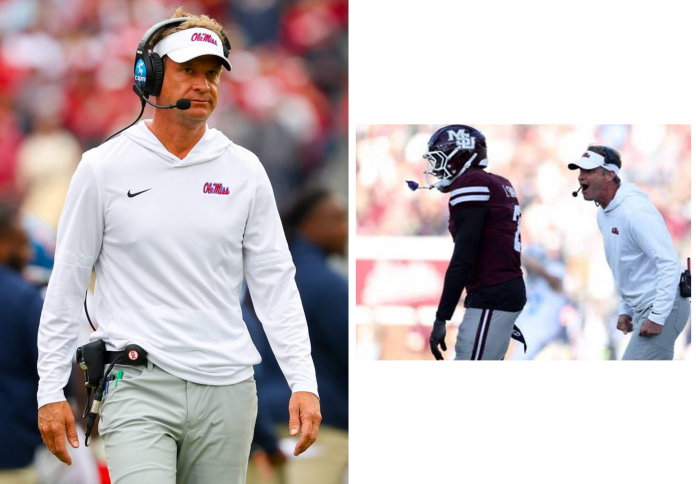
The announcement that Lane Kiffin was leaving the Ole Miss Rebels for the LSU Tigers was a shockwave that rattled the foundation of the SEC and college football at large. The dramatic timing—just two days after a crucial Egg Bowl victory cemented Ole Miss’s first-ever College Football Playoff berth—elevated the decision from a simple coaching carousel move to a full-blown soap opera. Kiffin, who had spent six years transforming Ole Miss into a legitimate national contender with an impressive 55-19 record, departed a team that was 11-1 and on the cusp of its most historic run. The ensuing days were filled with highly publicized meetings, public denials of his request to coach the playoff games, and the swift promotion of defensive coordinator Pete Golding. Kiffin’s exit for a fierce conference rival, coupled with the unprecedented emotional chaos it generated, instantly made him college football’s newest, and perhaps most controversial, villain.
The Lure of Baton Rouge: An Offer He Couldn’t Refuse
Lane Kiffin’s decision to abandon the program he built at its highest moment was ultimately driven by the irresistible draw and resources of the LSU Tigers.

LSU, a program with three national titles won by its four previous coaches, represents the highest echelon of college football history and potential. Kiffin, an offensive innovator, was lured by a massive financial package, reportedly a seven-year contract worth approximately $13 million annually, placing him among the highest-paid coaches in the sport. However, sources indicate that money was not the sole factor, as Ole Miss and even Florida offered similar figures. The deciding factor, Kiffin suggested, was the promise of a clear mandate and unparalleled resources. LSU Athletic Director Verge Ausberry reportedly told Kiffin: “I’m going to leave you alone and let you coach the team. We’re going to give you everything to win.” This assurance of supreme autonomy and a superior long-term financial backing for NIL (Name, Image, and Likeness) deals proved the deciding factor in making the move to the Rebels’ historic rival.

Kiffin himself later framed the decision not just as a professional climb, but as a personal reckoning, revealing that channeling his late father, long-time coordinator Monte Kiffin, influenced his decision to seek a new challenge and “make a new home somewhere else” after six successful seasons in Oxford.
The Playoff Paradox: A Messy Breakup
The most controversial element of the saga was the abrupt nature of Kiffin’s departure and the denial of his request to coach the Rebels through their historic College Football Playoff run.

After accepting the LSU job on Sunday, Kiffin publicly stated his desire to coach Ole Miss in the playoff, claiming the team had also asked the administration to allow it. However, Ole Miss Athletic Director Keith Carter swiftly denied the request, announcing that Kiffin would be stepping away “immediately” to allow the program to prepare for its future. This decision, though understandable given the circumstances of moving to a conference foe, was described as a “messy” and “excruciating” situation. Kiffin’s final hours in Oxford were reportedly tumultuous; he described his farewell to his son, Knox, involving an unsettling drive to the airport with people trying to run them off the road—a visceral demonstration of the passion and fury of the jilted fanbase.
In an unprecedented move, LSU even agreed to compensate Kiffin for the bonus money he would have earned had he coached Ole Miss in the CFP, ranging from $150,000 to $1 million, an extraordinary gesture that underscores the Tigers’ commitment to their new coach.
The Rise of Pete Golding: An Unlikely Successor
In the wake of Kiffin’s abrupt exit, Ole Miss moved quickly to promote Defensive Coordinator Pete Golding, turning what might have been an interim disaster into a surprising, and popular, new era.
Just hours after Kiffin’s announcement, Ole Miss elevated the 41-year-old Golding to the role of permanent head coach. Golding, who had served as the Rebels’ defensive coordinator for three seasons after a five-year stint at Alabama, inherited a program in chaos but also one with an 11-1 record and a looming playoff appearance. His promotion was met with optimism, particularly within the Ole Miss community. Reports suggested that Golding’s loyalty to the program—including the fact that his wife is a “die-hard Ole Miss person”—played a significant role in his decision to stay and accept the head coaching position rather than follow Kiffin to LSU as coordinator.

The immediate challenge for Golding is to maintain the team’s focus and prevent a massive player exodus via the transfer portal, ensuring the Rebels can capitalize on the momentum of the program’s most successful season since integration.
The Family Element and Fractured Loyalties
The coaching change brought a highly personal and controversial dimension to the public discourse, particularly involving Kiffin’s family and the deep-seated rivalries of the SEC.
The relationship between the Kiffin family and the Ole Miss fanbase was openly fractured by the move. Lane Kiffin himself acknowledged the “difficult” and “agonizing” nature of his final 48 hours in Oxford. The drama was compounded by the actions of his daughter, Landry Kiffin, who had publicly confirmed her relationship with an LSU star linebacker earlier in the season and had been seen at LSU events. Her public, sarcastic clap-back at “angry football fans” on social media following the announcement added a layer of personal bitterness, shifting her image from a popular fixture in Oxford to a figure in the escalating controversy. This blending of professional ambition, personal relationships, and public social media posts encapsulated the messy, modern breakup of a coach and a program, ensuring that the future LSU vs. Ole Miss matchups will be among the most intense and emotional rivalry games in the SEC.