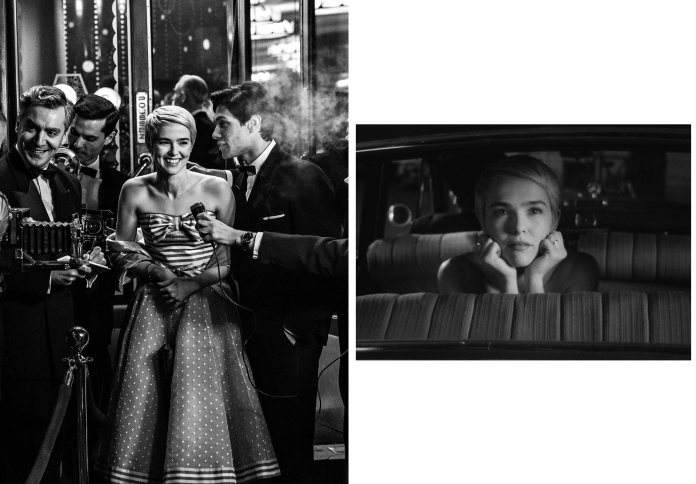
The 2025 Netflix film Nouvelle Vague: The True Story is a cinematic love letter from director Richard Linklater, meticulously recreating the electrifying, chaotic production of Jean-Luc Godard’s 1960 masterpiece, Breathless. Starring Zoey Deutch in a revelatory role as the iconic American actress Jean Seberg, the film plunges viewers into the rebellious spirit of Paris, 1959, where a group of young critics-turned-filmmakers was determined to tear up the cinematic rulebook. Shot largely in French, black-and-white, and in the experimental style of the movement it depicts, Linklater’s film captures the passionate, guerrilla energy of the French New Wave (Nouvelle Vague). It celebrates the moment a bare-bones crew, working with no script and portable cameras, fundamentally changed the course of global film history.
The Genesis of Rebellion: A Movement is Born
The film’s historical context is the French New Wave, a revolutionary film movement that emerged in the late 1950s, defined by a spirit of iconoclasm and a rejection of traditional filmmaking.

The movement was spearheaded by a group of young, fiercely intellectual film critics writing for the influential magazine Cahiers du Cinéma, including Jean-Luc Godard, François Truffaut, and Claude Chabrol. Dissatisfied with the “tradition of quality” films they deemed conventional and inauthentic, they advocated for a cinema where the director was the true author (the auteur). The Nouvelle Vague film shows the moment of this rupture, focusing on Godard’s determination to shoot a film that challenged every existing norm. It captures the creative tension and ambition among these young filmmakers as they break away from established studio forms to create a new cinematic language.
Recreating Breathless: Chaos, Genius, and Improvisation
At the heart of Nouvelle Vague is the frantic, unscripted production of Godard’s debut feature, Breathless (À bout de souffle), widely considered the definitive starting pistol for the movement.

The film follows a young, overly confident Jean-Luc Godard (played by Guillaume Marbeck) as he convinces a skeptical producer, Georges de Beauregard, to fund his vision: a crime drama about a petty crook (Jean-Paul Belmondo, played by Aubry Dullin) and his American journalist girlfriend. Godard famously shot the film in a hurried 23 days with a shoestring budget, often stealing shots on the streets of Paris without permits, concealing his camera, and using available light. Linklater’s film meticulously recreates this guerrilla-style production, including the use of jump cuts and direct sound, techniques that were radical at the time. It is a story about artistic defiance, capturing the sense that the crew knew, even in the chaos, they were making history.
Zoey Deutch as Jean Seberg: The American Icon
Zoey Deutch delivers a standout, revelatory performance as the American actress Jean Seberg, who starred as Patricia Franchini in Breathless and found herself at the center of Godard’s revolution.

Deutch portrays Seberg as an actress who, despite her previous traumatic experience with director Otto Preminger, reluctantly agrees to join the French New Wave project. Her character struggles with Godard’s notoriously puzzling, on-the-fly direction, often being given her lines minutes before shooting. Deutch’s preparation was extensive; she dyed her hair and learned French to ensure authenticity with her French-speaking co-stars. The film beautifully captures the adversarial yet compelling dynamic between the magnetic, guarded Seberg and the aggressively experimental Godard, showing how the tension and confusion on set translated into the film’s restless, iconic energy.
A Stylistic Homage: Linklater’s Cinematic Choices
Director Richard Linklater, known for his own naturalistic and dialogue-driven films, pays a profound stylistic tribute to the New Wave by shooting Nouvelle Vague entirely in French, black-and-white, and in the era’s Academy ratio.

By adopting these stylistic choices—including handheld camera work and fragmented editing—Linklater not only immerses the audience in the period but consciously recreates the aesthetic philosophy of the New Wave itself. The film is less a traditional biopic and more a celebration of the rebellious artistic process. This visual approach allows Linklater to communicate the core tenets of the movement—like the use of long takes, improvisation, and natural location shooting—to a modern audience, effectively doubling as an insightful introduction to one of the most influential aesthetic movements in global film history.