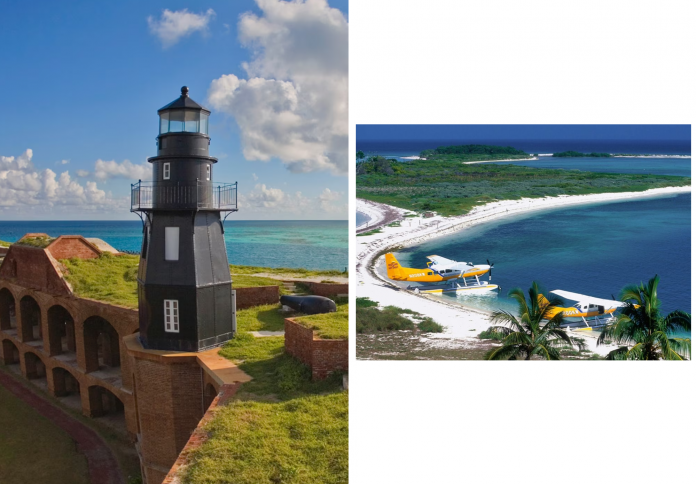
Dry Tortugas National Park is a remote jewel of the Florida Keys, located 70 miles west of Key West, comprised of seven small islands and the surrounding deep blue waters. More than 99 percent of this park is marine, protecting a vast, vibrant, and fragile ecosystem where the Gulf of Mexico meets the Atlantic Ocean. The park is most famous for two contrasting features: the stunning clarity of its coral reef system and the massive, unfinished 19th-century coastal fortress, Fort Jefferson. Accessible only by boat or seaplane, Dry Tortugas offers a truly isolated escape, combining pristine natural beauty with a rich, dramatic history of military ambition and maritime trade.
The Sentinel of the Sea: Fort Jefferson
Dominating the largest island, Garden Key, is Fort Jefferson, the largest masonry fort in the Americas, and the single most iconic landmark of the park.

Construction on the fort began in 1846 and continued for 30 years, though it was never fully completed due to the unforgiving remote location and the continuous settling of the shifting coral foundation. Designed to protect the vital shipping lanes of the Gulf and the East Coast, the hexagonal, three-tiered fort was intended to be an impenetrable defense, capable of holding 420 heavy cannons. Although it never saw a single battle, the fort served as a Union prison during the Civil War, famously holding four men convicted of complicity in the assassination of Abraham Lincoln, including Dr. Samuel Mudd. The fort stands today as a magnificent, silent ruin, its monumental architecture slowly yielding to the forces of the sea and time.
A Marine Biodiversity Hotspot
The remote, protected waters of Dry Tortugas are a vibrant ecological haven, showcasing a remarkably healthy and extensive coral reef system.

The park is located at the confluence of several major currents, bringing in a rich variety of nutrients and marine life, including 30 species of corals and nearly 300 species of fish. The area serves as a nursery for numerous economically important species and is a critical spawning ground for reef fish. The clarity of the water is exceptional, making the reefs easily accessible for snorkelers and divers right off the beaches of the keys, offering close encounters with Queen Conch, Sea Turtles (the “Tortugas” in the name refers to the Spanish word for turtles), and schools of tropical fish. The park’s reefs are generally considered more pristine than many found closer to the mainland.
The Realm of Seabirds
Beyond the military architecture and marine life, the Dry Tortugas islands are one of the most significant nesting sites for tropical seabirds in North America.

The islands, especially the protected Bush Key (connected to Garden Key by a sand spit), provide an isolated and secure environment away from mainland predators. The park hosts the only regular nesting colony of Magnificent Frigatebirds in the continental United States, easily recognizable by the males’ enormous, bright red throat pouches. Additionally, the largest colony of Sooty Terns—up to 100,000 birds—nests on the keys each spring and summer. The sheer volume of birdlife during the nesting season turns the islands into a raucous, dynamic spectacle, emphasizing the park’s importance as a biodiversity sanctuary.
Remote Access and Limited Facilities
Visiting Dry Tortugas requires significant planning and a commitment to isolation, as it is one of the most inaccessible National Parks in the lower 48 states.
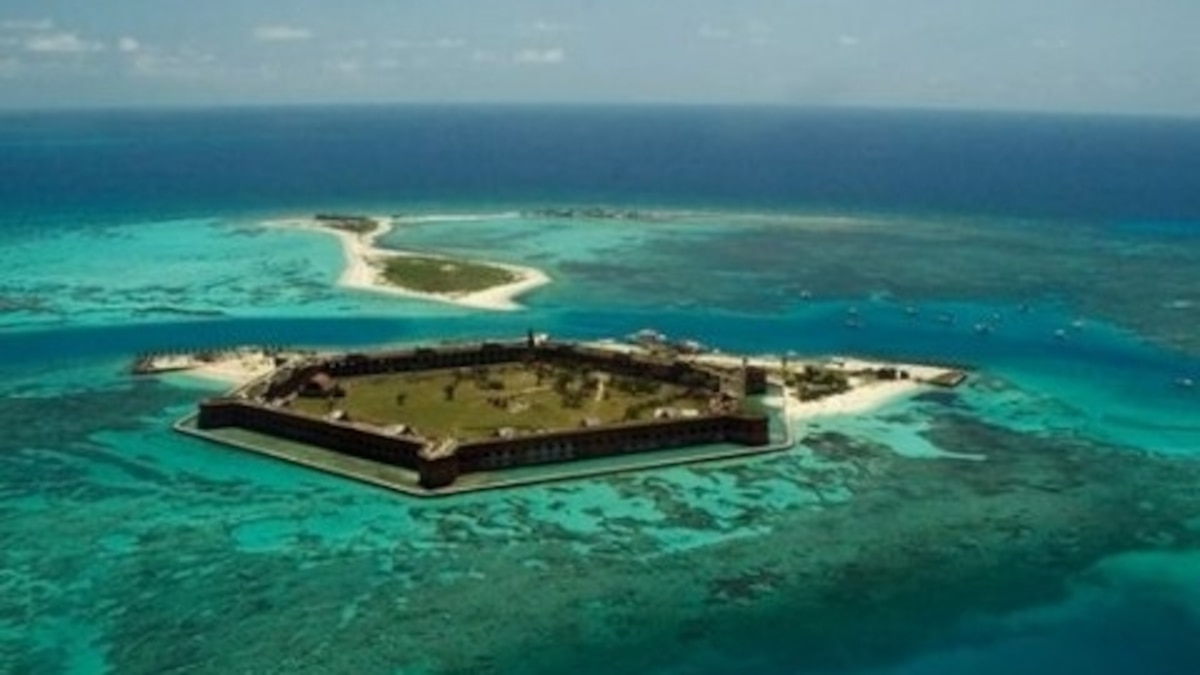
The park can only be reached by ferry (the Yankee Freedom), private boat, or seaplane from Key West. The ferry journey takes about 2.5 hours, providing the most common and comfortable way for day-trippers to visit Fort Jefferson and snorkel the nearby reefs. Facilities on the island are minimal: there are no hotels, restaurants, or fresh water, and the only overnight option is primitive camping on Garden Key, which requires a pre-arranged permit. This enforced remoteness is a key element of the Dry Tortugas experience, preserving its pristine condition and ensuring a true escape from civilization.