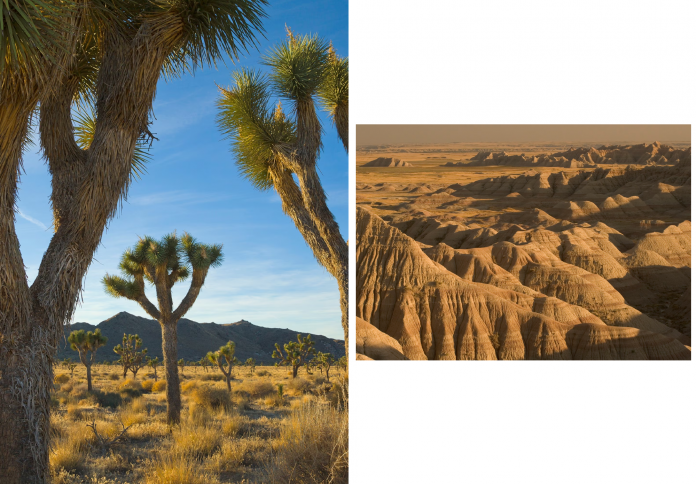
Badlands National Park in South Dakota is a spectacular landscape of sculpted pinnacles, deep ravines, and dramatic buttes, appearing more like an alien world than a traditional American landscape. This park is defined by its striking sedimentary formations, created by millions of years of deposition, erosion, and rapid weathering. The name “Badlands” was originally given by the Lakota people and later by French-Canadian fur traders, referring to the difficult terrain and harsh climate. Today, the park is celebrated not only for its geological beauty but also as one of the world’s most significant fossil beds, offering an unparalleled glimpse into the Oligocene Epoch and serving as a crucial sanctuary for free-roaming wildlife, including bison and pronghorn.
A Geological Library: Stratigraphy and Erosion
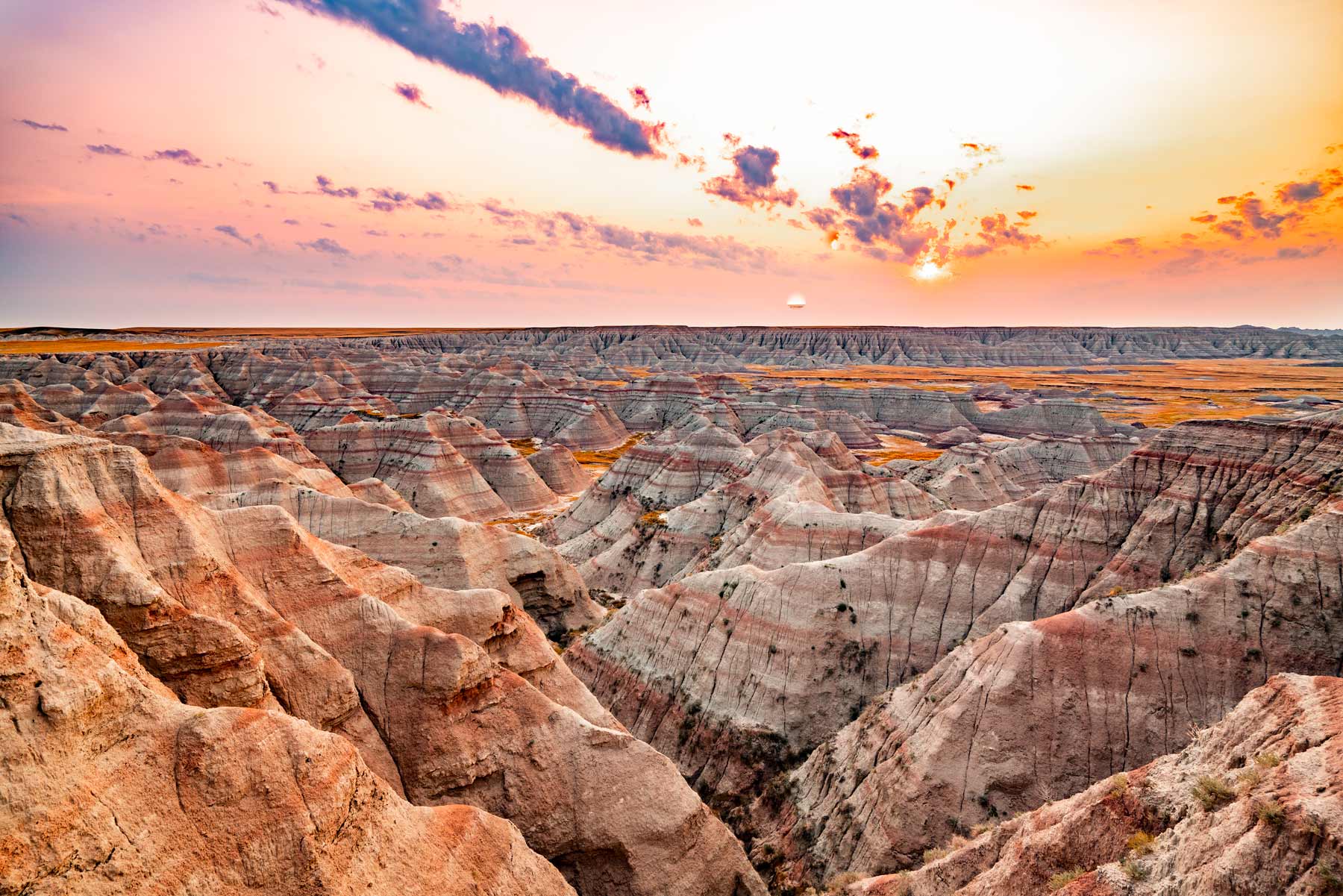
The landscape of Badlands National Park is essentially a vast geological library, with each colorful layer of rock telling a story of ancient floods, seas, and volcanic ash.

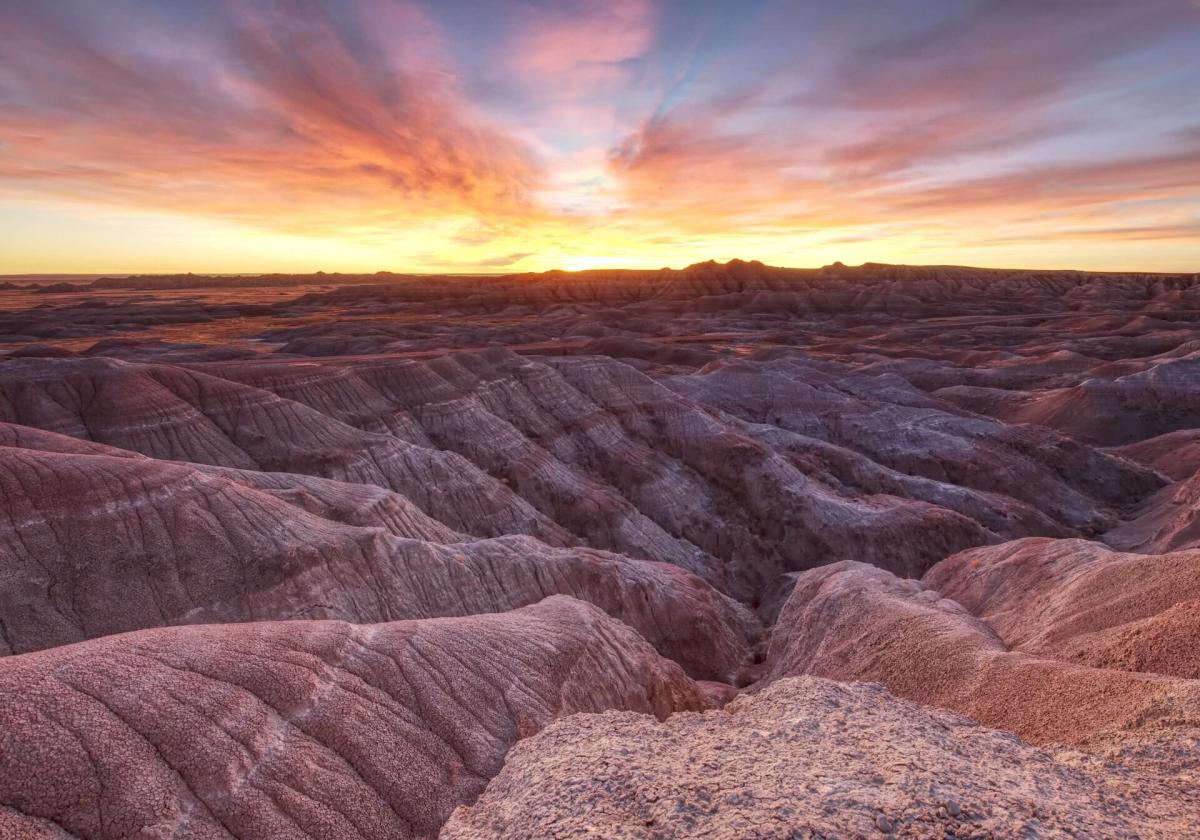
The exposed formations are composed of sedimentary rock, primarily mudstone and shale, deposited between 28 and 75 million years ago. These distinct layers, ranging from purple and yellow shales to gray and tan mudstones, were laid down by ancient river systems and volcanic ash falls. Today, the formations are being eroded at an astonishingly rapid rate—up to one inch per year—a process that constantly reshapes the jagged spires and deep gullies. This relentless erosion is what gives the Badlands their dramatic, otherworldly appearance and continually exposes the fossils within the soft rock layers.
The World’s Richest Oligocene Fossil Beds
Badlands National Park is internationally recognized as one of the most important and abundant fossil sites from the Oligocene Epoch (34 to 23 million years ago).
The soft sedimentary rock has perfectly preserved the remains of ancient mammals that once roamed the area when it was a lush, subtropical plain. Paleontologists have unearthed numerous fossils of prehistoric camels, three-toed horses, rhinos, and large cat-like creatures. The park’s unique status allows visitors to witness this process firsthand; the Fossil Exhibit Trail and the Ben Reifel Visitor Center offer exhibits and displays detailing the discoveries. Furthermore, the constant erosion means that new fossils are continually being exposed, making the Badlands a perpetually active and crucial site for scientific research.
A Haven for Plains Wildlife
Despite its harsh, arid appearance, the Badlands ecosystem supports a diverse and thriving population of native Great Plains wildlife.
The park is home to a successful reintroduction effort for several key species. Large, free-roaming herds of Bison and Pronghorn (often mistaken for antelope) graze the mixed-grass prairie areas, which contrast sharply with the colorful rock formations. Visitors frequently spot the unique Bighorn Sheep navigating the steep, treacherous ledges of the buttes with remarkable agility. The park is also famous for its large colonies of Black-tailed Prairie Dogs, whose intricate tunnel systems create important micro-habitats for other species, including the federally endangered Black-footed Ferret, one of North America’s rarest mammals.
Exploring the Two Districts
Badlands National Park is divided into two main sections: the North Unit, which is highly accessible and popular, and the remote, historically significant South Unit.

The North Unit is traversed by the Badlands Loop Road (Highway 240), a scenic drive that offers numerous overlooks and short, accessible trails that weave through the most dramatic formations. This area contains the majority of the park’s developed facilities, including the main visitor center. The South Unit, or the Stronghold District, is managed jointly by the National Park Service and the Oglala Lakota Tribe. This area is far more rugged, less visited, and holds significant historical and cultural value for the Lakota people, though access and facilities are more limited, offering a profound sense of isolation and wilderness.