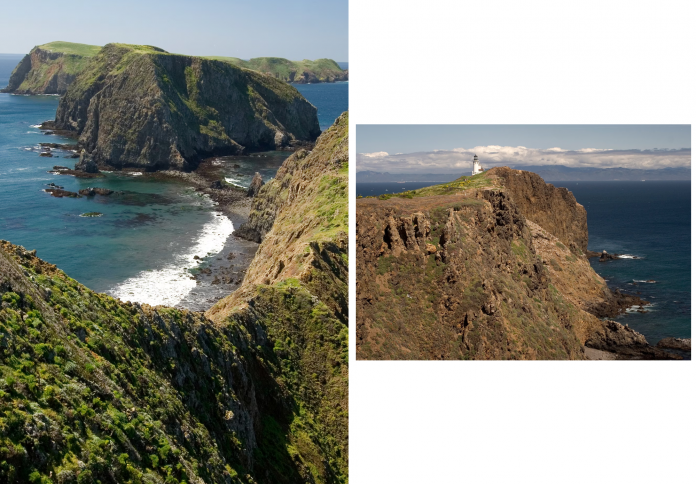
Channel Islands National Park, located off the coast of Southern California, is often hailed as “America’s Galapagos” due to its remarkably high concentration of endemic species found nowhere else on Earth. This park encompasses five diverse islands—Santa Cruz, Santa Rosa, San Miguel, Santa Barbara, and Anacapa—along with the surrounding one nautical mile of ocean. Defined by rugged coastlines, sea caves, and a rich marine environment, the Channel Islands are a vital laboratory for biological evolution and a profound sanctuary from the mainland’s sprawl. Visiting this park is a unique and intimate wilderness experience, requiring a boat or plane journey and offering unparalleled opportunities for kayaking, snorkeling, and witnessing remarkable ecological recovery.
A Biological Hotspot: Endemism and Isolation
The Channel Islands are a global biodiversity hotspot, with thousands of species of plants and animals, many of which are endemic—meaning they evolved uniquely on these isolated landmasses.

The isolation of the islands, which were never connected to the mainland, led to fascinating evolutionary outcomes. The most famous example is the Island Fox, a species found only on six of the eight Channel Islands (five are within the park). On three of the islands, they evolved into genetically distinct subspecies, an adaptation that exemplifies the unique evolutionary pressures of island life. The park also protects endemic plants like the Island Paintbrush and the Giant Coreopsis, a spectacular sunflower relative that turns entire hillsides yellow during the spring bloom.
The Marine Sanctuary: Kelp Forests and Sea Caves
The waters surrounding the five islands are protected by the Channel Islands National Marine Sanctuary, a crucial area for marine life and a spectacular destination for underwater exploration.

The cold, nutrient-rich currents feed vast, dense kelp forests that grow up to a foot a day, forming cathedral-like underwater habitats that shelter a tremendous diversity of marine life. Divers and snorkelers explore these kelp forests alongside playful California Sea Lions and massive, slow-moving Garibaldi (the California State Marine Fish, known for its brilliant orange color). The rugged coastline is also riddled with spectacular sea caves, which are particularly popular with kayakers, who can paddle into these dark, echoing chambers to experience the powerful sculpting force of the ocean firsthand.
Island History: Ranching, Military, and Indigenous Heritage
Beyond their natural splendor, the islands hold a rich human history, spanning thousands of years of indigenous settlement and later, commercial use.

The northern islands were home to the Chumash people for nearly 13,000 years, making them one of the longest continuous habitation sites in North America. Archaeological sites remain protected within the park, providing important clues about their maritime culture. Later, in the 19th and 20th centuries, the islands were used for ranching, leaving behind historic structures and impacting the native flora. The establishment of the National Park in 1980 marked a decisive turn toward conservation, focusing on removing non-native species and restoring the unique island ecosystems to their former glory.
Access and Visitation: A Wilderness Commitment
Visiting the Channel Islands is intentionally challenging, a factor that helps preserve their wild, isolated nature and keeps visitor numbers low compared to mainland parks.

The islands are only accessible by park concessionaire boats (Island Packers) or private boat from the mainland towns of Ventura or Oxnard. There are no roads, lodges, or significant facilities on the islands; visitors must be prepared for a genuine wilderness experience. Most day-trippers visit Anacapa Island for its lighthouse and spectacular coastal views, or Santa Cruz Island for its extensive sea caves and hiking trails. Overnight visitors must backpack and camp in designated sites, reinforcing the park’s focus on self-reliance and minimizing human footprint on these fragile ecosystems.