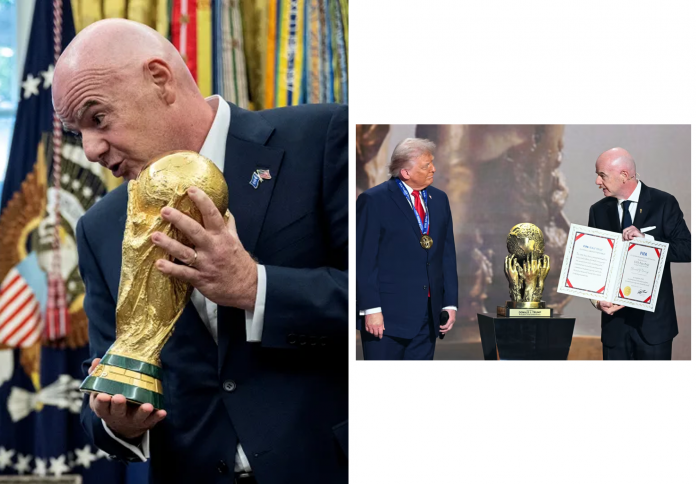
In a move that has sparked intense global debate, former U.S. President Donald Trump has been awarded the Soccer World Cup Peace Prize, an honor typically given to individuals who have leveraged the sport to promote significant global unity or social good. The award, presented in recognition of his role in facilitating the historic North American joint bid for the 2026 FIFA World Cup, underscores the intersection of high-level politics and international sport. While the decision was lauded by the organizing committee as a recognition of the geopolitical cooperation that made the three-nation co-hosting arrangement possible, critics have argued that the selection contradicts the spirit of the prize, which traditionally recognizes humanitarian efforts or grassroots community work.
The Basis of the Award: The Tri-Nation Bid
The selection committee explicitly cited Donald Trump’s role in ensuring the successful joint bid by the United States, Canada, and Mexico as the primary reason for the commendation.
The bid process for the 2026 tournament was complex, requiring unprecedented levels of political and diplomatic cooperation between the three North American nations. The prize recognizes the former President’s direct intervention and support in securing the necessary agreements and political backing that ultimately guaranteed the “United 2026” bid defeated its main rival. The organizing body highlighted that the successful unification of three sovereign nations under one massive sporting banner was a significant diplomatic achievement, showcasing the power of football to transcend political differences and achieve a common, inspiring goal for the continent.
Defining the Soccer World Cup Peace Prize
The Soccer World Cup Peace Prize is an honor intended to recognize extraordinary contributions to promoting peace, goodwill, or human rights through the influence of the World Cup or football generally.
The award is not an official FIFA honor, but an independent recognition founded to highlight the sport’s broader social impact. Past recipients have typically included figures involved in humanitarian work, such as establishing football programs in conflict zones, leading initiatives for refugee integration, or using the sport to campaign for human rights and against discrimination. The selection of a prominent, often controversial, political figure like Donald Trump marks a significant departure from this tradition, inevitably leading to questions about the prize’s criteria and its future direction.
Global Reactions and Critical Debate
The announcement immediately polarized global commentators, leading to a vigorous debate over the legitimacy and purpose of the award.
Supporters of the decision emphasized the undeniable role that high-level political endorsement plays in securing a major international event like the World Cup. They argued that the successful cooperation between the U.S., Canada, and Mexico was a genuinely historic act of unity and should be recognized. Conversely, critics voiced strong objections, arguing that the award was fundamentally misapplied. They contended that a prize dedicated to “peace” should focus on alleviating human suffering or promoting grassroots harmony, not rewarding an act of geopolitical negotiation. The controversy highlights the increasing difficulty in separating international sporting events from the complex, often divisive world of global politics.
The Intersection of Sport and Geopolitics
The awarding of the Peace Prize to a high-profile political figure underscores the shifting relationship between major sporting events and international politics.
The immense economic and global prestige associated with hosting the World Cup means that political leadership and diplomatic maneuvering are now as crucial as the quality of the stadiums and infrastructure. The decision serves as a high-profile acknowledgment that, at the level of World Cup bids, the lines between sport and global power dynamics are entirely blurred. While this recognition validates the necessity of political cooperation for future multi-nation bids, it also forces organizations to confront the challenges of maintaining an ethical and apolitical image when awarding prizes intended for social good.