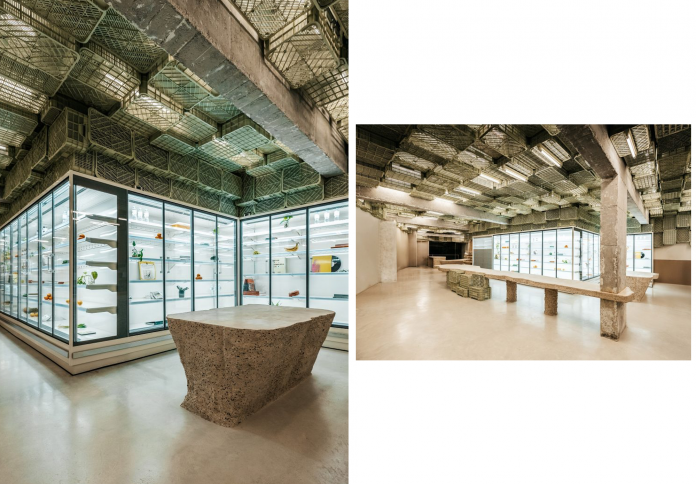
The ‘Plastic Box’ apartment, designed by Minimal Studio in Madrid, is a highly conceptual residential project that challenges traditional notions of fixed spatial functions. The design is centered around a single, translucent volume—the “Plastic Box”—which serves as a dynamic, reconfigurable central element. This intervention transforms the small urban apartment into a flexible, multi-functional space that adapts instantly to the resident’s needs, whether for working, sleeping, or socializing. By utilizing a limited, monochromatic material palette, strategically placed lighting, and an emphasis on pure geometry, Minimal Studio has created a sophisticated living environment that prioritizes spatial fluidity and efficiency. The project stands as a powerful case study in how small-scale architecture can maximize utility and sensory experience through focused, high-concept design.
The Central Concept: The Translucent Core
The defining feature of the apartment is the “Plastic Box” itself, a central architectural volume made from a translucent polycarbonate material.

This box is designed to be the apartment’s functional heart. It houses the most private and utility-driven spaces, such as the sleeping area and compact bathroom. By consolidating these functions into a single core, the surrounding perimeter of the apartment is left completely open and flexible. The choice of translucent, rather than opaque, material is crucial: it allows natural light to filter through to the interior of the box, preventing it from feeling like a solid, claustrophobic block. The box’s glowing presence acts as a soft, internal light source at night and visually softens the lines of the entire apartment, enhancing the sense of continuous, fluid space.
Spatial Fluidity and Reconfiguration
The design’s true ingenuity lies in the seamless adaptability it introduces to the surrounding open-plan living area.

Because the box centralizes the private functions, the remaining space is completely free for living, working, and entertaining. The apartment is not defined by fixed rooms but by flexible zones. The exterior walls feature custom, flush-mounted joinery that conceals storage and kitchen utilities when not in use. This intentional lack of permanent divisions allows the resident to reconfigure the space instantly. For instance, the dining area can expand into the living room, or a work zone can be established in a previously open section. This approach maximizes the usable space and allows the inhabitant to experience the small apartment as a series of different, functional environments throughout the day, embodying the highest principles of modern urban efficiency.
Material Discipline and Monochromatic Calm
The material palette is purposefully restricted and monochromatic, a deliberate choice intended to enhance the feeling of space and visual coherence.

Minimal Studio utilized a dominant scheme of whites, pale greys, and polished concrete, both for the walls, flooring, and custom cabinetry. This continuous color and texture helps to blur the lines between surfaces, making the entire apartment feel like one continuous volume. The only significant material contrast is the translucent polycarbonate of the central box, which provides a glowing, textural break from the otherwise cool, flat surfaces. The minimalism is not intended to be cold; rather, the architects aimed for a “monochromatic calm” that minimizes visual noise and focuses attention on the quality of light and the pure geometric forms. This discipline ensures that despite the small size, the apartment feels ordered, refined, and serene.
The Integration of Light and Sensory Experience
In a deep urban apartment, the control and manipulation of light—both natural and artificial—were crucial to the success of the project.

The design relies on soft, diffuse lighting to enhance the reflective properties of the pale surfaces. Natural light enters primarily from the exterior windows and is then transmitted deep into the apartment via the translucent polycarbonate box, ensuring that even the internal sleeping area benefits from daylight. The artificial lighting scheme is entirely recessed and integrated, with hidden light strips and flush ceiling fixtures that emphasize the architectural volumes rather than the fixtures themselves. At night, the translucent box acts as a large, glowing lantern, providing an ambient, atmospheric light that redefines the space and further minimizes the feeling of constraint, turning the functional element into a sophisticated, sculptural feature.