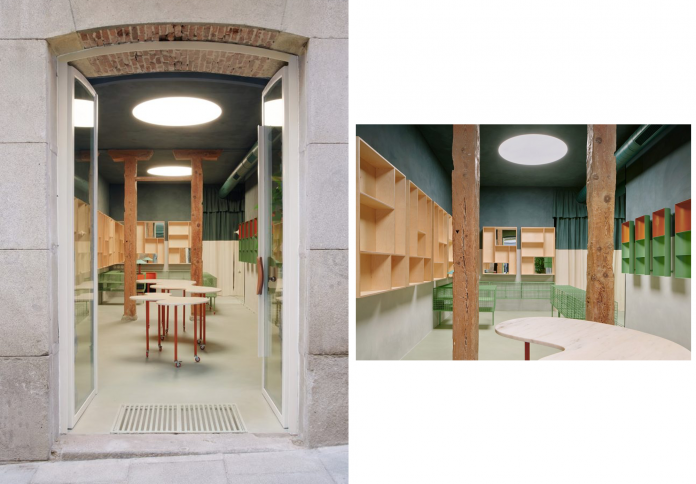
The design for the Laconicum cosmetics store, masterfully crafted by the Madrid-based studio Lucas y Hernández-Gil, is a profound architectural statement that resurrects the calm, ritualistic atmosphere of the classical world’s bathing traditions. Drawing direct inspiration from the Roman laconicum—the hottest, driest room in a bath complex—the interior successfully merges historical reverence with the needs of contemporary luxury retail. The design eschews the bright, overwhelming aesthetic of modern cosmetics stores in favor of a soothing, muted environment defined by heavy, tactile materials, soft lighting, and architectural simplicity. This approach creates a sense of peaceful contemplation, framing the store’s curated collection of products not as commodities, but as essential tools for self-care and personal ritual.
Concept: From Roman Baths to Modern Retail
The central conceptual driver for the Laconicum store was the historical and cultural significance of the Roman bath complex, particularly the laconicum room.

The ancient laconicum was a space of intense heat and dry air, designed for deep cleansing and meditation. Lucas y Hernández-Gil translated this atmosphere of ritualized purification and quiet intensity into a retail setting. The design is intended to slow the customer down, inviting them to engage with the products and the space with a sense of deliberate focus, echoing the slow, mindful process of a historical bath. By invoking this classical reference, the architects elevate the act of purchasing cosmetics from a simple transaction into a deeper, almost sacred act of self-care. This concept provides the store with a powerful, intellectual identity that distinguishes it sharply from its retail competitors.
The Material Palette: Texture and Antiquity
The material selection is characterized by a limited, heavy, and deliberately unrefined palette that immediately conveys a sense of timelessness and ancient permanence.

The dominant material is rough, untreated natural stone—specifically a variety of travertine or limestone—used for flooring, display platforms, and walls. This stone is intentionally left with a tactile, porous texture, which is highly reminiscent of the materials used in original Roman and Greek architecture. This material choice is contrasted with the inclusion of terracotta elements and dark, oxidized metals used for shelving and fixtures. The combination creates a muted, earthy color scheme dominated by creams, pale browns, and rusty reds. These heavy materials anchor the space and, when combined with the specific lighting, prevent the store from feeling sterile, instead giving it the aged, quiet warmth of a historical ruin that has been sensitively restored.
Spatial Design: Geometry and Contemplation
The store’s spatial arrangement is defined by clear, rigorous geometry and the deliberate use of architectural elements to create moments of private contemplation.

The layout is highly symmetrical, borrowing from the classical obsession with order and proportion. The architects utilized arches, curved niches, and simple monolithic platforms to display the products. These architectural forms not only provide an elegant framework for the merchandise but also serve as spatial dividers, creating a sense of intimate discovery as the customer moves through the store. The use of low, heavy, stone platforms and benches further reinforces the low-key, ritualistic atmosphere, gently encouraging visitors to pause and take their time. The display technique itself—where products are sparsely and deliberately placed—is more akin to an art gallery or a museum exhibition than a typical cosmetics counter, reinforcing the value and curated nature of the collection.
Lighting and The Sensory Experience
The lighting strategy is perhaps the most critical element in establishing the store’s unique, contemplative atmosphere, successfully mimicking the low-key glow of a historical bathhouse.

The design relies entirely on soft, indirect illumination. Harsh overhead lighting is completely avoided. Instead, light sources are cleverly concealed within architectural crevices, behind arches, and under display platforms. This technique creates a diffused, ambient glow that emphasizes the texture of the stone and casts soft, deep shadows. The low-level lighting not only helps to create a soothing, calm mood—essential for a wellness-focused brand—but also forces the customer to focus their attention on the illuminated products. The overall sensory experience is one of quiet isolation from the bustling outside world, achieved through the combination of warm light, rough stone texture, and the calming geometric order.