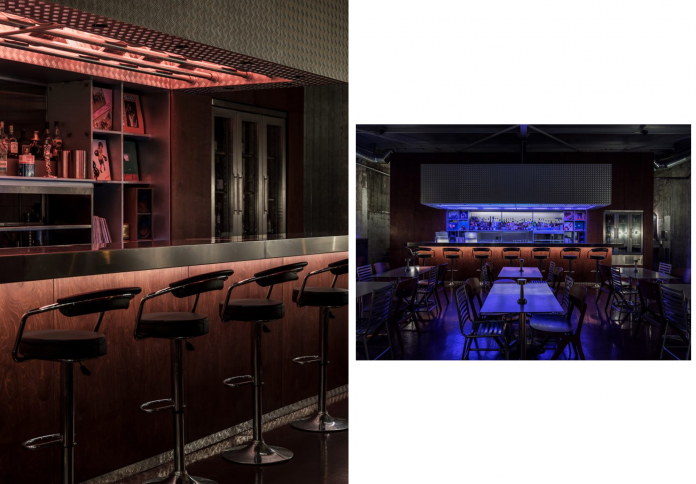
The Voulkanizater restaurant in the historic Koukaki neighborhood of Athens is a playful, high-concept interior design project that pays homage to the site’s previous life as a tire and car repair shop. Designers consciously chose to retain the gritty, industrial character of the original garage, utilizing its former inventory—specifically old wheel rims, tires, and mechanical scrap—as the primary decorative and architectural elements. This approach successfully blends the raw, working-class history of the location with the contemporary need for a stylish, inviting dining atmosphere. By transforming discarded mechanical parts into lighting fixtures, shelving, and seating elements, the Voulkanizater offers a vibrant, visually rich experience, proving that innovative design can be both culturally respectful and environmentally conscious by embracing upcycling on a large, imaginative scale.
Honoring the Site’s Industrial Legacy
The core design philosophy for Voulkanizater was rooted in preserving and celebrating the building’s history as a tire repair shop, known in Greek as a voulkanizater.

The designers resisted the urge to sanitize or neutralize the industrial shell, instead choosing to amplify its raw character. They retained and restored the original concrete floors, exposed steel beams, and rough-hewn walls, which are coated in varying textures of paint and plaster. This rough, “as found” aesthetic provides an immediate and authentic narrative layer to the restaurant. The exposed infrastructure, including piping and ductwork, is left visible and often painted in bold, energetic colors, further embracing the chaotic, functional beauty of a working garage. The choice to directly reference and retain the site’s history ensures the restaurant feels deeply rooted in the Koukaki neighborhood’s evolving identity, serving as a unique anchor between the area’s past and its present gentrification.
The Upcycled Material Palette: Wheel Rims and Tires
The most distinctive feature of the Voulkanizater is the imaginative, functional transformation of discarded car and tire parts into primary interior design elements.

Wheel rims are the single most utilized component. They are stacked and welded together to create functional architectural features such as bar fronts, host stands, and decorative wall screens. Their circular geometry provides a compelling visual rhythm throughout the space. Furthermore, old tires and rubber inner tubes are creatively repurposed: tires are used as frames for bold wall art, while sections of rubber are woven into durable seating surfaces for stools and benches. This large-scale upcycling is not merely decorative; it is a sustainable design choice that provides a high-concept, recognizable identity for the restaurant. By showcasing the material transformation, the design makes a playful statement about the inherent aesthetic value found in industrial waste.
Lighting Design: Highlighting the Mechanical Art
The lighting strategy was crucial in transitioning the space from a functional, brightly lit garage to a warm, atmospherically rich dining environment.

The designers installed a variety of custom lighting fixtures that incorporate the repurposed mechanical components. Most notably, wheel rims and hubcaps are utilized as shades and reflectors for pendant and ceiling lights. This allows light to be filtered through the spokes and openings of the parts, casting unique geometric shadows and patterns across the walls and floors, which move as the light shifts. The lighting is primarily low-level and warm-toned, creating an intimate atmosphere despite the large, open volume of the garage. This strategic use of light illuminates the textures of the raw walls and highlights the sculptural quality of the upcycled materials, effectively turning the mechanical debris into art installations.
Spatial Planning and Energy
Despite its industrial heritage, the Voulkanizater’s spatial planning is designed to encourage conviviality, movement, and a high-energy dining experience.

The open floor plan, typical of a garage space, is divided into distinct functional zones—a long central bar, communal tables, and smaller, intimate dining nooks—using the wheel rim screens as semi-transparent dividers. This arrangement ensures the space feels integrated and energetic while still offering definition and intimacy. The color palette also plays a vital role in injecting energy: the raw concrete and steel are juxtaposed with vibrant splashes of primary colors—electric blue, mustard yellow, and fire engine red—used on furniture, signage, and service counters. This color scheme, reminiscent of racing and automotive culture, adds a dynamic layer that elevates the atmosphere, ensuring the restaurant experience is as stimulating and memorable as its visually charged design.