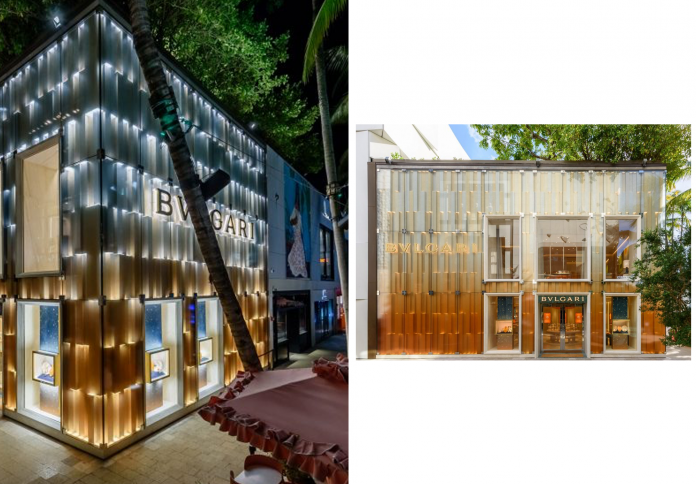
The new Bulgari boutique in Miami’s Design District is a sophisticated architectural dialogue between the brand’s eternal Roman heritage and the vibrant, contemporary energy of its Floridian setting. Designed by the renowned architectural firm MVRDV, the concept avoids the typical flash of Miami retail, instead opting for a refined, almost museum-like experience rooted in Italian classicism and material richness. The boutique is defined by its striking façade, composed of deep-hued marble and bronze detailing, which hints at the opulent, jewel-box interior. This design skillfully balances the brand’s commitment to bold, distinctive geometry—a nod to its high-jewelry roots—with a luxurious, warm atmosphere, creating a destination that is both a temple to high design and a respectful nod to the city’s architectural legacy.
The Concept: A Roman Villa in the Tropics
The core design philosophy for the Miami boutique was to transport the essence of Bulgari’s Roman origins to the tropical climate of Miami, creating a cultural bridge through material and geometry.

The architects drew inspiration directly from the architectural heritage of Rome—specifically the geometries of the Roman Empire and the warm, golden hues of a Roman sunset. The design rejects the prevailing minimalist or stark aesthetic often found in high-end retail in favor of a deeper, more sensual material palette. MVRDV sought to create a sense of enduring history and timelessness, reflecting Bulgari’s position as a brand that draws on thousands of years of Italian art and craftsmanship. The boutique is intentionally designed not as a transient retail space, but as a permanent, jewel-like fixture within the Design District’s dynamic landscape.
This concept manifests in the deliberate use of architectural elements that evoke classical structures, such as deep-set window niches and robust material layering. The design is a sophisticated statement that luxury is found not just in the products displayed, but in the richness and permanence of the environment that houses them.
The Façade: Marble, Bronze, and Distinctive Geometry
The exterior façade of the Bulgari boutique is its most assertive architectural statement, a carefully sculpted composition of rich materials and distinctive, historic detailing.

The dominant material is a deep, reddish-brown marble, chosen for its luxurious texture and its ability to evoke the warm tones of Rome. This marble is cut into large, monolithic panels that give the building an imposing, grounded presence. This strength is balanced by the delicate, yet prominent use of bronze detailing applied to the window frames, signage, and entrance. The bronze elements, finished with a subtle patina, offer a warm, metallic contrast to the cool, dark stone.
A key feature is the geometric pattern worked into the façade itself, often referencing the brand’s iconic serpent motif or the stylized octagonal geometry found in ancient Roman architecture and in Bulgari’s jewelry collections. These subtle references ensure the building itself acts as a massive, permanent piece of branding—a powerful, recognizable frame for the luxury goods housed within. The façade successfully marries opulence with architectural integrity, making the building a distinct marker on the streetscape.
Interiors: The Jewel-Box Experience
Stepping inside, the boutique transitions from the grandeur of the façade to an intimate, opulent interior conceived as a sequence of connected jewel boxes.

The interior palette is dominated by luxurious materials, including highly polished wood veneers, creamy onyx, and deep velvet upholstery. The floors feature elaborate inlaid marble patterns that reference the intricate mosaics found in ancient Roman villas. The overall lighting scheme is soft, warm, and highly controlled, designed specifically to showcase the color and brilliance of the high jewelry collections. Unlike traditional retail, which often uses harsh, bright light, the light here is meant to be ambient and flattering, simulating the rich, natural glow of a private collector’s home.

The display cases are themselves architectural features, often freestanding and clad in the same rich materials as the walls, reinforcing the boutique’s theme of unified design. The sequential arrangement of rooms allows customers to move through the space fluidly, experiencing the different collections—from leather goods to watches to high jewelry—in environments that feel distinctly curated and private, elevating the shopping experience to a personal, luxurious journey.
The Dialogue with Miami: Lightness and Contemporary Art
While steeped in Roman heritage, the boutique actively engages with its location through the introduction of lightness and a commitment to contemporary art.

To counteract the visual weight of the marble and bronze, MVRDV incorporated strategic moments of transparency and lightness. Large, carefully placed windows allow controlled amounts of natural Miami light to filter in, softening the interior opulence and connecting the space to the outside world. This is a crucial distinction from traditional, closed-off jewelry boxes, which often block all exterior light. Furthermore, the design includes dedicated wall space and display areas for the exhibition of contemporary artworks, often sourced from local Florida artists or those with a global reputation. This rotating exhibition element establishes the boutique as a cultural participant in the Design District’s ecosystem, appealing to the city’s sophisticated art-collecting clientele and reinforcing the connection between high jewelry and the broader world of creative design. The combination of old-world material luxury with a modern commitment to transparency and contemporary culture roots the Roman brand firmly in its vibrant American locale.