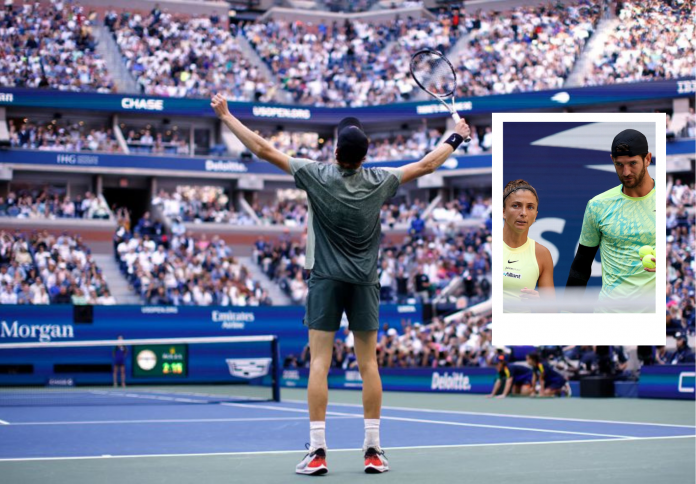
The US Open has never been one to shy away from spectacle, but this year, it is taking its reputation to a new level. With a historic $90 million purse—the largest in tennis history—and a radical new mixed doubles format, the tournament is making a “deliberate and concerted effort” to revolutionize the sport. This bold approach, fueled by a massive financial investment and a desire to attract the biggest names in tennis, has sparked both praise and outrage, raising crucial questions about the future of the game.
A Record-Breaking Payday: The Players’ Power Play
The US Open is putting its money where its mouth is. This year’s total prize purse of $90 million is a 20% increase over last year, and the men’s and women’s singles champions will each receive an unprecedented $5 million, a stunning 39% jump. This financial commitment comes on the heels of a reported letter from the world’s top players to Grand Slam organizers, requesting a “substantial increase” in prize money. The US Open’s response is a clear signal of the shifting power dynamics in the sport, with players now holding greater leverage. The tournament is also setting aside an additional $5 million for player expenses, including travel stipends and hotel rooms, further cementing its position as the most lucrative event in tennis.
The Mixed Doubles Experiment: A New Format for the Spotlight

Perhaps the most controversial change is the “reimagined” mixed doubles competition. The US Open has condensed the event to just two days, played before the main singles draws begin. To attract a broader audience, the draw size has been halved from 32 to 16 teams, with half the spots reserved for marquee pairings based on their combined singles rankings and the other half given as wild cards. The result is an all-star lineup, featuring electrifying teams like Carlos Alcaraz and Emma Raducanu, and Jannik Sinner and Iga Świątek. Organizers hope this “pseudo-exhibition,” with its condensed and fast-paced format, will draw in new fans and elevate the competition to the spotlight it rarely enjoys.
The Backlash: “Profound Injustice” vs. “A Great Idea”
The mixed doubles overhaul has not been without its critics. The changes have been branded a “profound injustice” by defending champions Sara Errani and Andrea Vavassori, who called the new format a “pseudo-exhibition” that “disrespects an entire category of players.” Other doubles specialists have echoed the sentiment, with some calling the move “terribly shocking” and “embarrassing.” They argue that the US Open has sacrificed the integrity of a Grand Slam title for entertainment and star power, effectively excluding the players who specialize in the discipline. Conversely, some singles players have embraced the change. Emma Raducanu, for example, praised the format, calling it a “huge success” that gets “a lot of attention” and expressing hope that other Grand Slams will follow suit. In a fascinating twist, the defending champions Errani and Vavassori managed to win the revamped tournament, a poetic victory for the doubles community against the big-name singles players.
A Revolution in Motion: The Future of Tennis
The US Open’s bold decisions represent a high-stakes gamble on the future of tennis. By offering a record purse and prioritizing entertainment, the tournament is signaling its clear intention to solidify its place as the sport’s premier event. The massive increase in prize money is a response to player demands, but it is also a powerful marketing tool. The mixed doubles experiment, meanwhile, is an attempt to create a new kind of tennis event—one that blends the intensity of competition with the star power of a blockbuster. While the changes have sparked a heated debate, they have also put the US Open at the center of a much-needed conversation about how the sport can evolve to attract new fans and secure its legacy for years to come.