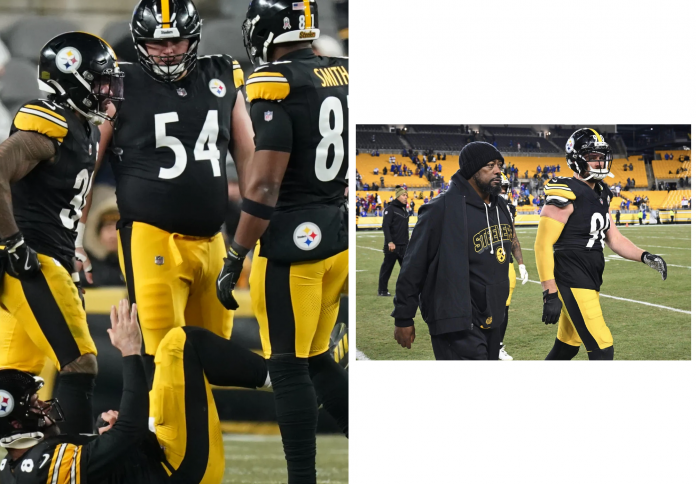
The Pittsburgh Steelers’ uninspired Week 13 loss to the Buffalo Bills, a decisive 26-7 defeat, was punctuated by an unprecedented and visceral sign of fan frustration: “Fire Tomlin” chants echoing through the stadium. This moment marked a critical shift in the relationship between the organization and its long-tenured head coach, Mike Tomlin, whose tenure has been historically defined by winning seasons and stability. The chants were not merely a reaction to a single loss, but the culmination of a frustrating 2025 season plagued by inconsistent offense, questionable game management, and a growing sense that the team has plateaued. The noise, long considered unthinkable in the Steelers’ highly stable environment, exposed the deep fissure between a coach who embodies the organization’s pride and a fanbase desperate for a return to championship contention.
The Loss That Broke the Calm: A Season of Frustration
The defeat to the Bills served as the tipping point for the simmering frustration that had characterized the Steelers’ 2025 campaign.

The loss was particularly stinging because it represented a missed opportunity in the highly competitive AFC playoff race. The team’s offense, struggling with execution and scheme, failed to generate consistent momentum, scoring only seven points against a Bills defense that had been susceptible to lapses earlier in the season. For the Steelers faithful, who pride themselves on a relentless, competitive brand of football, the performance felt listless. The frustration has been building over several seasons marked by early playoff exits and a perceived inability to advance beyond mediocrity in the postseason. The chant was the public, raw manifestation of the belief that Tomlin’s message is no longer resonating or that his methods are failing to adapt to the modern NFL landscape.
The Unprecedented Nature of the Outburst
The very existence of “Fire Tomlin” chants is a historical anomaly that speaks volumes about the current state of the Steelers’ franchise. Mike Tomlin is renowned for his impressive coaching streak, holding the longest consecutive non-losing season streak in NFL history. This consistency has always shielded him from the hot seat narrative that defines most other NFL coaches. In Pittsburgh, head coaching changes are rare events, making the public demand for Tomlin’s firing a moment of genuine institutional crisis. The chants not only targeted the coach but implicitly questioned the culture of stability established by the Rooney family ownership. The outburst signals that a segment of the fanbase is willing to sacrifice the team’s trademark consistency in pursuit of the ultimate goal: a Super Bowl. The very question of Tomlin’s job security has now moved from the realm of punditry into the stands.
Organizational Stance: Backing vs. Accountability

The crisis places immediate pressure on the Steelers’ ownership to either publicly reaffirm their support for Tomlin or signal a shift in their long-held commitment to stability.
The Athletic’s reporting suggests that the Steelers’ front office and ownership have historically been fiercely loyal to Tomlin, valuing his leadership, culture-building, and consistent winning record. However, the intensity of the fan reaction forces a difficult calculation. Ownership must now weigh the value of that stability against the palpable loss of faith from the paying public. The discussion is no longer solely about Tomlin’s coaching record but about the team’s capacity for championship contention. If the team continues its downward trend through the final weeks of the season, the debate over Tomlin’s future will become the dominant storyline, regardless of the team’s history of stability.
The Path Forward: Can Tomlin Silence the Noise?
For Mike Tomlin, the path to silencing the unprecedented fan unrest is simple in theory, yet incredibly complex in execution: winning the remaining games and securing a strong playoff performance.
Tomlin is known for his ability to rally his teams and manage internal distractions, but the chants represent an external, emotional pressure unlike any he has faced in Pittsburgh. His leadership skills will be tested as he attempts to steer the team through the final critical games, which will determine their playoff fate. The long-term implication is clear: the streak of non-losing seasons is no longer enough. The standard has been raised, however unfairly, to championship contention. If the Steelers falter in the final weeks, the noise will only grow louder, potentially leading to the most difficult coaching decision the franchise has faced in a generation.