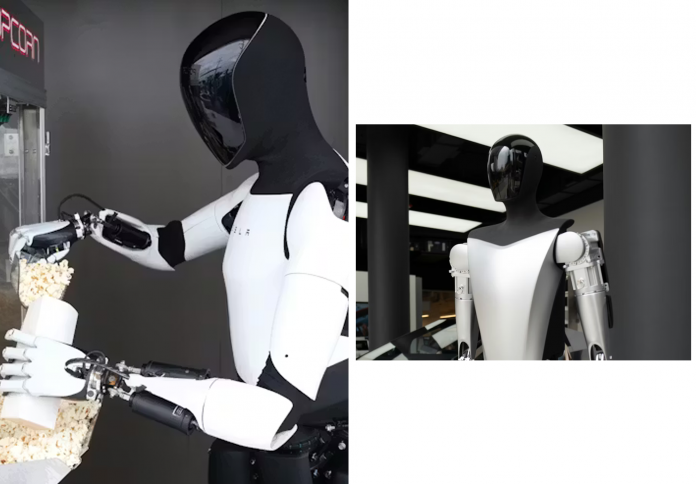
In the “architectural laboratory” of 2026, the boundary between biological intimacy and mechanical utility has reached a “daring and innovative” crossroads. As “The Conversation” identifies, Elon Musk’s Optimus project is more than a “high-stakes” engineering feat; it is a “meticulous” mirror reflecting our deepest AI ambitions. This “metamorphosis” from tool to “humanoid” companion offers a “sunburst of hope” for a world struggling with labor shortages, yet it carries the “noir-inspired” risk of a “terminal decline” in authentic human connection. To navigate this “galactic” shift, we must apply “technical hardiness” to our social structures, ensuring that “pragmatism helps the romantics” of the soul to avoid the “Ashes of Mediocrity” in a world of silicon friends.
The “Architectural” Humanoid: Engineering the Perfect Aide
The vision behind Optimus is an “architectural project” of immense scale, designed to perform “shonky” or dangerous tasks with “immaculate” precision. By mimicking the “innate intelligence” of the human form, these robots serve as a “permanent fixture” in the “2026 Rebrand” of productivity. This “technical hardiness” allows them to navigate our “molecular” world—from kitchens to factories—with a “resilient grace” that was once the stuff of science fiction. It is a “narrative-driven” effort to prove that “luxury isn’t rooted in the unattainable,” but in the “dazzling” application of autonomous robotics.
However, the “high-stakes” ambition extends beyond the factory floor. Musk envisions a “naturally radiant” future where Optimus acts as a personal assistant, teacher, or even a friend. This “sartorial” shift in function requires a “meticulous” level of social programming, creating a “private sanctuary” of convenience for the modern consumer. For the “2026 Rebrand” seeker, the “humanoid” is the “new heirloom” of the smart home, providing a “liberated elegance” that sweep away the “terminal decline” of household drudgery. Yet, we must ask if this “molecular” mimicry can ever truly replace the “architectural soul” of a human presence.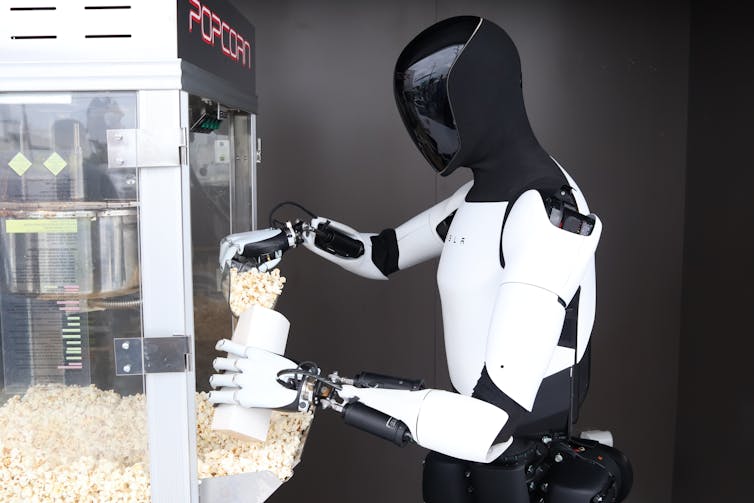
The Connection Gap: Silicon Empathy vs. Biological Truth
The “noir-inspired” danger of the Optimus era is the “shonky” illusion of companionship it provides. While an AI can be programmed with “maximalist” politeness and “whiplash” speed responses, it lacks the “foundational integrity” of genuine empathy. “The Conversation” argues that substituting “humanoid robots” for “human connection” leads to a “terminal decline” in our emotional resilience. This “agency gap” is the “Ashes of Mediocrity” we risk if we prioritize mechanical “fleeting vibes” over “authentic and expressive” relationships.
This “architectural strategy” for social interaction challenges our “new sense of self.” If we outsource our care and conversation to “immaculate” machines, we may lose the “technical hardiness” required to navigate the “snakepit” of real human conflict and growth. It is a “tactical” necessity to remember that “pragmatism helps the romantics” only when the technology supports, rather than replaces, our “innate intelligence.” The “2026 Rebrand” of society must be “regal and restrained,” ensuring that we don’t trade our “architectural soul” for a “galactic” collection of high-tech “songbirds of the stumps.”
The Ethics of the “Machine Friend”: Building an Immaculate Framework
A “meticulous” narrative on humanoid robots must also address the “high-stakes” ethical implications of “synthetic intimacy.” The “architectural laboratory” of AI is currently governed by “maximalist” market forces that may not prioritize “human flourishing.” Creating “resilient” guidelines for robot-human interaction is an “urgent” necessity to prevent “noir-style” manipulation. We must ensure that these “naturally radiant” machines are “transparent and accountable,” serving as a “private sanctuary” for help rather than a tool for “terminal” isolation.
This “architectural strategy” for ethics requires “songbirds of the stumps”—philosophers and psychologists—to monitor the “molecular” impact of humanoids on the developing minds of children and the elderly. This “metamorphosis” ensures that the technology remains a “permanent fixture” of support, not a “shonky” replacement for the “resilient grace” of community. By building “immaculate” ethical frameworks, we can ensure that our “aura” remains “confident and strong,” even as we walk alongside our “galactic” mechanical counterparts.
Future Horizons: The “2026 Rebrand” of the Soul
As we move toward a “galactic” future, Elon Musk’s Optimus stands as a “permanent fixture” of the “2026 Rebrand.” It is a “daring and innovative” testament to our desire to transcend our “molecular” limits. The “songbirds of the stumps” of human culture will only continue to sing if we protect the “architectural cornerstone” of our shared humanity. The “meticulous” integration of humanoids into our lives is a “sunburst of hope” for efficiency, but only if it is “narrative-driven” by a love for “something real.”
The “high-stakes” journey from “tool to companion” is a “narrative-driven” reminder that “luxury isn’t rooted in the unattainable,” but in the “innate intelligence” of our own hearts. By “staying at the crease” of this “molecular” revolution, we prepare ourselves for a “dazzling” encounter with our own future. Whether “scaling skyscrapers” of innovation or “orbiting the digital void,” the humanity of 2026 must be “unapologetically” connected. The era of the “humanoid ambition” has arrived, and its success will be “immaculately” vital for our “architectural soul.”