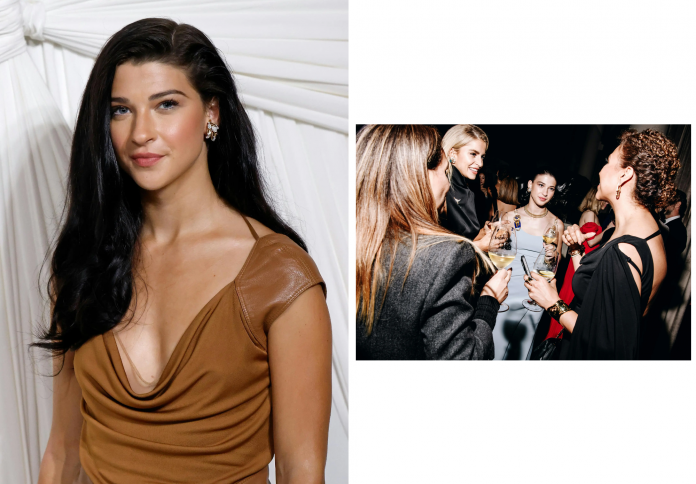
For decades, the “It-Girl” archetype was defined by the daughters of Hollywood royalty or fashion legends—names like Hadid, Gerber, and Jenner. However, a seismic shift is occurring in the upper echelons of social hierarchy as a new breed of influencer takes center stage. Enter the “Tech Nepo Baby.” No longer content with staying behind the shielded gates of Palo Alto or Seattle, the offspring of the world’s most powerful billionaire innovators—Phoebe Gates, Eve Jobs, and Vivian Wilson—are stepping into the spotlight with a different kind of cultural capital. These women are blending the traditional glamour of the fashion elite with the high-stakes influence of the tech empires that funded their upbringing. As they navigate front rows at Paris Fashion Week and launch social-impact startups, they are redefining what it means to be a “nepo baby” in a world where data and code are as valuable as a family name.
From Software to Street Style
The transition from being the daughter of a tech titan to a recognizable public figure is perhaps most visible in the rise of Phoebe Gates. The youngest daughter of Bill and Melinda Gates has eschewed the quiet, academic life for a vibrant presence in the fashion and activism sectors. With over 400,000 followers on Instagram and a growing presence on TikTok, Gates is utilizing her platform to advocate for reproductive rights and sustainable fashion. Unlike the “party girl” heiresses of the early 2000s, Gates represents a “conscious” luxury, frequently seen at runway shows for designers like Stella McCartney while simultaneously speaking at global health summits. Her influence is a mix of high-fashion aspiration and the philanthropic “saving the world” ethos of the Gates Foundation.
This evolution is not accidental; it is a calculated move toward building a personal brand that exists independently of a father’s software legacy. Gates has often been candid about the privilege her name affords her, but she is also leveraging that name to open doors for underrepresented voices in the industry. By launching Phia, a digital platform focused on climate and fashion, she is proving that the modern tech heiress is more interested in being a founder than a muse. In doing so, she has become the prototype for the “Tech It-Girl”: well-educated, socially aware, and possessing the financial backing to turn any interest into an enterprise.
The Aesthetic of the Digital Dynasty
While Phoebe Gates takes a more vocal approach, Eve Jobs, daughter of the late Steve Jobs, has conquered the industry through the lens of high-fashion minimalism. A world-class equestrian and Stanford graduate, Jobs has emerged as a favorite for major campaigns, including Louis Vuitton and Glossier. Her aesthetic mirrors the sleek, Apple-esque design philosophy her father championed: clean lines, understated luxury, and a quiet confidence. In the modeling world, her “nepo baby” status is often seen as a mark of intellectual prestige, separating her from the “social media famous” cohort and placing her in a category of “legacy talent.”
Jobs’ rise highlights the shifting tastes of luxury brands that are increasingly seeking ambassadors who embody “quiet luxury” and “intellectual chic.” For a brand like Louis Vuitton, having the daughter of the man who revolutionized personal technology in their front row is a way to bridge the gap between tradition and the future. She represents a “clean-girl” aesthetic that is deeply aspirational for Gen Z, emphasizing health, education, and a polished, “no-makeup” look that costs a fortune to maintain. She is the embodiment of the tech industry’s transition from “nerdy” to the height of global coolness.
Public Rebels and the Cost of Legacy
Not all tech heiresses choose a path of alignment with their family’s public image. Vivian Wilson, the daughter of Elon Musk, represents a more complex and defiant side of the tech-nepotism conversation. After legally changing her name and gender, Wilson publicly distanced herself from her father and his controversial views, becoming a symbol of the ideological divide between the “old guard” of Silicon Valley and the progressive values of the next generation. Her visibility on social media—though more private than Gates or Jobs—has made her a figure of interest for those tracking the cultural impact of the tech elite’s family dynamics.
Wilson’s presence in the public eye serves as a reminder that the “Tech Nepo Baby” label is often a burden of proximity to power. While Gates and Jobs utilize their legacies as a foundation for their careers, Wilson’s “It-Girl” status is rooted in her autonomy and her rejection of a toxic legacy. This narrative of the “rebel heiress” is a classic trope, but in the context of the world’s wealthiest man, it carries a unique weight. It highlights the growing scrutiny on how these families manage their immense wealth and influence, and how the children are often the first to challenge the ethics of their parents’ empires.
The New Social Hierarchy of Influence
The ascent of these women marks the end of the “Hollywood-only” era of fame. In 2026, being a “tech baby” carries a specific kind of intellectual and financial weight that traditional celebrity does not. These women aren’t just famous for being famous; they are famous for being the inheritors of the platforms, algorithms, and capital that run the modern world. This gives them a level of security and agency that makes them incredibly attractive to brands and media outlets. They are the new “Gold Standard” of influence, moving effortlessly between the MET Gala, university libraries, and boardroom meetings.
Ultimately, the rise of the Tech It-Girl is a reflection of where power currently resides in our society. As Silicon Valley continues to exert dominance over culture, politics, and the economy, it is only natural that its children become the new faces of the social elite. Whether they are advocating for the planet, walking a runway in Milan, or standing up for their own identities, Phoebe Gates, Eve Jobs, and Vivian Wilson are showing that the daughters of tech are no longer just “the kids in the background.” They are the ones writing the new rules of influence, proving that in the digital age, the most valuable thing you can inherit is a seat at the table where the future is being decided.