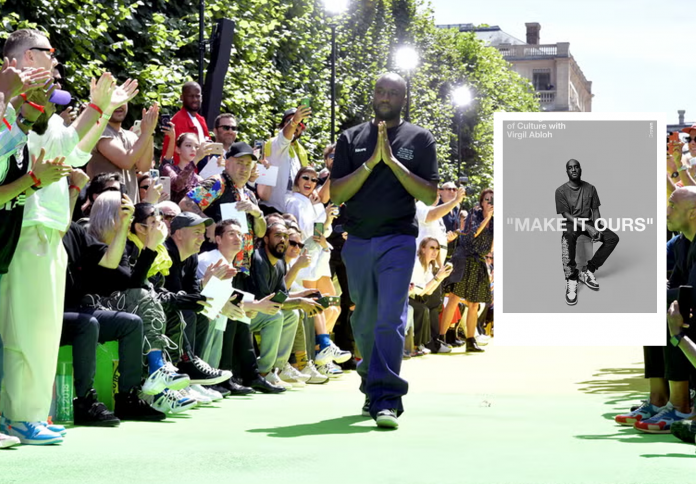
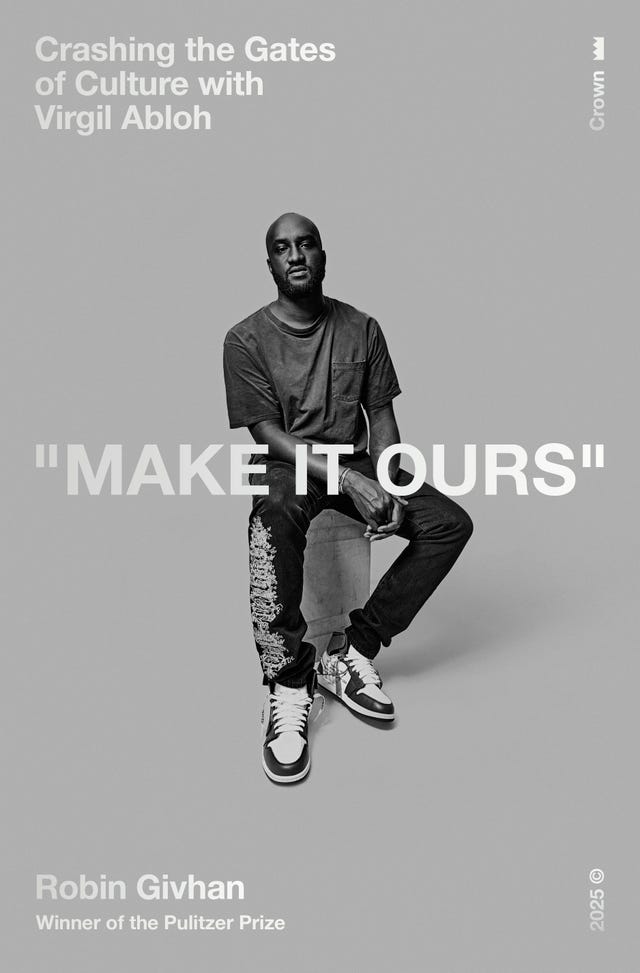
In Make It Ours: Crashing the Gates of Culture With Virgil Abloh, Pulitzer Prize–winning critic Robin Givhan offers more than a biography—she delivers a study of transformation, ambition, and cultural disruption. Through the life of Virgil Abloh, Givhan unpacks what it means to exist “in between”—between industries, identities, and expectations—and how one man turned that liminal space into the center of global fashion.
Beyond biography, toward legacy
Robin Givhan’s Make It Ours isn’t a traditional fashion biography. Instead, it’s a cultural exploration, tracing how Virgil Abloh—architect, DJ, fashion disrupter, and Louis Vuitton artistic director—crashed the gates of an industry that rarely opened them. Abloh’s story is less about the clothes he designed and more about the ideas he cultivated, the barriers he challenged, and the people he empowered. Givhan deftly places Abloh in a larger historical and cultural framework, focusing on how he redefined what success in fashion could look like—especially for a young Black man from the Midwest.
The book introduces Abloh not as an overnight prodigy but as a restless thinker, always in motion, always iterating. Born in Rockford, Illinois to Ghanaian immigrants, Abloh studied civil engineering before earning a master’s in architecture. But it was during those academic years that his mind began blending disciplines. Fashion. Architecture. Music. Skate culture. Design. He refused to choose one. That refusal, Givhan shows, became the bedrock of his vision: a world where categories blur, and ideas evolve in constant remix.
A city’s son, a culture’s student
Chicago looms large in Abloh’s story, and Givhan makes clear it shaped him in profound ways. The city’s dual legacy—brilliant architecture amid systemic segregation—reflected the very tensions Abloh later explored in his work. He didn’t emerge from an established fashion capital or elite atelier. Instead, his early creative universe revolved around skate parks, mixtapes, and Tumblr blogs. These were spaces of curiosity and critique, where he and his peers—like longtime collaborator Kanye West—sought access to an industry that often ignored them.
Givhan explores how Abloh’s label, Off-White, wasn’t just a name—it was a statement of intent. “It’s like my own ruler,” he once said. “It’s okay to have two answers to a singular question.” He didn’t want to erase contradictions. He wanted to live in them. From Pyrex Vision to Off-White to Louis Vuitton, his output wasn’t about mastery in the traditional sense. He didn’t cut patterns like a couturier, but he made garments that spoke to a generation. In Givhan’s words, he promoted ideas—not just products.
A new design language
Abloh’s design philosophy was rooted in communication and improvisation. Through WhatsApp chats, street observations, and endless conversation, he built a style that felt urgent and unfinished by design. His “3% rule”—the idea that modifying an object by just 3% could make it new—challenged the fashion world’s obsession with radical reinvention. A quotation mark here, a zip tie there. Simple shifts with seismic impact.
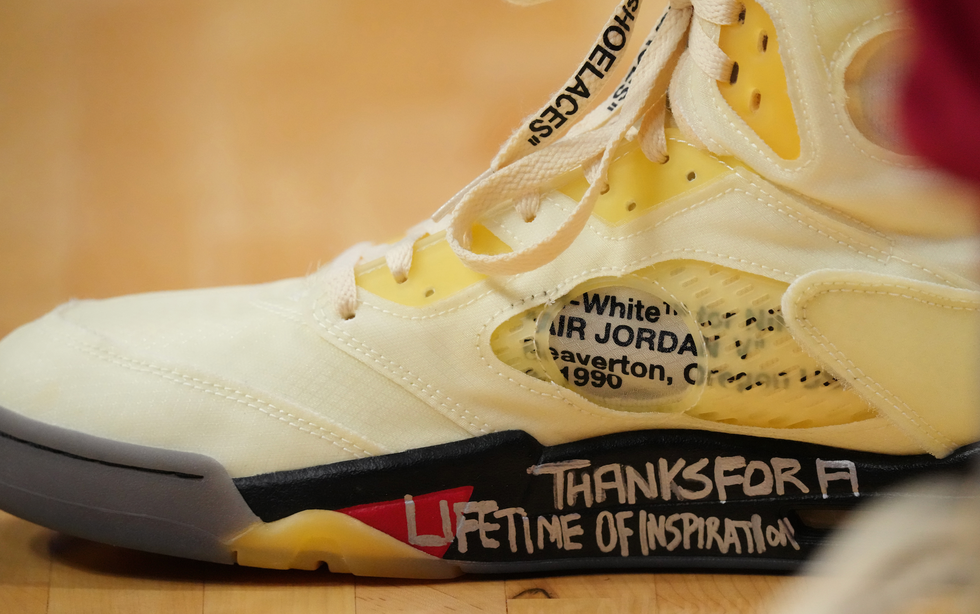
Givhan also highlights Abloh’s revolutionary work with Nike, which helped turn sneakers into canvases of expression and collectability. His collaborations weren’t just commercial—they were cultural. By foregrounding customization, he let consumers participate in the creative act. It wasn’t just what the shoe looked like; it was what it said about you. In this way, Abloh democratized luxury and made streetwear intellectual. He turned fashion into a shared language of aspiration.
Reimagining fashion’s center
Through Abloh, Givhan tells a broader story about Blackness, masculinity, and visibility in fashion. She revisits the work of designers like Edward Buchanan and Ozwald Boateng, whose quiet breakthroughs laid the foundation for Abloh’s ascent. But Abloh pushed the narrative further. He didn’t just include Black men in the fashion story—he put them at its center. “Abloh placed young Black men in the center of the American story,” Givhan writes. “It was a blend of high and low: a statement about the added value of Blackness and a merging of past and present.”
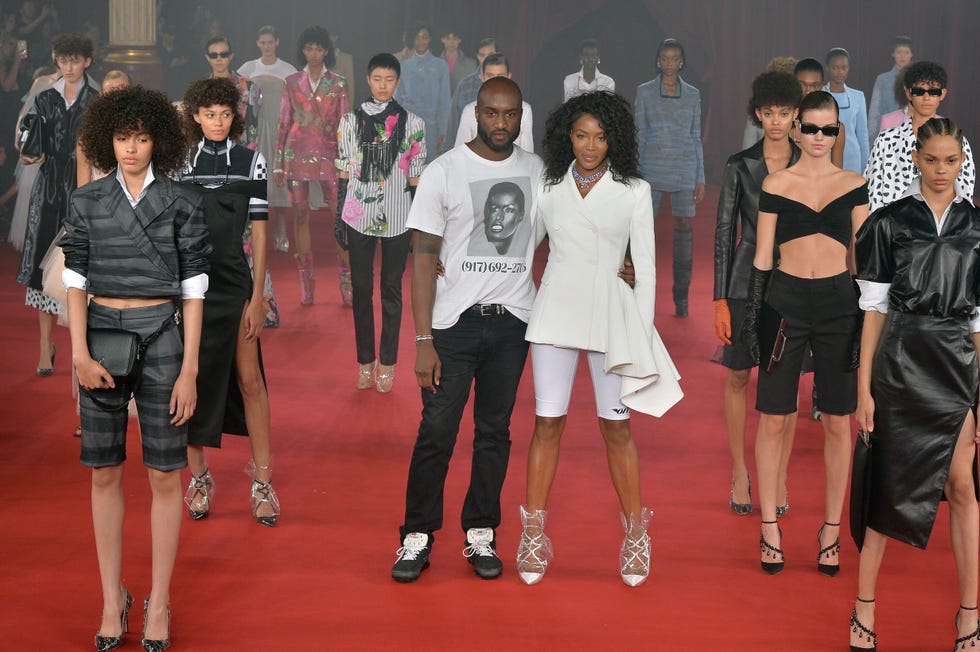
Abloh’s rise to Louis Vuitton was more than symbolic. It was structural. Givhan compares the moment to Barack Obama’s presidency—a once-unimaginable milestone made real. But Abloh didn’t retreat behind the walls of the maison. Instead, he filled its runway seats with students, handed out rainbow “Not Home” T-shirts, and framed his debut as a modern-day journey to Oz. His mother was there. His community was there. The fashion establishment was watching, and Abloh made sure they weren’t the only ones who mattered.
A philosophy for the future
Make It Ours is ultimately a book about belief—belief in the unfinished, the in-between, the yet-to-come. Givhan captures Abloh’s ethos of process over perfection, dialogue over dominance. For Abloh, the act of making wasn’t about finality. It was about offering a starting point, one that others—especially young Black creatives—could build on. In his world, the messy middle was where possibility lived.
Today, in a culture increasingly flattened by algorithms and aesthetic sameness, Abloh’s vision feels more vital than ever. He saw creativity as a conversation, not a monologue. He valued sincerity over polish, and curiosity over certainty. He challenged the old gatekeepers and gave new voices a microphone.
Virgil Abloh may be gone, but Givhan’s book reminds us: the best thing he ever designed wasn’t a sneaker, a hoodie, or even a fashion show. It was a mindset. A model for how to move through the world—fearless, generous, unfinished, and free.