As the world of sports prepares for a year of unprecedented spectacles—from the Winter Olympics in Milan to the lead-up for the 2027 Africa Cup of Nations—the architectural landscape is rising to the occasion. 2026 is poised to be a milestone year for stadium design, with eight high-profile venues scheduled to open across four continents. These projects represent a shift toward “narrative-driven” architecture, where the form of the stadium is as important as the function it serves. From Buffalo’s “intimidating” new NFL home to Saudi Arabia’s whirlpool-inspired coastal arena, these structures are designed to be cultural landmarks that resonate with local identity while utilizing cutting-edge materials. As “Magazine World” explores, the stadiums of 2026 are no longer just places to watch a game; they are sophisticated urban interventions that blend sports, hospitality, and civic pride.
Buffalo’s Intimidating New Fortress
In the United States, all eyes are on Orchard Park, New York, where the new Highmark Stadium is nearing completion. Designed by the industry titans at Populous, the 62,000-seat venue is set to become the permanent home of the NFL’s Buffalo Bills. The design team sought to capture the “projection of strength” associated with the city of Buffalo, moving away from the generic multipurpose bowls of the past. Instead, they have created an “intimate yet intimidating” football-first environment. By bringing the stands closer to the field and utilizing materials that reflect the region’s industrial heritage, the stadium is designed to amplify the home-field advantage.

The structure is a masterclass in modern sports engineering, featuring a form that is both open and protective, accounting for the infamous Buffalo winters. While many modern stadiums prioritize luxury suites, Highmark Stadium places a premium on the “fan experience” in the lower bowls, ensuring that the energy of the crowd remains concentrated. This project is a clear signal that even in the age of digital streaming, the physical atmosphere of a live game remains a primary driver for multi-billion-dollar architectural investments.
Miami’s Freedom Park: A Beckham-Led Vision
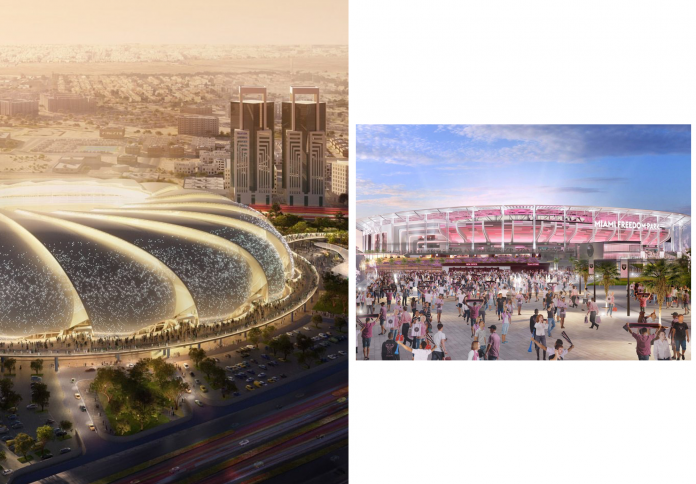
To the south, the Inter Miami Freedom Park Stadium is set to redefine the sports culture of Florida. Co-owned by English football legend David Beckham, the 25,000-seat stadium is being designed by Manica Architecture as the centerpiece of a massive 58-acre redevelopment project. Located strategically near Miami International Airport, the stadium is not just a pitch for Major League Soccer; it is part of a larger community ecosystem designed by Arquitectonica. The surrounding parkland will feature hotels, restaurants, and a network of youth soccer fields, turning a former golf course into a public cultural hub.

The design of the stadium itself is sleek and aerodynamic, reflecting the fast-paced energy of Miami. Its relatively modest capacity compared to NFL venues is a deliberate choice, intended to create a sell-out atmosphere for every match. By integrating the stadium into a larger commercial and recreational park, the developers are ensuring that Freedom Park remains a destination 365 days a year, rather than just on match days. It is a blueprint for the “lifestyle stadium,” where professional sports serve as the anchor for a vibrant, mixed-use urban district.
Saudi Arabia’s Whirlpool on the Coast
As Saudi Arabia accelerates its preparations to host the 2034 World Cup, the kingdom is unveiling its first major project for the tournament: the Aramco Stadium in Khobar. Designed by Populous, this 47,000-seat arena is a poetic tribute to the sea. The architecture is informed by the “whirlpools” and “overlapping sails” of the Arabian Gulf, utilizing graceful, natural wave motifs to blend the massive structure into the coastal landscape. This project is part of a “slew of new stadiums” that will define the Saudi sports landscape over the next decade.
The Aramco Stadium is more than just a venue; it is a statement of intent for the Saudi 2030 Vision. It combines high-tech spectator cooling systems—essential for the region’s climate—with an aesthetic that honors the local community’s profound connection to maritime history. By creating a stadium that feels like a natural outgrowth of the coastline, the designers have avoided the “spaceship” aesthetic often associated with rapid Middle Eastern development. It stands as a symbol of the country’s emergence as a global player in the world of sports and luxury tourism.
National Pride and Cultural Icons: Kenya and Turkey
Across the globe, stadiums are being used as powerful symbols of national identity. In Nairobi, the 60,000-seat Talanta Sports Stadium is set to become the largest venue in Kenya. Designed by the Beijing Institute of Architectural Design and built by Chinese contractors, the stadium is wrapped in a white steel mesh that features eight giant shields—a direct motif from the Kenyan flag. This project is being built ahead of the 2027 Africa Cup of Nations, signaling Kenya’s readiness to host the continent’s most prestigious football tournament.

Similarly, Turkey is preparing for Euro 2032 with the completion of the New Ankara Stadium. Designed by Bahadır Kul Architects, the 58,000-seat venue features a striking steel roof informed by the “form of a soccer ball.” These national projects demonstrate that in 2026, stadium architecture is being used to communicate a country’s cultural heritage and modern ambitions to a global audience. Whether through the literal inclusion of national symbols or the metaphorical use of geometric forms, these arenas are becoming the “new cathedrals” of their respective nations.
Olympic Ambitions and Post-Quake Recovery
The year 2026 also sees projects that address specific historical and global events. In Milan, the Santagiulia Ice Hockey Arena, designed by David Chipperfield Architects, is preparing to host the Winter Olympics. The 14,000-seat arena reinterprets the archetype of the classical amphitheatre with modern tectonics. Meanwhile, in New Zealand, the “Te Kaha” – One New Zealand Stadium is nearing completion in Christchurch. This multi-use venue is a crucial part of the city’s post-2011 earthquake recovery plan, replacing the damaged Lancaster Park and providing a state-of-the-art home for rugby and music events.

From the expansion of Manchester City’s Etihad Stadium to the iconic ice hockey arenas of Italy, the class of 2026 proves that sports architecture is more diverse than ever. These stadiums are meeting the demands of modern technology, environmental sustainability, and social responsibility. As they open their gates throughout the year, they will provide the stage for some of humanity’s most shared moments, reminding us that the buildings we create to house our games are as much a part of the story as the athletes themselves.