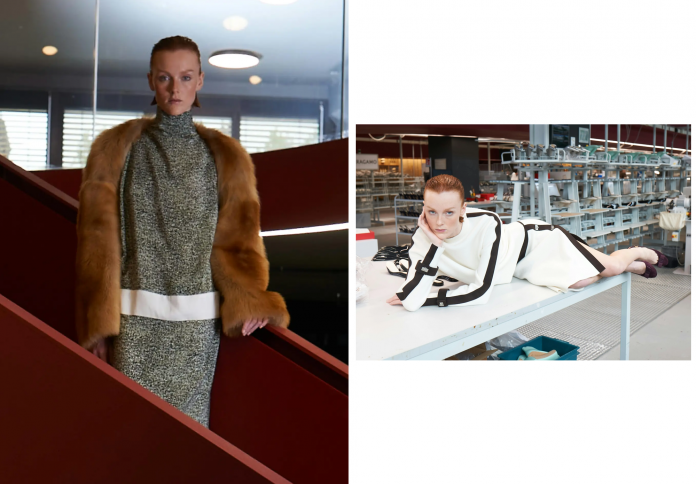
In a quiet corner of Ferragamo’s workshop near Florence, the air is thick with the scent of high-grade leather and the rhythmic sound of artisanal tools. This is the Ferragamo Atelier, a space where “industrial production” is a forbidden phrase and heritage is treated as a living, breathing entity. In late 2025, the house turned its focus back to its most enduring icon: the Vara shoe. Born from a “happy mistake” in 1978, the Vara’s signature grosgrain bow and gold plaque have survived five decades of shifting trends. As we enter 2026, creative director Maximilian Davis has reimagined this archival treasure for a new generation, proving that in the world of Ferragamo, the most profound innovations are often found in the mistakes of the past.
The Accident That Built a Dynasty
The story of the Vara shoe is a masterclass in the beauty of imperfection. In 1978, Salvatore’s eldest daughter, Fiamma Ferragamo, was tasked with creating a shoe for the modern, on-the-go woman. During the prototyping stage, a craftsman mistakenly used a grosgrain ribbon meant for a different project to create the bow. Rather than rejecting the error, Fiamma recognized its charm. She added a metal plaque engraved with the Ferragamo logo, and an icon was born.

Almost 50 years later, the Vara remains one of the world’s best-selling luxury shoes. The “Atelier” approach ensures that each pair is still largely finished by hand. This dedication to craft is what has allowed the Vara to transcend its origins as a “mid-height” functional pump and become a symbol of Italian elegance. For 2026, the shoe has undergone a subtle evolution under the Vara Bow Project, featuring a sleeker, more tapered toe and new sculptural heel heights that range from 30mm to a towering 95mm.
Maximilian Davis: Archival Alchemy
Since joining the house in 2022, Maximilian Davis has made it his mission to “reframe” the Ferragamo archive. His strategy is not one of nostalgia, but of alchemy—taking the rigid codes of the past and melting them into something fluid and contemporary. For the Spring/Summer 2026 collection, Davis looked further back to the 1920s, the era when Salvatore Ferragamo first found fame in Hollywood.

The collection features “speakeasy” tailoring and drop-waisted dresses that echo the liberated spirit of the interwar years. Davis has masterfully integrated archival motifs, such as floral prints from the house’s 1920s silk library, into modern silhouettes. This “Atelier” sensibility extends to the footwear, where the Cage pump—a design first patented by Salvatore in the 1920s—has been revamped as a sharp, modern mule with an “S-shaped” heel as a nod to the founder’s initials.
The “Soft-Bag”: A 2025 Archival Resurrection
While the Vara dominates the footwear conversation, 2025 marked the return of an archival star in the leather goods category: the Soft-Bag. Inspired by a versatile, rounded silhouette from the brand’s past, Davis reintroduced the bag as a cornerstone of his “classicism meets boldness” vision. The bag is defined by its volume and its signature Gancio pin, which sits on either side of its supple folds.

The Soft-Bag reflects the 2026 trend of “hug-able” luxury—accessories that prioritize tactile pleasure over stiff structure. Available in suede and semi-glossy nappa, it has been embraced by cultural icons ranging from Michelle Monaghan to Paloma Elsesser. By focusing on the “archival star,” Davis is successfully building a wardrobe of “essential Ferragamo” items that feel relevant across multiple generations.
The Vara Bow Project: Four Faces of Modernity

To celebrate the Vara’s enduring relevance, Ferragamo launched the Vara Bow Project in late 2025. The campaign features four distinct women who embody the shoe’s versatility: model Paloma Elsesser, actress Hyeri Lee, Italian icon Bianca Balti, and Fiamma’s own niece, Fiamma Paternò Castello di San Giuliano. Each woman wears the Vara in a way that reflects her unique lifestyle, from the high-glamour 95mm sandal to the pragmatic Mary Jane.

This campaign is a strategic pivot for the brand, moving away from “faceless luxury” toward a narrative of individual identity. It reinforces the idea that the Vara is not a uniform, but a canvas. Whether paired with a 1920s-inspired fringe dress or a modern denim ensemble, the bow remains a constant—a small, grosgrain reminder that Ferragamo’s heritage is rooted in the joy of movement and the authenticity of the wearer.
Looking Toward Pre-Autumn 2026

As the 2026 fashion cycle continues, the “Atelier” spirit is moving into maritime territory. The Pre-Autumn 2026 collection, teased in December 2025, explores the concept of “The Golden Age and the Open Sea.” Expect deconstructed loafers for men and crocodile-print slingbacks that continue Davis’s obsession with high-contrast materiality. The craftsmanship remains front and center, with woven leather panels that take weeks to complete.

The legacy of the Ferragamo Atelier is one of “controlled boldness.” By honoring the “happy mistakes” of the 1970s and the cinematic heights of the 1920s, Maximilian Davis has ensured that Ferragamo is not just a brand with a history, but a brand with a future. In 2026, the bow is still tied tight, and the workshop in Florence is busier than ever.