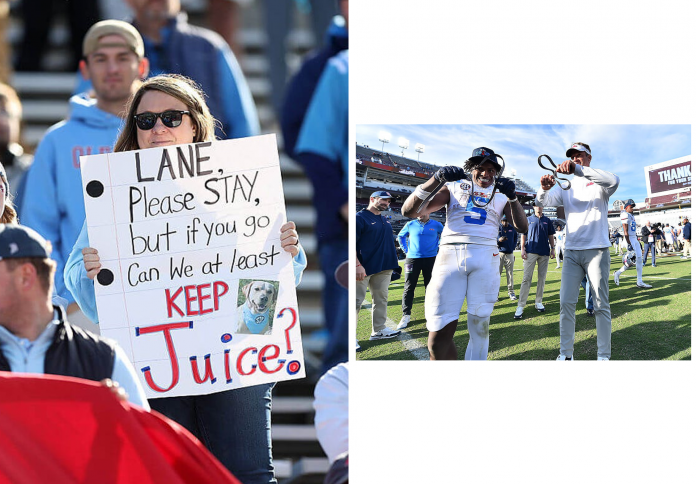
The Ole Miss Rebels’ 38-19 victory over Mississippi State in the annual Egg Bowl should have been an unadulterated moment of triumph, a joyous culmination of an 11-1 regular season and the certain confirmation of the program’s first-ever College Football Playoff berth. Instead, the final gun in Starkville was met with a deep, unsettling silence, the cheers muted by the massive, unresolved question hanging over the entire organization: Would Lane Kiffin leave for LSU? Kiffin’s calculated silence throughout the high-stakes week and his post-game promise of a “Saturday decision” sucked all the air out of the achievement. This historic win—the definitive proof of Kiffin’s success in Oxford—was instantly transformed into a bittersweet farewell, exposing the raw, transactional nature of modern college football where even the greatest seasons can end not with a trophy, but with a coach walking out the door.
The Cloud Over Starkville: The Egg Bowl as an Audition
The 2025 Egg Bowl was less a traditional rivalry game and more a tense, public audition of Lane Kiffin’s worthiness for the LSU job, with every play serving as a testament to his offensive genius.

The atmosphere surrounding the game was thick with anxiety, palpable both on the sidelines and in the stands. The Rebels delivered a dominant, steady performance, showcasing the offensive efficiency and tempo that had rebuilt the program. They controlled the line of scrimmage, averaged high yards-per-play, and showed no visible signs of distraction despite the overwhelming national spotlight focused on their coach’s future. For Ole Miss fans, the victory was meant to be the capstone of a legacy-defining season, but for national reporters, it was merely the final piece of evidence in Kiffin’s portfolio. The collective relief of winning the Egg Bowl was immediately replaced by the universal dread of his impending decision, confirming the bitter truth that the program’s greatest achievement was instantly overshadowed by the pursuit of its head coach by a more resource-rich rival.
The victory itself was merely a procedural requirement; the real emotional drama was the clock counting down to Kiffin’s pronouncement.
The Unthinkable Distraction: Drama in the Locker Room
Adding to the surreal intensity of the day, Kiffin revealed an unprecedented pre-game drama that he claimed his players had to overcome, highlighting the bizarre circumstances surrounding his final game.
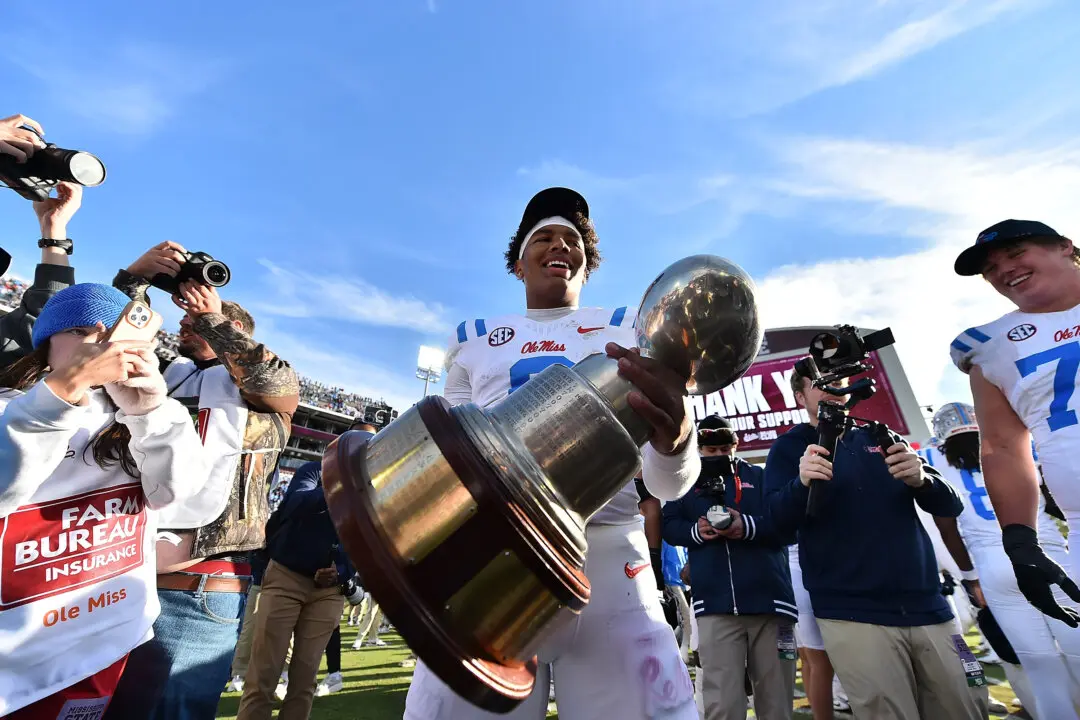
Hours before the midday kickoff, the Ole Miss locker room in Starkville was reportedly broken into, with the perpetrators attempting to disrupt the team’s preparation. Kiffin claimed the thieves made off with quarterback Trinidad Chambliss’s game jersey, forcing the equipment staff into a frantic race to secure a replacement before the game. While Kiffin used the incident to praise his team’s focus and resilience—stating that such “distractions” only bonded them—the story underscored the level of chaos the team was navigating. This bizarre episode became a footnote in the immediate aftermath, yet it perfectly symbolized the high-stress, unpredictable environment that Kiffin thrives in, and the level of external noise that defined his tenure—a chaos the players had learned to weather, only to be abandoned by their captain immediately afterward.
Kiffin’s Anguish: A Public Display of Contemplation
Lane Kiffin’s post-game press conference became a masterclass in controlled ambiguity, where he carefully balanced his public image of conflicted loyalty with the underlying reality of his career calculation.
Kiffin told reporters that he hadn’t made a decision, stating that the situation was “not as enjoyable as people think it is” and that he needed to “pray to figure this thing out.” He appeared genuinely emotional when discussing the difficulty of the choice and even mentioned seeking advice from mentors like Nick Saban and Pete Carroll. This performance resonated with fans who hoped his attachment to Oxford and his family’s local ties would prevail. However, the sincerity of his anguish was immediately questioned against the background of the massive financial offers from LSU—reported to be around $90 million over seven years. For many, the post-game show was simply Kiffin buying time, adhering to his agreement with Athletic Director Keith Carter to defer the announcement until Saturday while he solidified the final details of his departure.
The Denial: Why Ole Miss Refused the Playoff Farewell
The brief window of uncertainty was violently shut down by Ole Miss officials, who denied Kiffin’s final, controversial request to coach the team through its College Football Playoff run.

On Saturday, following the historic victory, Kiffin met with Athletic Director Keith Carter and Chancellor Glenn Boyce, reportedly to finalize his LSU deal while simultaneously proposing a compromise: he would coach the Rebels through the CFP. Kiffin argued that his presence was vital to the team’s performance and success in the once-in-a-lifetime playoff opportunity. Carter and Boyce, however, rejected the request outright. Their decision was driven by a need for immediate stability and a defense of the program’s integrity. Allowing Kiffin to coach the Rebels while having accepted the LSU job would have created an untenable situation—a recruiting risk where he could potentially poach players and staff, and a mental distraction that would overshadow the playoff itself. Carter swiftly demanded an immediate separation, forcing Kiffin to step away from the team he had guided to its greatest season, just before its biggest moment.
The Price of Progress: A Bitter End to a Historic Run
Kiffin’s exit, which reportedly included him requiring a police escort from the airport amid fan shouting, cemented the Egg Bowl as the defining moment of the program’s modern tragedy.
The final irony is brutal: Kiffin delivered Ole Miss its first 11-win regular season and its first-ever CFP berth, only to leave the team emotionally and strategically vulnerable for the postseason. His success was undeniable, but the manner of his departure—abandoning the team at the threshold of greatness—highlighted the cold reality that professional aspirations trump sentimental loyalty in modern college athletics. The Egg Bowl victory is now forever fused with the agony of betrayal, serving as the moment the Rebels achieved their dream, only to have their coach—the architect of that dream—pull the rug out from under them in pursuit of a bigger, more permanent dynasty in Baton Rouge. The Ole Miss fanbase is left to celebrate a historic win while grappling with the loss of its most important asset.