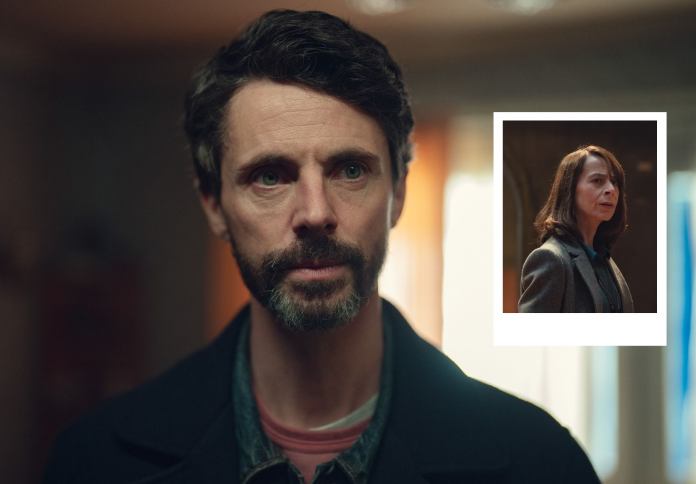
Dept Q may have solved its central mystery—what happened to Merritt Lingard—but the series finale left behind a sticky web of unanswered questions. Chief among them is the true role of Moira Jacobson, the enigmatic commanding officer played by Kate Dickie. Friend or foe? Ally or architect of deception? From spider phobias to shady budget decisions, fans are unraveling theories faster than Moira closes a case file.
What’s with the spiders?
No one expected arachnophobia to become a plot device in a brooding Scottish detective series, but here we are. From early on, Moira Jacobson is shown using what appears to be immersion therapy to combat a fear of spiders. At first glance, it’s the kind of eccentric detail often assigned to complex TV cops—a nod to psychological depth, maybe even a touch of dark humour.
But Dept Q doesn’t seem to include anything by accident. We repeatedly see Moira examining files while a realistic fake spider rests nearby, and an exposure therapy track plays in the background. One of those files is the Leith Park case—directly connected to the shooting of Carl Morck (Matthew Goode) and James Hardy (Jamie Sives). Could it be that the spiders are more than a personal quirk? Are they a metaphor for fear, entrapment—or even guilt?
Perhaps the spider sessions are a form of double immersion. If Moira uses them while reviewing something truly disturbing, it could signal that she associates the Leith Park case with a deeper fear—not just of the content, but of what it might expose about her role in it. If that’s true, the question becomes: what exactly does she know that she’s not sharing?
Why does she sideline Carl?
When Hardy finally returns to duty, he’s approached by Jacobson, who casually asks him to take a look at a case.
“Something for me and Carl?” Hardy asks.
“Something for you,” she replies.
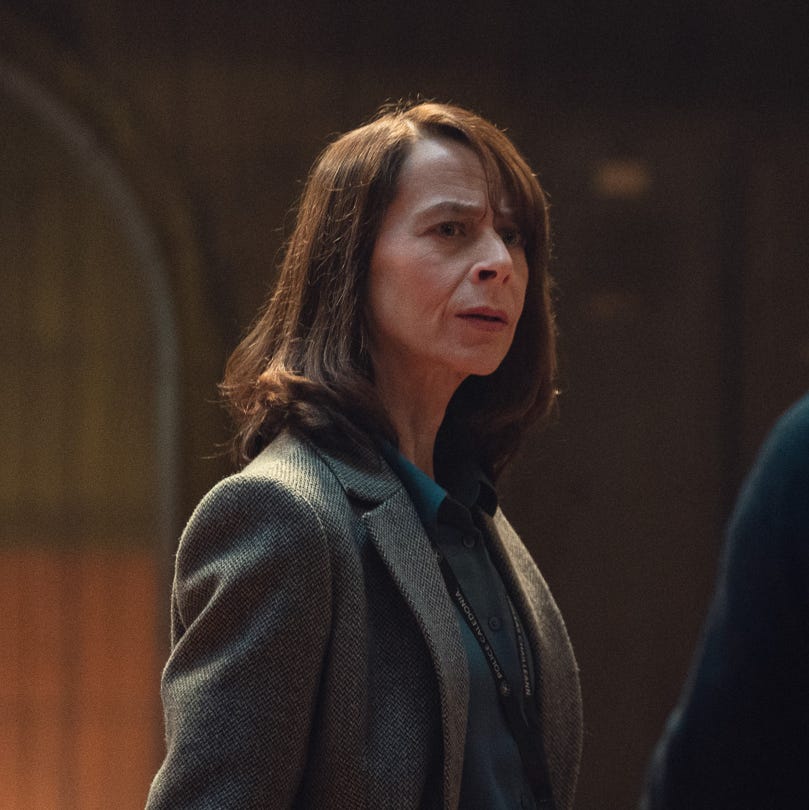
The case? Leith Park—the one tied to the shooting that sidelined both him and Carl. That Jacobson wants Hardy to review it without Morck is a major red flag. Is she simply trying to get a second opinion, or does she suspect Carl of mishandling, or worse—covering up—parts of the investigation? Her actions suggest deeper motives. Moira looks at the file, closes it slowly, and we see the fake spider once again. The framing feels symbolic. The spider is her fear trigger—and perhaps a sign that what’s in that file isn’t just troubling, but dangerous. Why involve Hardy alone? Is she trying to keep Carl out of the loop? Or is she using Hardy to reframe the narrative around the shooting?
If Carl is viewed as unstable or unreliable, especially post-trauma, Moira could be isolating him to ensure control over the investigation’s outcome. The question then isn’t just what happened to Carl—but who wants the truth buried.
The case of the missing budget
Another breadcrumb trail worth following? The money. From the moment Dept Q is reactivated, there’s a clear disparity in resources. New screens, fancy offices, plenty of cash floating around—yet somehow, Carl and his basement crew are running on fumes. They’re given a dysfunctional workspace and minimal support. Meanwhile, other departments seem to be thriving on the same budget boost.
At first, this could be written off as poor management or standard bureaucratic inefficiency. But in a world of gritty crime drama politics (Line of Duty fans, take a bow), such mismatches often suggest something more deliberate.
Is Moira using Dept Q as a budget loophole? She opens the unit to access funding, only to funnel it elsewhere. If so, that’s more than creative accounting—it’s calculated misdirection. Worse, she seems to be actively setting Carl up to fail. Consider the press conference she throws him into, knowing full well he isn’t prepared. Public humiliation, followed by a lack of support—it’s the classic playbook for sidelining a threat.
A team built to miss the truth?
The Leith Park investigation is riddled with mistakes—and not just the kind that come from a tight deadline. When Carl finally discovers that the victim’s alleged daughter never existed, it begs the question: why didn’t anyone else on the team notice?
This isn’t a minor oversight—it’s a glaring inconsistency that should’ve come up on day one. Instead, the case seems to have been intentionally mishandled. If Carl is the only one putting the pieces together, does that mean he’s the only capable detective? Or has Moira deliberately stacked the team with people who won’t ask the right questions?
It’s a familiar pattern in detective thrillers: promote the loyal, sideline the critical. If Jacobson wanted the Leith Park case kept cold, assigning a mediocre team would ensure that. Carl’s presence threatens that status quo—not just because he’s smart, but because he won’t stop digging. That leaves us with a chilling possibility: Moira may not be investigating the case. She may be managing it.
So… friend or foe?
The brilliance of Kate Dickie’s performance is that she never tips too far into villainy or virtue. Moira Jacobson remains a mystery—at times nurturing, at others coldly bureaucratic. She clearly cares about her team, yet often undermines them. She seems haunted by something—but is it guilt, grief, or something more strategic?
Whether she’s part of a deeper conspiracy, or simply a compromised figure trying to navigate a broken system, Moira represents the ambiguity at the heart of Dept Q. If Carl and Hardy are the moral centre, Moira is the moral question mark—always just outside the frame, closing files, planting seeds of doubt, keeping her web intact. And just like the spider she fears, Moira may be far more dangerous than she appears.
Dept Q gave us a satisfying resolution to one mystery but left just enough loose threads to make us wonder who’s really pulling the strings. With her spiders, shady budget moves, and cryptic management style, Moira Jacobson might not just be the boss—she might be the next case.