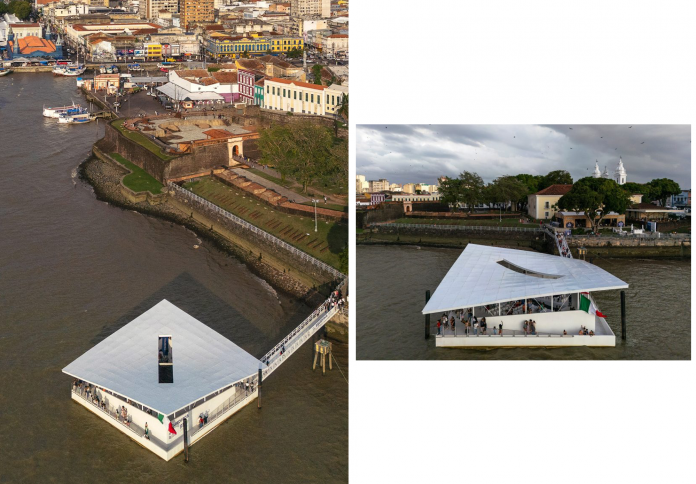
The AquaPraça plaza—a proposed design collaboration between Italian architect Carlo Ratti and American firm Howeler + Yoon—is a visionary response to the extreme hydrological fluctuations of the Amazon River basin. Designed to float and adapt to the dramatic seasonal rise and fall of the river, this project fundamentally re-imagines civic space in an aquatic environment. The plaza is intended to serve as a multi-functional community hub, featuring markets, public gathering areas, and educational zones, all housed within a buoyant structure. This innovative approach to architecture not only provides crucial social infrastructure but also celebrates the unique, cyclical rhythm of the Amazon, making the river’s powerful natural processes an integral part of the public experience.
The Challenge of the Hydrological Cycle
The Amazon River and its tributaries experience one of the most severe seasonal variations on the planet, with water levels fluctuating by as much as 14 meters (45 feet) between the dry and wet seasons.

This extreme cycle renders traditional, fixed architectural solutions impractical and vulnerable to flooding. The AquaPraça design directly addresses this challenge by utilizing buoyant engineering, ensuring the plaza rises and falls with the water level. This adaptive design strategy allows the community to maintain continuous access to the civic space regardless of the season. The architecture itself becomes a dynamic representation of the river’s life cycle, providing a compelling new model for resilient public infrastructure in flood-prone regions globally.
Floating Platform and Core Structure
The core of the AquaPraça concept is a robust, modular floating platform that provides the foundational stability and flexibility required for a high-traffic public space.

The platform is designed to be constructed from locally sourced, lightweight, and durable materials, potentially utilizing engineered timber or recycled components to minimize environmental impact. The architectural program—which includes covered market stalls, open gathering areas, and shaded zones—is organized around a flexible grid system. Crucially, the design accounts for all necessary utility connections, such as water, sanitation, and power, ensuring they can safely adjust to the extreme vertical movements of the river without interruption.
A Hub for Commerce and Community Life
More than just an architectural feat, the AquaPraça is conceived as a vital economic and social engine for the local Amazonian communities, many of which rely heavily on river transport and trade.

The design integrates a dedicated marketplace area, providing a safe, stable venue for vendors to sell their goods, particularly during the rainy season when riverbanks are often submerged. The plaza also features educational spaces and cultural performance areas, fostering community interaction and celebrating the unique heritage of the Amazonian people. By creating a reliable, centrally located space, the AquaPraça aims to reinforce local identity and support economic stability throughout the year.
The Synergy of Ratti and Howeler + Yoon
The project is a product of a dynamic transcontinental collaboration, bringing together the expertise of Carlo Ratti, known for his focus on “senseable cities” and technology-driven design, and Howeler + Yoon, celebrated for their research-driven, materially inventive and context-responsive architecture.

Ratti’s contribution often involves integrating digital tools and responsive systems to enhance the user experience, potentially including real-time monitoring of river levels or interactive displays. Howeler + Yoon’s expertise grounds the design in the physical reality of the site, ensuring the structure is not only visually compelling but also structurally sound and culturally appropriate. This partnership results in a design that is simultaneously futuristic in its technical adaptability and deeply rooted in its local environmental context.