In the vibrant heart of New York City’s Chinatown, a groundbreaking community hub designed by Spaced Agency is redefining the role of architectural intervention in fostering urban resilience. This innovative space, created for the non-profit “Welcome to Chinatown,” transforms a former plumbing fixtures store into a dynamic, highly flexible nexus for small business incubation, cultural celebration, and community-led placemaking. Through a sensitive blend of cultural iconography—from mobile carts inspired by dim sum trolleys to a shimmering curtain echoing storefront gates—and ingenious modular design, the hub navigates the challenges of a deep, windowless interior. It embodies a philosophy of “characterful framework” that anticipates and encourages organic accumulation and expression by its users, providing a vital platform to bolster economic vitality, preserve heritage, and empower a cherished neighborhood in its ongoing evolution.
A Resilient Hub for Chinatown’s Future

The “Welcome to Chinatown” hub, a brainchild of the non-profit organization dedicated to supporting and revitalizing the historic neighborhood, represents a crucial infrastructure for its future resilience. Situated in New York City’s iconic Chinatown, the hub is designed to address a multifaceted array of community needs, particularly focusing on bolstering small businesses that are the lifeblood of the area. The challenges faced by these enterprises, from increasing competition to language barriers and limited access to resources, are significant. This new center aims to directly alleviate some of these pressures by providing a dedicated physical space and a supportive ecosystem.
Beyond its role as a small business incubator, the hub functions as a versatile event space, capable of hosting a wide variety of community-led activities. This multifaceted utility underscores its importance as a vital resource center, offering not just physical space but also advisory services, mentorship meetings, and a platform for cultural events. Spaced Agency’s design approach was deeply rooted in understanding these diverse programmatic functions, transforming a previously utilitarian plumbing fixtures store into a fluid, adaptable venue that can seamlessly shift between different roles – from a co-working environment to a gallery, a marketplace, or a lecture hall, depending on the community’s evolving needs.
Architectural Adaptability: A Dynamic Interior Landscape

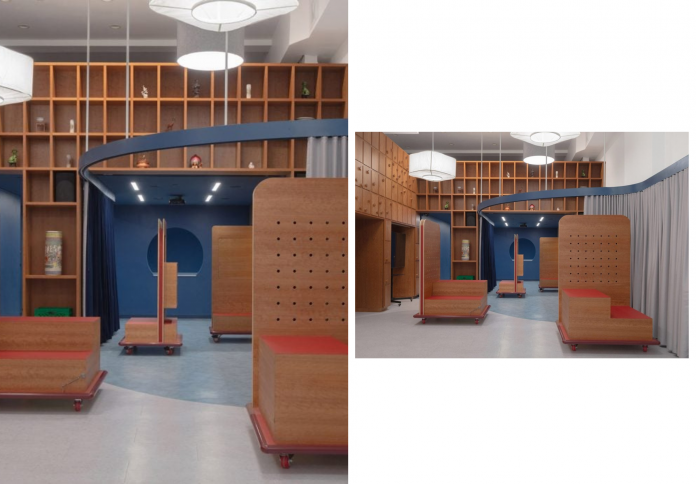
Spaced Agency faced significant design challenges when converting the former plumbing fixtures store into the “Welcome to Chinatown” hub. The space was characterized by its narrow, deep, and notably windowless layout, posing a considerable hurdle for creating an inviting and functional environment. To overcome these limitations and ensure the space could serve a very diverse range of uses, Spaced Agency founder TK Justin Ng implemented a highly adaptable and modular design strategy centered around three primary components: a long, sweeping curtain; mobile wooden units; and two large shelving units.
The curtain, stretching the entire length of the space, is a key element in its flexibility. Mounted on a radial track, it can curve outwards towards the center or hug the walls, allowing for dynamic spatial reconfigurations. This curtain serves to divide the hub’s deep-blue meeting rooms and lounge area from a more open gallery space and entryway. Its ability to cover the gallery wall also allows the entire space to be opened up for larger events when needed, offering unparalleled versatility. The mobile wooden units, designed to be easily reconfigured, further enhance this adaptability. Their arrangement, combined with the curtain, provides numerous layout possibilities, catering to events ranging from lectures and movie screenings to pop-up night markets, ensuring the space remains a responsive and vital community asset.
Cultural Echoes: Design Rooted in Identity

The design of the “Welcome to Chinatown” hub is not merely functional; it is deeply imbued with cultural significance, drawing directly from the “iconographies of Chinatown” and broader Chinese cultural elements. This contextual rootedness is a hallmark of Spaced Agency’s work, which specializes in “using artful research to design places rooted in context and possibility.” TK Justin Ng emphasized how the main design elements—the carts, the curtain, and the color palette—all echo the rich heritage of the surrounding neighborhood and Chinese culture at large.

The mobile wooden carts, for instance, are a direct nod to the ubiquitous dim sum carts found in Chinese restaurants, as well as the street vendor carts that are a familiar sight on Chinatown’s lively thoroughfares. This literal reference creates an immediate sense of familiarity and cultural connection within the space. The silver of the curtain subtly echoes the metal gates that form the storefronts of Chinatown, a common visual element in the neighborhood’s commercial landscape. Even the choice of deep blue for the walls is culturally significant; while providing a calming base, it is also a prevalent color in Chinese culture, often used to offset vibrant reds, and is associated with major holidays like Chinese New Year, signifying good fortune. The cherry wood used for the large shelving units was specifically chosen for its widespread use in traditional Chinese furniture construction, further embedding cultural authenticity into the material palette.
Anticipating Community: An Organic Framework for Expression

A core tenet of Spaced Agency’s design philosophy for the “Welcome to Chinatown” hub was to create a “characterful framework that allows and encourages accumulation and expression by the people who use it.” This means the space was intentionally designed not to be overly prescriptive or “finished” in a conventional sense, but rather to be a responsive canvas that can evolve organically with the community’s needs and contributions. This approach addresses the challenge of designing a windowless space, which, as Ng noted, can make time feel longer and stretch out the aging process of a project. Instead, the design embraces this temporal quality, inviting ongoing transformation.
The shelving units, for example, are designed to serve as receptacles for objects, inviting the community to fill them with their own contributions, trinkets, and creations. This intentional “blankness” or “anticipation of filling in” allows the space to truly become a reflection of its users. It’s a living environment that adapts to the community’s needs, whether it’s displaying local art, showcasing small business products, or hosting various events. This flexible and inviting framework fosters a sense of ownership and belonging among the community members, allowing the hub to grow and adapt alongside the neighborhood it serves. By prioritizing adaptability and communal expression, Spaced Agency ensures the hub remains relevant and vibrant for years to come.
A Holistic Approach to Neighborhood Empowerment

The “Welcome to Chinatown” hub exemplifies a holistic approach to neighborhood empowerment, combining design innovation with practical support for local businesses and cultural preservation. The non-profit’s mission to “bolster small businesses, foster economic resilience, and drive community-led placemaking” is directly manifested in the physical space. By offering flexible co-working areas, advisory services, and mentorship opportunities, the hub directly addresses the identified challenges faced by Chinatown’s entrepreneurs, such as increased competition from larger companies and language barriers.

Moreover, the hub is a celebration of Chinatown’s rich heritage and creative spirit. Through its culturally resonant design elements and its capacity to host diverse community and cultural events, it reinforces the neighborhood’s unique identity. This project also highlights Spaced Agency’s broader methodology, which involves “artful research” and a multidisciplinary team to create places “rooted in context and possibility.” The founder, TK Justin Ng, an architect and artist, has a particular interest in documenting overlooked aspects of Chinese American architecture and community life, viewing projects like the hub as both visual records and physical evolutions of this design history. By growing its own practice alongside the community it serves, Spaced Agency positions itself not just as a design firm but as a partner in fostering a more resilient, expressive, and culturally rich urban environment.