As the architectural world enters 2026, a look back at the previous year reveals a material that continues to defy trends and expectations: weathering steel. Far from fading into obscurity, this “living” material—often known by the brand name Corten—has seen a resurgence in 2025, used in everything from high-tech corporate headquarters to contemplative artistic retreats. Its unique ability to develop a protective, rust-colored patina over time allows it to bridge the gap between industrial grit and natural organicism. As “Magazine World” explores, the standout projects of 2025 prove that weathering steel is not just a choice for durability, but a sophisticated tool for storytelling, capable of anchoring a building in its local geology while responding to the shifting patterns of the weather.
Industrial Reinvention and Adaptive Reuse
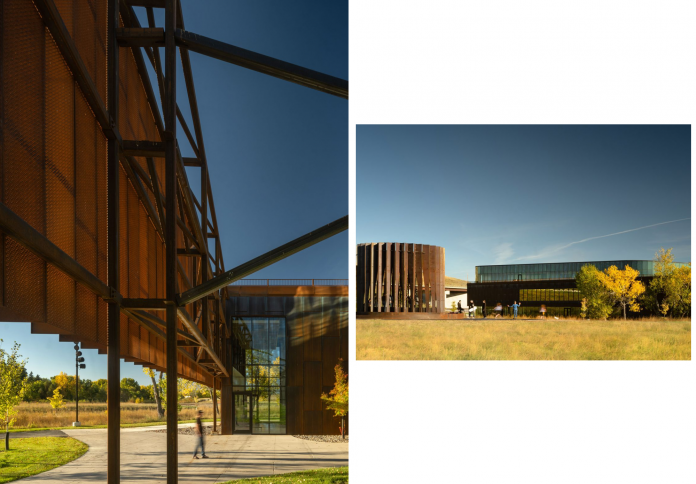
In 2025, some of the most innovative uses of weathering steel appeared in the realm of adaptive reuse. In Wyoming, CLB Architects transformed a former Kmart department store into the high-tech headquarters for EMIT Technologies. Almost all of the steel used to wrap the massive building was custom fabricated on site, utilizing a laser-perforated “scrim layer” that provides solar shading while allowing a silhouette of the interior activity to be visible from the street. Similarly, in Dalian, China, studio Neri&Hu utilized Corten steel to convert a former industrial compound into a creative hub known as “The Yard.” By selecting a material that pays homage to the site’s manufacturing past, the architects created a seamless transition between history and modern utility.

These projects demonstrate that weathering steel is the ideal medium for “industrial nostalgia.” It provides a contemporary aesthetic that doesn’t feel out of place in gritty urban or manufacturing contexts. In both Wyoming and Dalian, the material serves as a skin that protects the building while celebrating its evolution. By embracing the oxidation process, these structures acknowledge the passage of time, turning what was once a “vacant” or “obsolete” box into a vibrant, textured landmark that feels deeply rooted in its specific urban history.
Anchoring Architecture in the Landscape
Weathering steel’s ability to mimic the tones of the natural world made it a primary choice for several extreme viewpoints and residential retreats in 2025. In the Nujiang Grand Canyon of Tibet, architecture studio Archermit utilized the material for a cantilevering viewpoint that hovers 130 metres above the river. The steel’s rusty hue was chosen to echo both the rocky surrounding cliffs and the spiritual significance of the color red in Tibetan culture. A similar geological connection was sought by Faulkner Architects for “Red Rock,” a massive concrete house in Las Vegas. The structure is topped with a dramatic weathering steel cantilever that acts as a nod to the unique geology of the Las Vegas Valley and the Red Rock Canyon beyond.
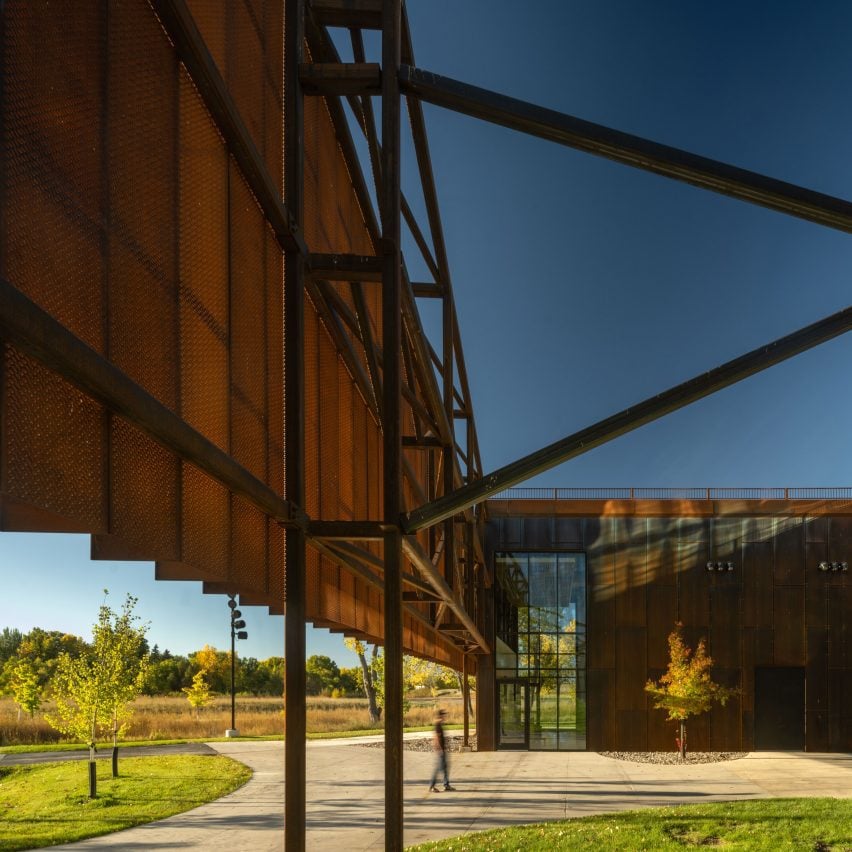
Further north in Wyoming, Prospect Studio utilized weathering steel for the Alta North Residence, a house perched on the edge of a dense forest. By combining the metal with concrete, stone, and reclaimed timber, the architects created a dwelling that feels “visually arresting yet deeply rooted.” In Australia, designer Robbie Walker used slatted weathering steel to wrap the “Sawmill Treehouse,” a 12-metre-long cabin on stilts. In this dense forest setting, the steel provides essential protection from summer heat and fire risks, while its slatted form hides services and maintains a clean, sculptural silhouette.
The Pritzker Legacy: Doshi’s Final Contemplation
One of the most culturally significant uses of the material in 2025 was the “Doshi Retreat” on the Vitra Campus in Germany. This project serves as the final architectural statement by the late Pritzker Prize-winner Balkrishna Doshi. Snaking across the campus in Weil am Rhein, the structure consists of sunken walls and a sculptural pavilion crafted entirely from weathering steel made using scrap metal. Doshi chose the material because of its “alive” quality—the way its appearance shifts with the moisture in the air and the angle of the sun.

The Doshi Retreat is a masterclass in using steel for private contemplation. It moves away from the aggressive, structural use of metal and toward something more tactile and environmental. By using recycled scrap, the project also highlights the sustainability of steel in a circular economy. It stands as a poetic reminder that even the most industrial of materials can be used to create spaces of profound silence and spiritual reflection. In the context of the Vitra Campus, it provides a weathered, organic contrast to the more polished, high-tech neighboring structures by Frank Gehry and Zaha Hadid.
Sculptural Public Interventions and Tech Narratives
Weathering steel also found a home in the public square in 2025. For the London Design Festival, designer Paul Cocksedge created “What Nelson Sees,” a large-scale sculpture in Trafalgar Square. The industrial metal tubes functioned as viewing portals where AI-generated films depicted London’s past and future from the perspective of Admiral Horatio Nelson. The raw aesthetic of the steel was chosen as a deliberate contrast to the high-tech AI inside, referencing Nelson’s maritime history while signaling a new era of technological integration. In Tennessee, Sanders Pace Architecture utilized perforated Corten panels for the Baker Creek Pavilion, a sturdy yet transparent structure that allows for unobstructed views across a popular mountain-biking park.

These public projects highlight the durability and low-maintenance qualities of weathering steel, which are essential for structures exposed to heavy public use and urban pollution. From the Spanish mountains, where Puerto & Sánchez Arquitectos used prefabricated steel to build a geological viewpoint capable of withstanding extreme temperature swings, to the heart of London, the material has proven its resilience. Whether used to house AI technology or to provide a simple bench for a park-goer, weathering steel in 2025 has cemented its status as a material that is as tough as it is beautiful.