In a move that signals a bold expansion of Amsterdam’s cultural footprint, the Rijksmuseum has announced the development of a sprawling new sculpture garden, scheduled to open in the autumn of 2026. This ambitious project, fueled by a historic €60 million donation from the Don Quixote Foundation, will see the transformation of a riverside plot into a public sanctuary for 20th and 21st-century art. At the heart of the initiative is a collaboration between the world-renowned British architecture firm Foster + Partners and the Belgian landscape architect Piet Blanckaert. By merging existing parklands and century-old pavilions, the museum aims to bring world-class modern sculpture out of the gallery shadows and into the sunlight. As “Magazine World” explores, this development is not merely an architectural feat but a “historic moment” that redefines the relationship between the Dutch national museum, the city of Amsterdam, and the global art stage.
Architectural Alchemy: Transforming the Amsterdam School
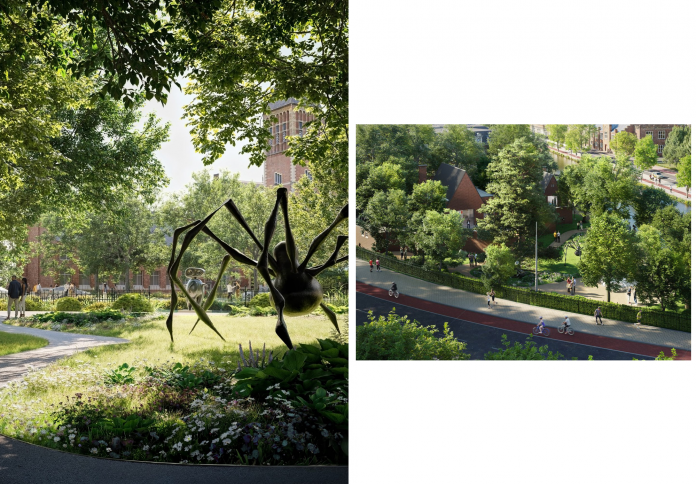
The architectural cornerstone of the project involves the sensitive renovation of three existing pavilions located at a stone’s throw from the main museum building. Built in the distinctive “Amsterdam School” style—a brick-heavy, expressive movement of the early 20th century—these structures have long remained closed to the public. Foster + Partners, led by Norman Foster, has been tasked with breathing new life into these historic shells, converting them into state-of-the-art exhibition spaces. The firm’s approach focuses on clarity and transparency; early renders depict the pavilions with large, glazed openings that allow the interior galleries to bleed seamlessly into the surrounding greenery.

By retaining the original pitched volumes and varied scales of the brick buildings, Foster + Partners ensures that the new development respects the aesthetic heritage of the Museum Square district. The transformation is designed to create a dialogue between the old and the new, providing a textured backdrop for the modern sculptures within. These indoor exhibition venues will allow the museum to host sensitive works that require climate control while maintaining a visual connection to the outdoor garden. For a firm known for grand interventions like the British Museum’s Great Court, this project represents a more intimate, yet equally transformative, urban surgery.
A Living Gallery of Modern Masterpieces
The Don Quixote Pavilion and Garden will serve as the permanent home for an international roster of modern art icons. Thanks to long-term loans from the Don Quixote Foundation and the museum’s own burgeoning 20th-century collection, visitors will encounter works by the likes of Alberto Giacometti, Louise Bourgeois, Alexander Calder, and Henry Moore. The inclusion of Bourgeois’ haunting structures and Calder’s kinetic mobiles marks a significant pivot for the Rijksmuseum, which is most famously associated with Dutch Golden Age masters like Rembrandt and Vermeer. This expansion gives modern sculpture the “visibility it deserves,” as noted by General Director Taco Dibbits.
The curation is intended to be dynamic, featuring a rotating program of temporary exhibitions alongside the permanent fixtures. One of the most anticipated highlights is a large-scale work by the American post-minimalist Roni Horn, whose presence signals the museum’s commitment to contemporary voices. By placing these masterpieces in a public, open-air setting, the Rijksmuseum is breaking down the barriers of “high art.” The garden will be accessible free of charge, ensuring that the silhouettes of 20th-century genius become a daily part of life for local residents and tourists alike, fostering a more democratic engagement with the arts.
Biodiversity as a Design Principle
Beyond its artistic and architectural ambitions, the new sculpture garden is an ecological intervention designed to enhance Amsterdam’s urban “green lung.” Belgian landscape architect Piet Blanckaert has designed a layout that prioritizes biodiversity and sensory experience. The plan includes the addition of 22 mature trees and a vast array of native flowers and plants, chosen specifically to support local wildlife and provide a “tranquil natural surrounding” in the heart of the busy city. Winding walkways will carve through the lush vegetation, creating natural “rooms” or niches where individual sculptures can be discovered in isolation.
This focus on nature is a deliberate response to the “digital fatigue” of the modern era, offering a tactile and atmospheric environment for contemplation. The landscape design is not merely a stage for the art; it is an equal partner in the experience. The rustle of leaves and the changing light of the seasons will provide a living, breathing context for the bronze and steel forms of the sculptures. By integrating native flora into a high-culture site, the Rijksmuseum is setting a precedent for how cultural institutions can contribute to city-wide sustainability and biodiversity goals, making the garden as much a gift to the environment as it is to the art world.
A Gift to the People of Amsterdam
The project has been met with widespread support, including an enthusiastic endorsement from Amsterdam’s Mayor, Femke Halsema, who described the donation as a “wonderful gift for everyone.” The total €60 million donation from the Don Quixote Foundation—founded by billionaire Rolly van Rappard—represents the largest private gift in the museum’s history. While €10 million is earmarked specifically for the construction of the garden and the renovation of the pavilions, the remaining funds will be invested to support future museum activities and acquisitions. This financial windfall ensures that the project is not just a one-time expansion but a sustainable part of the museum’s future.
However, the road to the autumn 2026 opening is not without its logistical hurdles. The museum is currently navigating the permit application process and consulting with local residents to finalize opening hours and access points. The goal is to create a space that feels like a natural extension of the neighborhood rather than a corporate imposition. If successful, the Don Quixote Pavilion and Garden will bridge the gap between the monumental scale of the Rijksmuseum’s main building and the human-centric intimacy of a neighborhood park. It is a vision of a future where art, architecture, and nature are intertwined, accessible to all, and deeply rooted in the soil of the city.