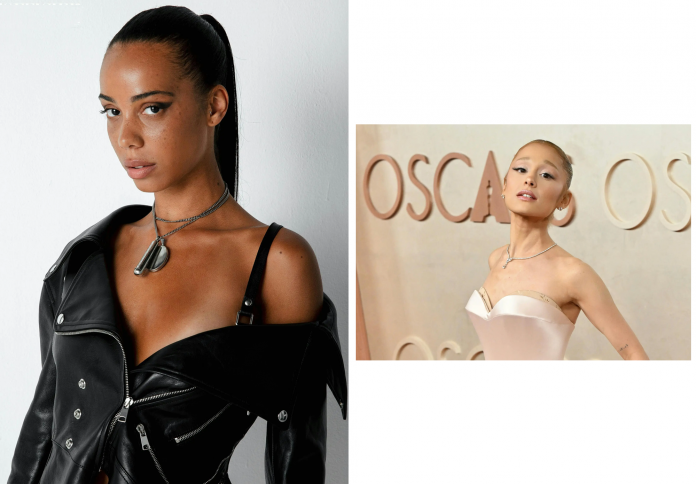
In the high-stakes world of Hollywood beauty, where the line between a good night’s sleep and a surgical enhancement is increasingly blurred, the “Ponytail Lift” has emerged as the definitive aesthetic of 2025. Popularized by the feline, upward-swept gazes of Bella Hadid and the signature snatched profile of Ariana Grande, this trend is as much a medical marvel as it is a stylistic choice. But what exactly is it? For some, it’s a rigorous hairstyling technique that uses tension to mimic a brow lift; for others, it is a sophisticated, minimally invasive surgical procedure designed to pull the face back without the tell-tale scars of a traditional facelift. As the trend dominates both surgical suites and TikTok tutorials, we delve into the dual nature of the lift that is keeping the world’s most famous faces looking perpetually “snatched.”
The Surgical Secret: Small Incisions, Big Results
The term “Ponytail Lift” (or Ponytail Facelift) is often used to describe a specific surgical technique pioneered by Dr. Chia Chi Kao. Unlike a traditional facelift, which typically requires large incisions around the ears and along the hairline, the Ponytail Lift utilizes small, discreet incisions hidden within the scalp or behind the ears. This allows patients to wear their hair in a high, tight ponytail immediately after surgery without revealing visible scars—hence the name.

Designed primarily for younger patients in their 30s and 40s who are experiencing early signs of aging, the procedure focuses on the upper and middle thirds of the face. By lifting the brow, rotating the temples, and repositioning the cheeks, surgeons can achieve a “foxy-eye” look that traditional methods often miss. The result is a vertically-lifted, refreshed appearance that avoids the dreaded “windblown” look associated with older, horizontal-pulling facelift techniques.
The “Bella Effect”: A New Standard of Snatched
The global obsession with this look is largely attributed to the “Bella Hadid effect.” The supermodel’s striking, almond-shaped eyes and razor-sharp jawline have become the most requested features in plastic surgery offices worldwide. While Hadid has famously challenged surgical rumors by offering to do a “scan” of her face, the industry consensus is that her aesthetic—whether achieved through surgery, thread lifts, or genius tape techniques—has redefined modern beauty.

Similarly, Ariana Grande has made the high ponytail her architectural trademark. The tension from such a style provides a temporary “mechanical lift,” pulling the skin of the temples and forehead upward. This “snatched” look has become a cultural shorthand for youth and high-maintenance glamour, leading to a surge in both cosmetic procedures and specialized hairstyling tools designed to replicate the tension without the surgery.
Surgery vs. Style: The Non-Invasive Alternatives
For those not ready to commit to a $10,000 to $30,000 surgical price tag, the Ponytail Lift has a massive non-surgical following. The most popular alternative is the Thread Lift, where dissolvable barbed sutures are inserted under the skin to physically pull the brows and cheeks upward. This “lunchtime lift” provides immediate results with minimal downtime, making it a favorite for influencers and celebrities looking for a temporary boost before a major event.

On the styling front, the “Ponytail Facelift” is a mainstay of red-carpet prep. Hairstylists use “face-lift tapes”—discreet adhesive patches connected by a string hidden under the hair—to manually pull the skin of the temples back. When combined with a high-tension ponytail secured with multiple elastics, the result is a temporary but dramatic transformation. However, experts warn that constant tension from these styles can lead to traction alopecia, a form of hair loss caused by repeated pulling on the follicles.
Recovery, Risk, and the Future of the Lift
Despite being marketed as “minimally invasive,” the surgical Ponytail Lift still carries the risks inherent to any operation, including swelling, bruising, and the rare possibility of nerve damage. Recovery is generally swifter than a deep-plane facelift, with most patients returning to social life within one to two weeks. However, the “permanent” nature of the results means that precision is paramount; an over-rotated brow can lead to a look of constant surprise that is difficult to reverse.

As we move into 2026, the trend shows no signs of descending. The evolution of the Ponytail Lift highlights a shift in beauty standards toward “pre-juvenation”—smaller, earlier interventions that maintain a specific look rather than waiting for significant aging to occur. Whether achieved through a surgeon’s scalpel or a stylist’s heavy-duty elastics, the Ponytail Lift remains the ultimate symbol of a generation that refuses to let gravity have the final word.