Heidi Klum’s annual Halloween bash has transcended the typical celebrity party to become a legendary cultural institution, largely because of the host’s singular commitment to extreme, high-art transformation. The model’s costumes are not merely outfits; they are meticulously planned, cinematic, and often grotesque creations that blur the line between fashion, special effects makeup, and performance art. For over two decades, Klum has consistently set an unparalleled global benchmark for Halloween creativity, relying on weeks of preparation, collaborations with Hollywood-level prosthetics artists, and an unwavering dedication to staying in character. Her legacy is one of fearless commitment, proving that the most memorable style is achieved not through glamour, but through the courage to be completely, spectacularly unrecognizable.
The Philosophy of Unrecognizability: Commitment to the Craft
The core principle underpinning Heidi Klum’s Halloween success is her relentless dedication to achieving total, absolute physical transformation, making the process itself the ultimate fashion statement.

Klum approaches Halloween not as a party, but as a performance. Her creations—ranging from a perfectly rendered elderly woman to a grotesque, skinless anatomical figure—often require six to twelve hours in the makeup chair and the expertise of multiple specialized prosthetics teams. This level of commitment contrasts sharply with the average celebrity’s costume, which typically relies on simple styling or recognizable clothing. Klum’s investment in extreme prosthetics and body modifications demonstrates that her goal is not simply to look good, but to become the character, embodying the spirit of immersive, theatrical costume design at its highest level.
The Element of Surprise: Building the Annual Reveal
Part of the tradition’s thrill lies in the extreme secrecy and meticulous buildup surrounding the annual costume reveal, turning the event into a globally anticipated media moment.

Unlike most red-carpet events where the dress is previewed or hinted at, Klum’s costume is often kept under airtight wraps until the moment she steps onto her own carpet. This secrecy creates immense media anticipation and a powerful dramatic reveal. She frequently utilizes social media in the preceding weeks to offer tantalizing glimpses of the complex preparation process—the molding of prosthetics, the intricate painting—without ever revealing the final character. This carefully orchestrated media strategy transforms her costume from a simple party outfit into a major cultural event, dominating global headlines every November 1st.
The Art of the Grotesque: Embracing Unflattering Forms
While fashion generally dictates beauty and flattery, Klum’s most iconic and celebrated costumes are those that courageously embrace the bizarre, the unflattering, and even the overtly repulsive.

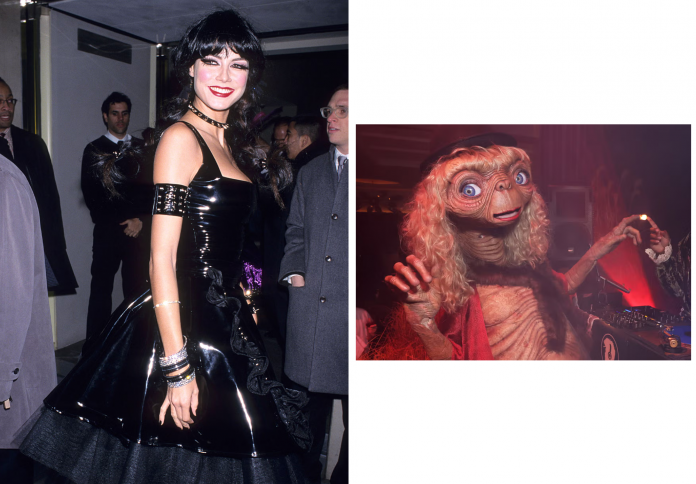
Her most memorable transformations include the horrifyingly realistic body-of-a-worm costume, the oversized, musculature-revealing human body, and the intricate alien creatures. By choosing roles that challenge conventional standards of beauty, Klum makes a profound statement about the ephemeral nature of her supermodel image. This willingness to distort her famous physique and embrace the grotesque is what sets her apart, demonstrating a fearless self-awareness and prioritizing the artistic impact and shock value of the costume over any superficial notions of glamour or appeal.
The Collaborative Masterpiece: Teamwork and Hollywood FX
The technical complexity of Klum’s creations is such that they function as collaborative masterpieces, requiring the same level of specialized talent found in major motion picture special effects departments.

Klum typically works with leading prosthetic and special effects artists, such as those responsible for blockbuster movie creatures. The work involves advanced techniques, including creating full body molds, constructing multi-piece silicone prosthetics, and intricate airbrushing to achieve seamless skin textures and hyper-realism. These costumes are, in effect, wearable sculptures. The success of the final look is a testament to the seamless integration of fashion design principles—such as movement, texture, and visual impact—with the technical precision of Hollywood-level special effects artistry, elevating the “costume” to an unprecedented level of execution.