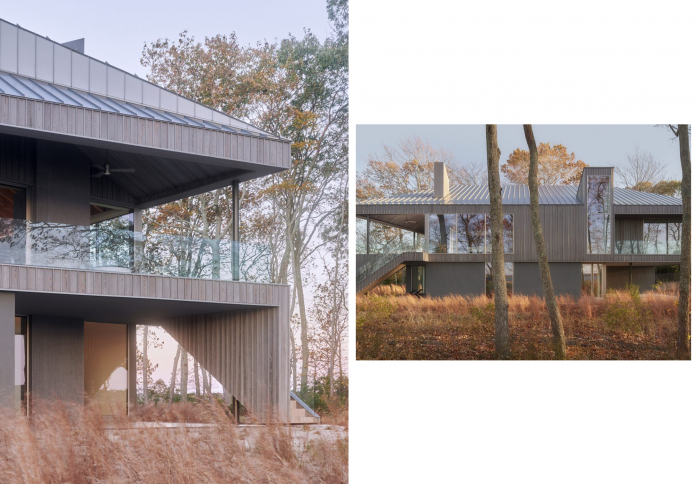
The Osprey House in upstate New York, designed by Desai Chia Architecture, is a masterful exercise in integrating contemporary residential design with a sensitive natural environment. Situated on a rugged, wooded site, the house is intentionally engineered for a camouflaging effect, seeking not to dominate the landscape but to blend into it through thoughtful materiality and strategic placement. By utilizing dark, muted exterior finishes and a low-slung profile that follows the natural topography, the architects created a structure that feels both minimal and protective. The design, however, doesn’t sacrifice views for subtlety; instead, it uses carefully placed large openings to frame the serene surroundings, maximizing the inhabitant’s connection to the picturesque landscape while minimizing the building’s visual impact.
The Strategy of Subtractive Design and Camouflage
The primary design goal for Osprey House was to achieve a symbiotic relationship with its forested site, using architectural techniques to minimize its visual footprint.

This was achieved through a subtractive design strategy. The house is built with a low, horizontal profile that hugs the land, avoiding the vertical massing that would typically disrupt the line of the tree canopy. The rooflines are simple and understated. Crucially, the exterior is clad in dark, muted materials, often dark wood siding or blackened metal panels. This dark palette absorbs light rather than reflecting it, helping the building recede into the shadows of the trees, especially during the twilight hours, giving it the intended camouflaging effect.
Materiality and the Blurring of Edges
The choice of materials goes beyond mere aesthetics, playing a functional role in softening the structure’s hard edges and reinforcing the feeling of integration with the natural world.

The architects deliberately selected materials that would weather and patina over time, allowing the house to visually mature alongside its environment. The combination of dark exterior cladding and the surrounding tree cover creates a dynamic visual ambiguity—at certain times of the day and from certain angles, the house almost disappears into the background. In contrast, the interior spaces are warm and light, defined by natural wood and large expanses of glass. This contrast sets up a satisfying transition, moving from a protective, dark shell to a bright, nature-focused living space.
Framing the View: Strategic Sightlines
Despite its camouflaging effect, the Osprey House is fundamentally designed to celebrate its surroundings, utilizing strategic glazing to transform the landscape into the central focus of the interiors.

The house features large, often floor-to-ceiling windows that are meticulously placed to frame specific views—whether it’s a cluster of trees, a distant ridge, or a patch of open sky. These openings are not generic; they are designed as architectural lenses, creating curated sightlines that draw the eye outward and maximize natural light penetration. This technique ensures that even as the house recedes visually from the exterior, the interior experience is constantly tied to the vitality and seasonal changes of the wooded site. The flow between indoor and outdoor living is seamless, achieved through large sliding doors that open onto cantilevered decks and sheltered outdoor spaces.
Functionality and Internal Organization
Beyond its exterior concept, the Osprey House is designed for modern living, organized around a clear functional division that enhances privacy and the daily experience of the inhabitants.

The layout often separates the public living areas—such as the kitchen, dining, and main living space—from the private sleeping quarters. The public zones typically feature the largest windows and the most open plans to take advantage of the views and light. The circulation path throughout the house is intuitive, guiding occupants through different spatial experiences that culminate in the views framed by the glass walls. This internal clarity ensures that the home is not only a beautiful architectural object but also a highly efficient and comfortable dwelling tailored to its inhabitants’ needs.