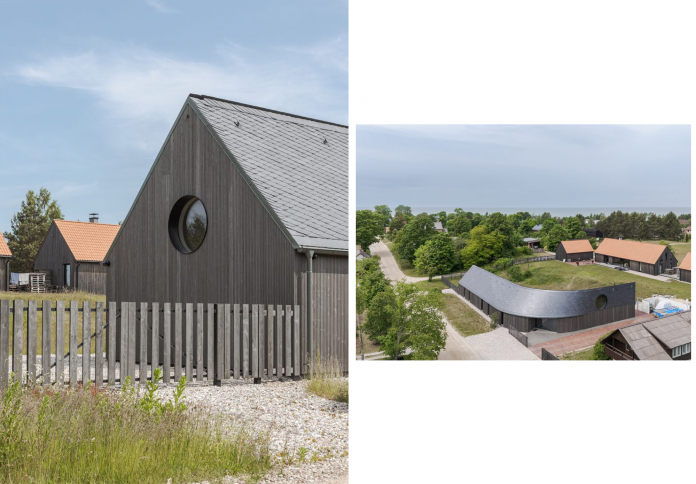
The Pāvilosta Home Annexe in Latvia, designed by MADE Architecture, is a striking example of contemporary Baltic design that prioritizes simplicity, rugged durability, and a profound connection to its coastal location. Situated in the small fishing village of Pāvilosta, known for its untouched natural beauty, the annexe serves as an extension of an existing residence, providing additional space for guests and relaxation. The architecture is characterized by its dark, monochromatic exterior, which references local vernacular structures, and a refined interior that uses light and natural materials to create a sense of calm and retreat. This project successfully merges minimalist aesthetics with pragmatic, climate-responsive design, offering a sanctuary that feels both contemporary and deeply rooted in the Latvian landscape.
Respecting the Context: Vernacular and Materiality
The annexe’s design is a thoughtful response to the immediate environment of Pāvilosta, utilizing materials and forms that honor the area’s architectural history and withstand the harsh coastal weather.

The architects opted for a simple, rectilinear form with a steeply pitched roof, directly echoing the silhouette of traditional Latvian fishermen’s huts and agricultural buildings common in the region. This nod to the vernacular ensures the new structure sits comfortably alongside its neighbors and the existing house. Crucially, the exterior is clad in dark-stained timber, a choice that provides excellent weather resistance against the damp, salty sea air, while visually allowing the building to recede into the surrounding pine forests and dune landscape.
The Contrast of Light and Dark: Sculpting the Interior
While the exterior presents a monochromatic, reserved face to the elements, the interior of the Pāvilosta annexe is a study in light, warmth, and the texture of natural materials, creating a dramatic sense of spatial transition.

The internal walls and ceilings are predominantly finished in light-toned natural wood, often left exposed or lightly treated, which contrasts sharply with the dark façade. This material strategy amplifies the limited northern light, making the relatively compact spaces feel expansive and bright. The design focuses on minimalist detailing, drawing attention to the quality of the materials and the meticulous craftsmanship. This deliberate contrast between the heavy, protective exterior and the light, serene interior reinforces the annexe’s function as a warm, private haven away from the coastal winds and storms.
Optimizing Space for Guests and Retreat
The annexe is designed specifically to serve as a self-contained unit—a private retreat for guests or extended family—while maintaining a functional connection to the main house.

The interior layout is highly efficient, typically including a compact but well-equipped bedroom, a small kitchenette, and a bathroom. The design prioritizes comfort and privacy, with carefully framed windows that offer curated views of the sea, the dunes, or the forest, turning the surrounding landscape into living artworks. The intimate scale of the annexe encourages a sense of simplicity and tranquility, perfectly suiting its location in a quiet, natural fishing village where the primary focus is on relaxation and enjoying the outdoor environment.
Strategic Placement and Landscape Integration

The siting of the annexe was crucial to its overall success, with MADE Architecture carefully positioning the structure to maximize views and maintain privacy relative to the main residence.

The annexe is often placed slightly detached from the original house, creating a visual separation that enhances its sense of privacy while still being easily accessible. The structure’s relationship with the ground is often subtle, minimizing disruption to the sensitive coastal dune ecosystem. Furthermore, the positioning ensures that the large glazed openings are oriented to capture the best available light and the most compelling vistas of the nearby Baltic Sea. The architecture thus acts as a mediator, framing the raw, natural beauty of the Latvian coast for the inhabitants.