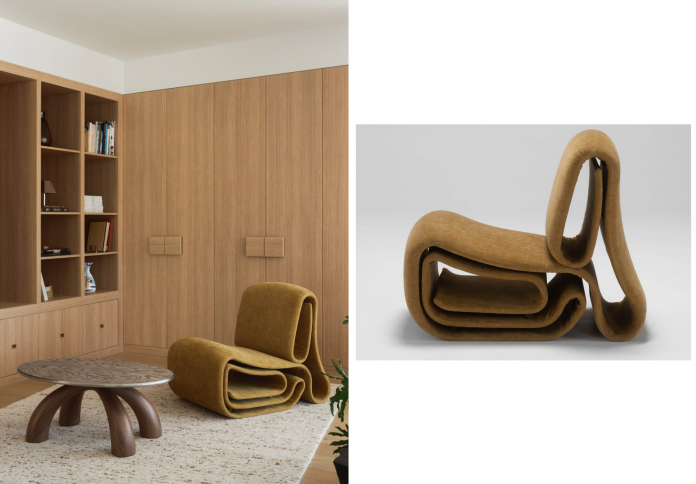
In the world of contemporary furniture design, inspiration often strikes in the most fleeting of moments—a shadow on a wall, the curve of a coastline, or, in the case of Australian interior designer Tom Black, the cursive flourish of a handwritten sign. His latest creation, the Ghezzi chair, is a sculptural tribute to the typographic heritage of Rome. By translating the flowing, interconnected loops of traditional Italian signage into a three-dimensional form, Black has created a seating piece that is both a functional object and a piece of visual poetry. The Ghezzi chair does not merely occupy a room; it narrates a story of European wanderlust and the enduring beauty of the handmade mark, brought to life through a sophisticated blend of industrial steel and luxurious velvet.
Typography Translated into Form
The genesis of the Ghezzi chair lies in the “cursive typographic style” that once dominated the streetscapes of Italian towns and cities. During his time in Rome, Black became fascinated by the handwritten signs that advertised everything from historic trattorias to modest artisan workshops. These signs, characterized by their rhythmic, looping letters, represented an era of personal touch and craftsmanship. To capture this essence, Black designed the chair as a series of looped forms folded upon one another, mimicking the continuous stroke of a pen on paper. This architectural “script” creates a silhouette that is dynamic and fluid, offering a different visual experience from every angle.

Supporting these upholstered loops is a discreet but robust steel frame, which provides the necessary structural integrity without disrupting the chair’s calligraphic flow. The juxtaposition of the rigid metal skeleton with the soft, cushioned forms creates a tension that is central to the chair’s appeal. It is a masterclass in reductive design, where every curve serves a purpose and every fold contributes to the overall comfort and aesthetic balance. By distilling the complexity of handwriting into a singular piece of furniture, Black has bridged the gap between graphic art and industrial design.
A Palette of Earthy Sophistication
To complement the Roman inspiration, the Ghezzi chair is available in a carefully curated selection of velvety fabrics that evoke the tones of a Mediterranean landscape. The color palette—comprising Chocolate, Copper, Moss, and Brass—is intentionally grounded and sophisticated. These hues were chosen to harmonize with a variety of interior styles, from minimalist gallery spaces to eclectic, high-end residences. The velvet upholstery adds a layer of tactile luxury, inviting the user to run their hands over the chair’s looped surfaces. The way the fabric catches the light further emphasizes the chair’s sculptural depth, highlighting the play of shadows within its folds.

The Moss finish, in particular, offers a subtle nod to the weathered walls and hidden gardens of Rome, while the Copper and Brass options provide a hint of metallic warmth that resonates with the city’s historic bronze work. By avoiding trendy, high-saturation colors in favor of these timeless earthy tones, Black ensures that the Ghezzi chair remains a versatile and enduring addition to any collection. The fabric’s softness is a crucial component of the design, transforming the “typographic” loops into a welcoming and ergonomic sanctuary for the body.
Subtle Memories of the Eternal City
Beyond its visual and tactile qualities, the Ghezzi chair is designed to evoke an emotional response. For Black, the chair is a vessel for “subtle memories of Rome,” capturing the feeling of an era when the world moved at a slower, more deliberate pace. The low-slung proportions of the chair encourage a relaxed posture, inviting the sitter to linger and reflect—much like one might while sitting in a Roman piazza. It is a piece that prioritizes “slow design,” emphasizing the importance of historical context and personal narrative in the creation of modern objects.

The chair’s name, Ghezzi, further anchors it in its Italian inspiration, serving as a linguistic link to the culture that birthed its form. This commitment to storytelling is a hallmark of Black’s practice at TB Atelier, where interior design is treated as a holistic exercise in atmosphere-building. The Ghezzi chair is not an isolated experiment; it is part of a wider portfolio that includes coffee tables and sofas, all of which share a similar commitment to refined silhouettes and high-quality materiality. In a world of mass-produced, “disposable” furniture, the Ghezzi stands out as a thoughtful celebration of cultural continuity.
A New Benchmark for Boutique Furniture
The launch of the Ghezzi chair on the Dezeen Showroom marks a significant milestone for Tom Black and TB Atelier, showcasing the designer’s ability to compete on a global stage. The project exemplifies a growing trend in the furniture industry toward “boutique” production, where individual designers create high-concept pieces that challenge the status quo. By focusing on a specific, niche inspiration—Roman cursive—and executing it with technical precision, Black has created a product that is both highly original and commercially viable.
Ultimately, the Ghezzi chair is a reminder that the most successful designs are often those that look backward in order to move forward. It honors the art of the calligrapher while utilizing the tools of the modern engineer. As it finds its way into homes and galleries around the world, the chair will continue to perform its silent script, offering a seat that is as much about the beauty of the curve as it is about the comfort of the sitter. In the hands of Tom Black, the handwritten signage of Rome has found a new, three-dimensional life—one that is written in steel, velvet, and the enduring language of style.