Spring/Summer 2027’s runways make a case for clothes that change as the body moves. Fringe swings, metallic surfaces catch light, skirts reorganize an outfit’s center, and folded basics give familiar garments a more deliberate outline. Soft color combinations connect these proposals without forcing them into one uniform look. The season’s interest is less a compulsory shopping list than a set of design operations: add movement, alter reflection, change proportion, or make a fold visible. Prada, Dior, Saint Laurent, and other houses approach those operations differently. Following the physical behavior of the clothes offers a way through fashion month’s crowded imagery, following a skirt’s volume, a bra’s compact shape, and the light reflected by silver trousers.
Begin With the Skirt, Then Build Around It
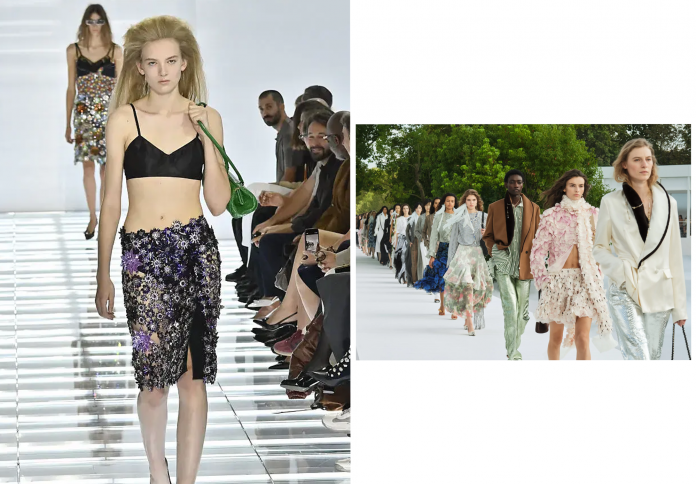
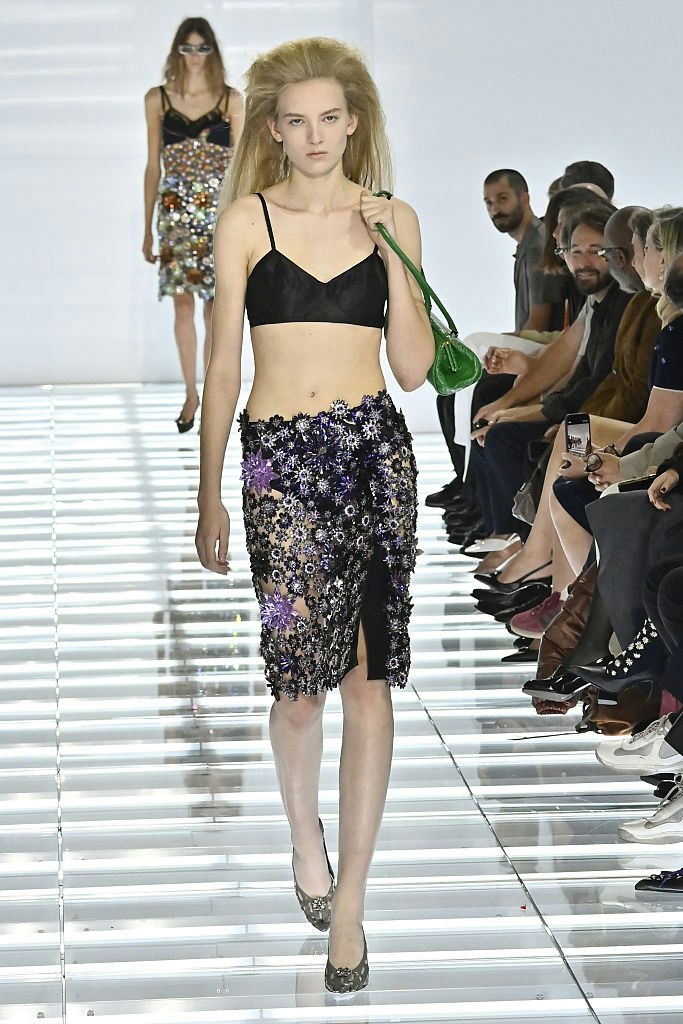
Prada’s collection places the skirt at the center of a wardrobe proposition, using varied closures, embellishments, and surface treatments. The shift matters because a skirt can determine how the upper half of an outfit reads. A plain top allows an elaborate skirt to carry the image; a short or structured top changes the proportions again. Treating the skirt as an active starting point opens several arrangements without requiring the garment to belong to one narrow idea of feminine dress.
Designers including Sandy Liang, Daniella Kallmeyer, and Jonathan Anderson at Dior also give skirts prominence. The shared category does not make the results identical. Length, weight, transparency, and decoration change the relationship between the garment and the person wearing it. The useful comparison is therefore among particular shapes. A beaded surface and a fringed edge can both attract attention while doing so through different kinds of movement and different degrees of visual density.
Fringe Measures the Body’s Movement
Long, fine strands appear as an alternative to the more familiar Western associations of fringe. Their behavior can become part of a garment’s structure: a small movement travels through many hanging threads, enlarging the body’s gesture without adding a fixed block of volume. The effect depends on motion. A still photograph can show the material, but walking reveals its rhythm. This makes fringe particularly suited to the runway, where the clothes are first encountered as a sequence of moving bodies.
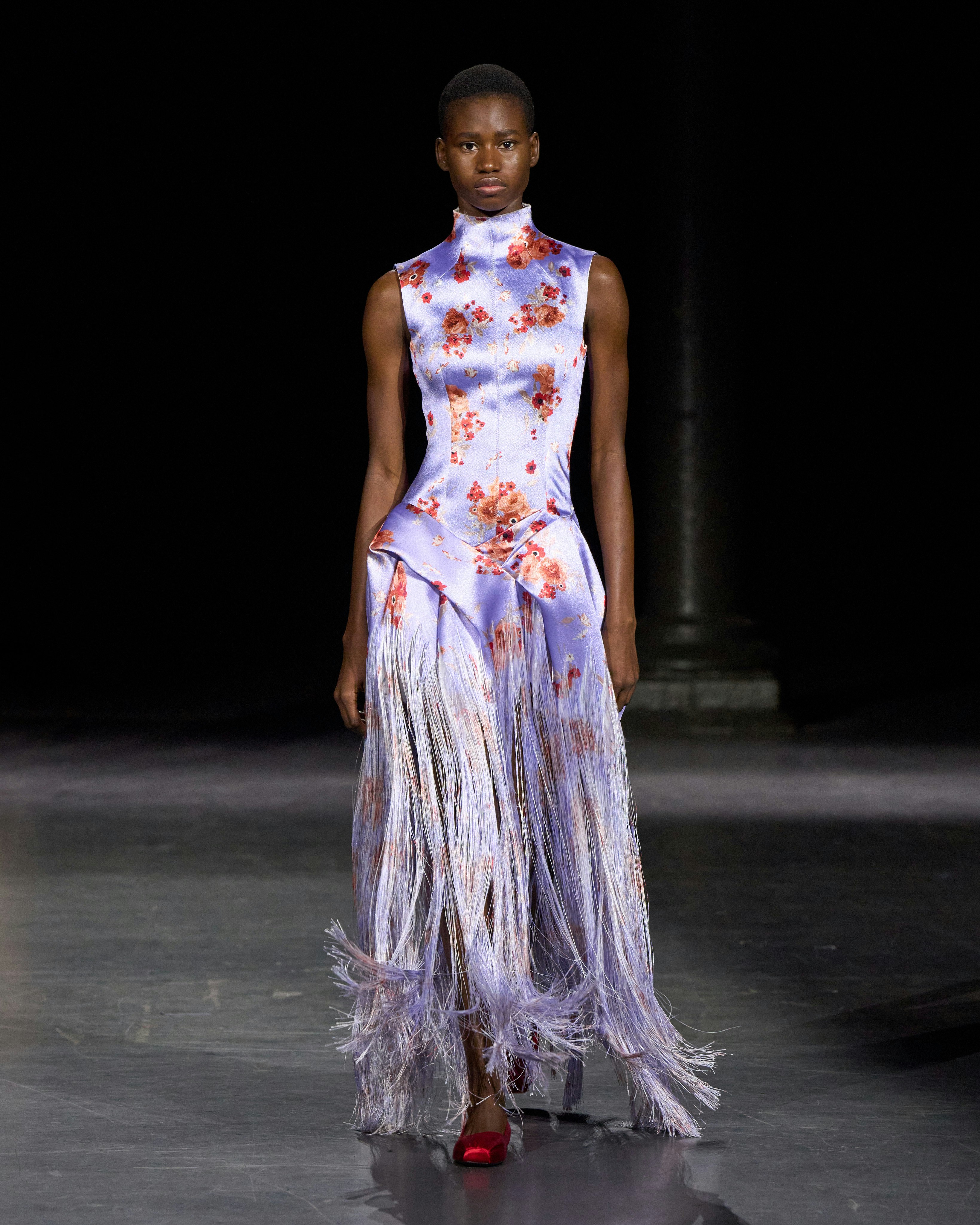
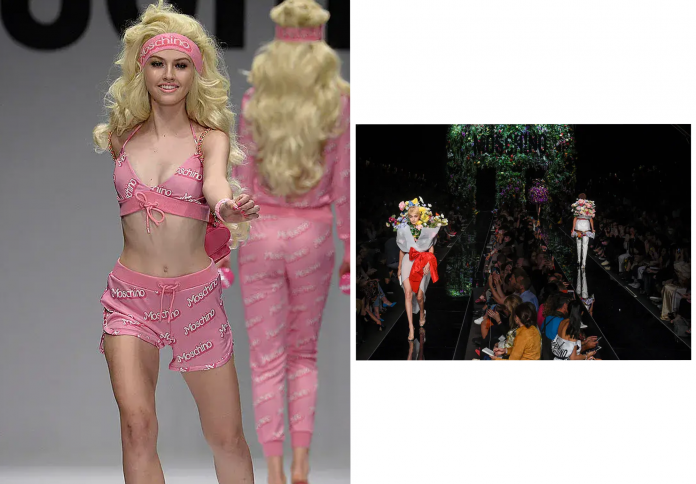
Erdem and Moschino approach the detail through their own visual languages. That difference keeps the trend from becoming a single instruction about what to wear. Fringe may extend a floral idea, animate a trim, or interrupt an otherwise controlled surface. Its placement determines the effect. Along a hem, it changes the boundary between garment and air; around the body, it can make a simple silhouette appear restless. A step sets the strands moving in succession, giving the hem a rhythm beyond the body’s gesture.
Metallics Need a Setting
Saint Laurent’s gold and Dior’s silver and copper proposals make reflection a prominent part of the season. A metallic fabric depends on surrounding light, so its appearance changes between a runway, a photograph, and an ordinary room. That variability distinguishes it from a flat block of color. The surface can sharpen a fold, emphasize a curve, or draw attention to the angle of a sleeve. Its effect is inseparable from the way the garment has been cut and the environment in which it is seen.
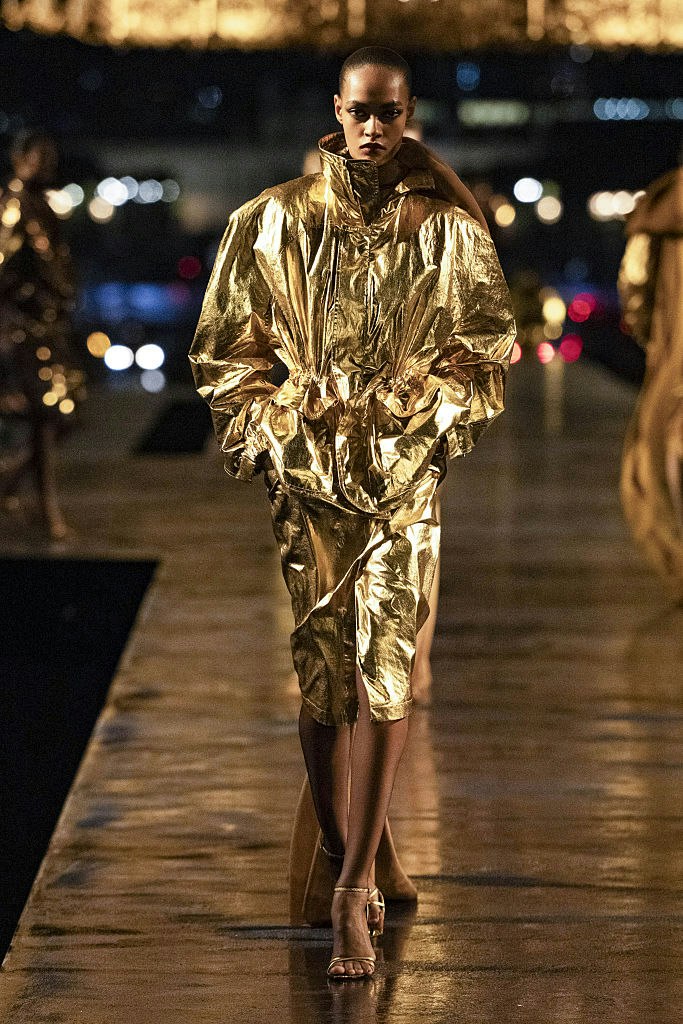
Pairing a metallic trouser with a blazer or a fluid blouse creates different balances between reflection and restraint. The shiny surface does not have to occupy every part of an outfit to remain the main event. A matte companion can help the eye register its changes. This is why a seasonal description such as metallics can be too broad to guide understanding on its own. Silver trousers and a gold dress may share reflectivity while proposing entirely different relationships among body, occasion, and visual emphasis.
The Bra Acquires an Outer Structure
Visible bras and bandeaus make the boundary between underwear and outerwear explicit. The most interesting versions are constructed to be seen, with sculpture and embellishment giving the compact garment an unmistakable outer surface. Prada’s sculptural treatments and Erdem’s embellishment give the small garment a more pronounced identity. Its limited area becomes an advantage: a compact shape can focus attention while leaving other garments to create length, volume, or a contrasting texture.
This arrangement also makes proportion central. A bra paired with a skirt does not create the same outline as a bandeau under broad tailoring. The amount of exposed skin changes the space between pieces, functioning visually much like a pause between solid forms. That does not turn exposure into a universal statement about confidence. Clothing can be described through its relationships without assigning one emotional meaning to every wearer. The runway proposal concerns construction and styling; its eventual personal meaning will differ from body to body.
Soft Color, Crisp Folds
Bottega Veneta and Fendi use pastel combinations that replace a stark clash with gentler distinctions. Soft tones can still be deliberately contrasted through differences in texture and shape. A tailored surface beside a more tactile one may produce depth without needing highly saturated color. The palette’s restraint allows seams, folds, and garment edges to remain visible. It offers another kind of intensity, built through relationships close enough that the eye has to spend time separating them.
Origami-like folds pursue that attention through construction. An everyday basic can acquire a boxier edge or an unexpected plane when the material is pleated or turned. The garment’s familiar function remains, but its outline gives the body a different frame. Beside swaying fringe and reflective fabric, those folded shapes complete a useful set of contrasts: some pieces change through movement, some through light, and others through the deliberate placement of an edge.
Spring 2027’s proposals become clearer when considered at this material scale. A skirt can organize an outfit, a thread can amplify a step, and a fold can make a basic feel newly constructed. None requires an entire wardrobe to adopt the same seasonal identity. The body supplies movement, the room supplies light, and the clothes determine which of those ordinary conditions becomes visible.