In the rapidly evolving landscape of East London, a new architectural landmark has emerged that seeks to bridge the gap between high-density residential development and hyper-local cultural identity. The Eades, a significant new housing project in Walthamstow, is more than just a collection of nearly 500 apartments; it is a sophisticated experiment in communal living. Designed with a deep reverence for the neighborhood’s artistic heritage—specifically the legacy of William Morris—the development utilizes a blend of natural materials, artisan collaborations, and expansive shared spaces to foster a genuine sense of belonging. As London grapples with its housing crisis, The Eades stands as a testament to the idea that modern rental developments can be both large-scale and soulfully connected to the spirit and energy of their local communities.
A Design Rooted in Walthamstow’s Heritage
The interior design of The Eades, led by the Amsterdam-based studio Nicemakers, takes its primary inspiration from the physical and emotional landscape of Walthamstow. Rather than imposing a generic “luxury” aesthetic, the designers looked to the nearby wetlands and the intricate patterns of William Morris, whose home and gallery are synonymous with the area. This connection is most vividly realized in a striking corridor mural created by London artist Hugo Dalton. Developed in collaboration with the William Morris Gallery and local youth, the stencilled floral and leafy motifs pay homage to Morris’s iconic Willow pattern, rooting the building’s modern infrastructure in the historical fabric of the neighborhood.

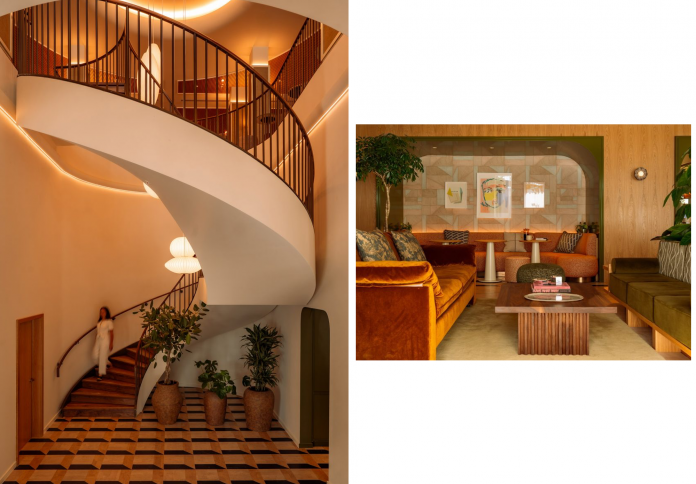
This sense of heritage is further reflected in the material palette used throughout the ground-floor communal areas. The lobby features a dramatic spiral staircase with a balustrade crafted from antique brass and walnut wood, signaling a return to tactile, high-quality craftsmanship. The adjoining lounge area is furnished with floral-print armchairs and mossy-green velvet sofas, echoing the natural hues of the Lea Valley. By prioritizing textures and colors that feel “natural rather than imposed,” the design team has created an entrance experience that feels less like a corporate lobby and more like a warm, residential living room.
Elevating the Resident Experience
At the heart of The Eades’ philosophy is a massive investment in shared amenities designed to encourage social interaction and well-being. The development boasts an array of facilities that rival high-end members’ clubs, including a professional-grade kitchen with a crimson-tiled breakfast island where residents can host private dinner parties. Wellness is also a central pillar of the building’s layout; a dedicated yoga studio features swathes of white fabric draped from the ceiling to create a “calming cocoon,” while a fully equipped gym and treatment rooms cater to the holistic needs of the 495-unit community.

The co-working spaces on the first floor are particularly indicative of the post-pandemic shift in residential design. Anchored by bespoke timber desks and mint-green lamps, the area includes chequered-glass privacy screens and acoustic felt-lined booths for private calls. These spaces are intentionally distinct from the lounging areas, utilizing a gridded timber coffered ceiling to provide a sense of structure and focus. By providing professional-quality work environments within the building, The Eades addresses the growing demand for flexible living-working arrangements, effectively turning the residential block into a self-sustaining urban village.
Panoramic Vistas and Rooftop Socializing
The architectural ambition of The Eades reaches its peak on the 33rd floor, where the design moves from intimate community spaces to grand urban spectacles. A second residents’ kitchen and a large dining area provide a high-altitude venue for socializing, but the true standout is the double-height roof terrace. Enclosed by full-height glass windows, this terrace offers expansive, unobstructed views across the London skyline, linking the residents of Walthamstow to the wider metropolis. This space serves as a literal and metaphorical “common ground,” where the density of East London is traded for a sense of openness and light.

This upper-level lounge area is designed to feel like a “members’ club” extension of the home, featuring geometric-patterned furniture, tufted rugs, and a luxe pool table. The inclusion of such high-quality social spaces at the top of the building ensures that every resident, regardless of their apartment’s floor or view, has access to the most prestigious part of the development. It is a democratic approach to luxury that emphasizes the collective experience over individual status, reinforcing the developer’s goal of creating a place where people truly connect and belong.
The Future of Walthamstow’s Urban Fabric
Managed by the property developer Way of Life, The Eades represents a new standard for rental housing in the capital. As Walthamstow continues to attract a diverse demographic of young professionals and creatives, projects like this provide the necessary infrastructure to support a growing population without sacrificing the local “spirit.” The project joins other recent high-profile developments in London that seek to repurpose urban space—ranging from converted police stations to faceted brick retirement complexes—showing that the city’s residential architecture is becoming increasingly specialized and design-led.

Ultimately, the success of The Eades will be measured by how well it integrates into the existing Walthamstow community. By involving local youth initiatives and drawing on regional history, the project sets a precedent for how large-scale developments can behave like good neighbors. It is a bold statement on the potential of the “Build-to-Rent” model, suggesting that when design is shaped by how people actually live and interact, the result is more than just housing—it is a home. In the neon-lit, historic lanes of E17, The Eades is a new chapter that respects the past while looking firmly toward a more connected, communal future.