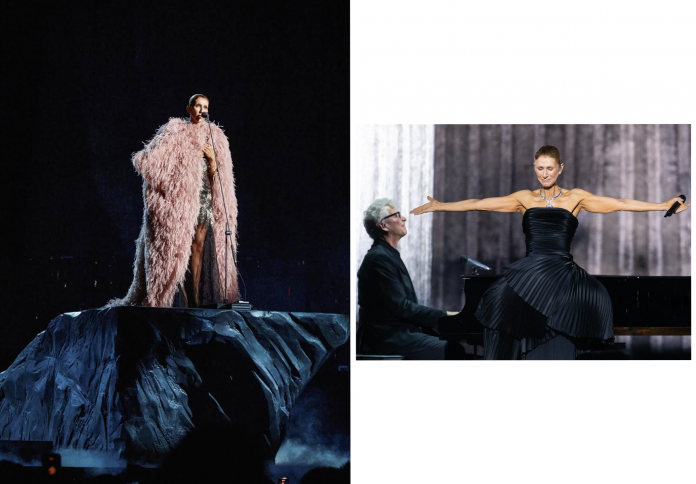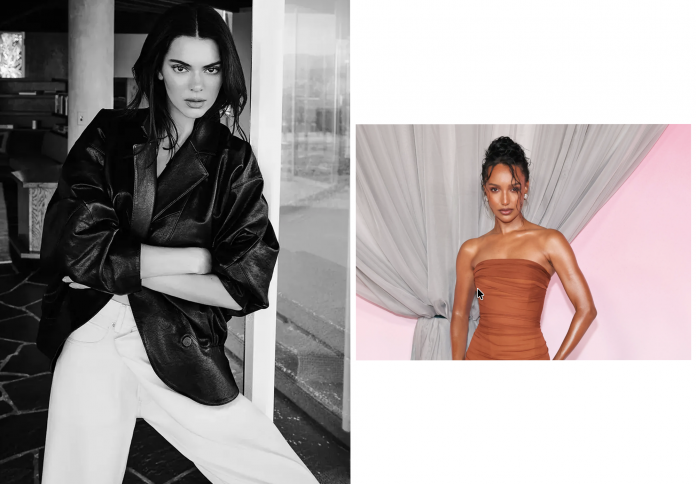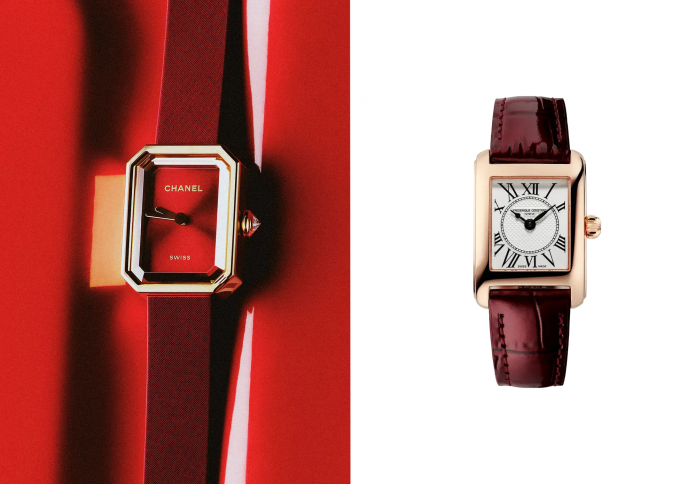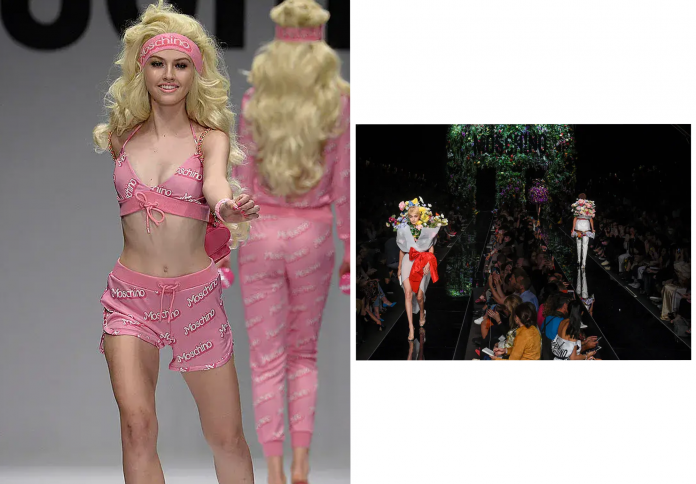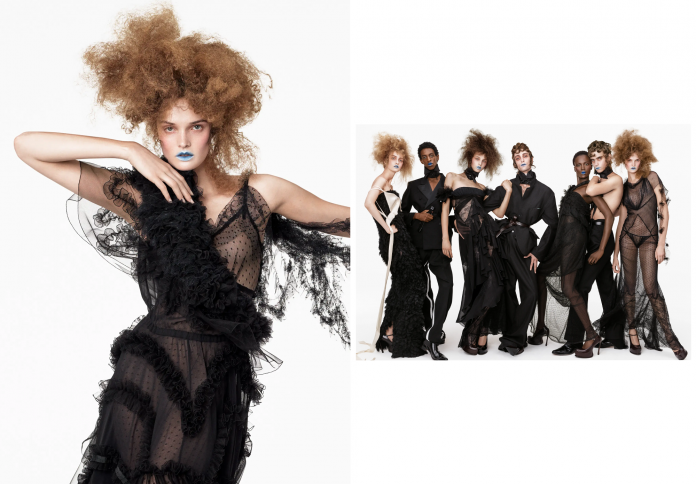
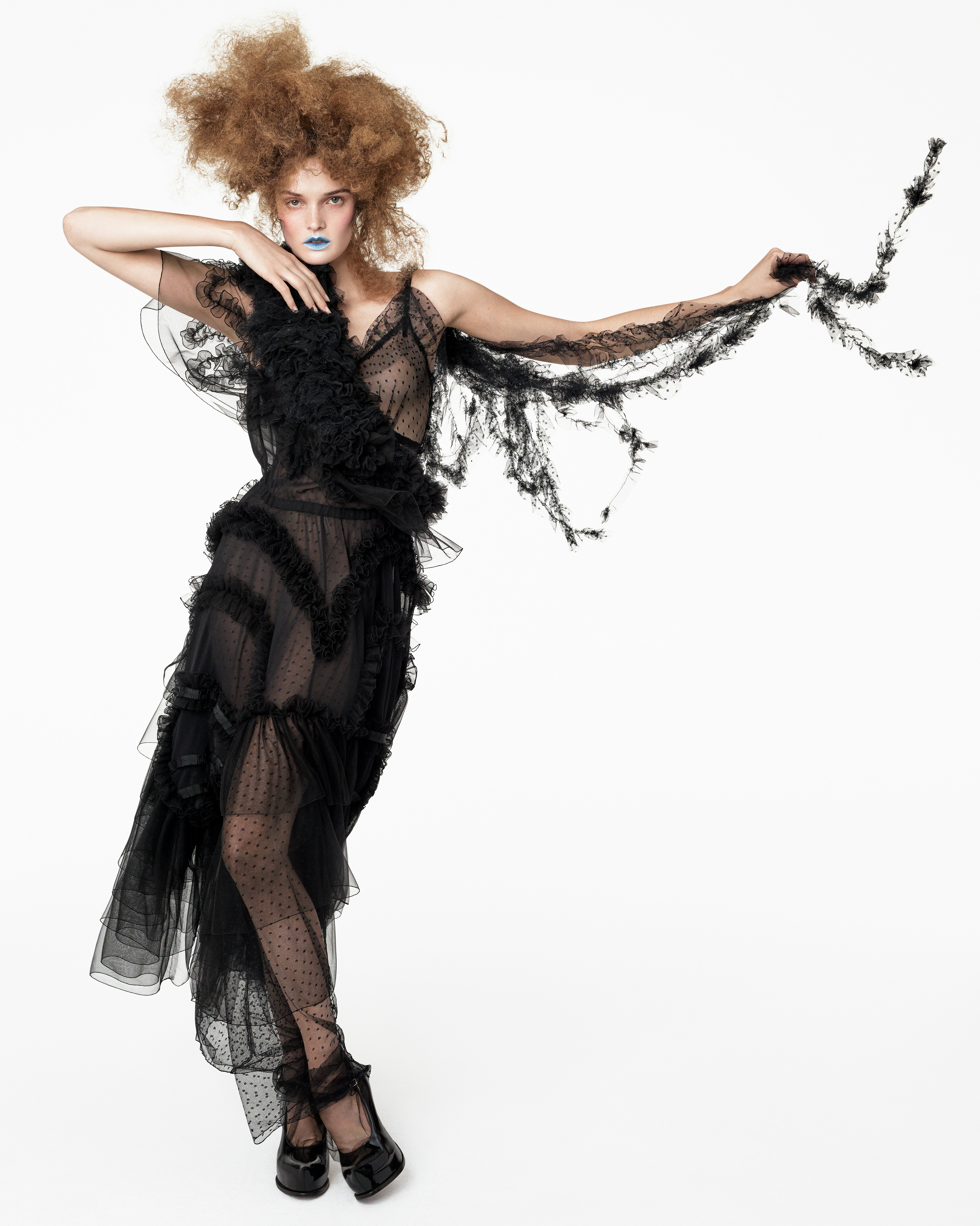
John Galliano’s Re{form} collaboration with Zara begins with clothes that already exist within the retailer’s design history. The collection cuts, shifts, and reworks those references, opening the archive to reconstruction through cuts that give its familiar forms another direction. Campaign images by Steven Meisel and a Paris installation extend the process into a visual world, but the garments carry the central proposition: familiar forms can be reorganized through the decisions of a designer associated with couture. The collaboration also places that proposition within mass-market retail. Its interest is in the encounter between a broad distribution system and a highly identifiable method of shaping clothing, where the promise of access meets the practical differences between a couture idea and a product offered for sale.
An Archive Is Not Yet a Collection
An archive supplies evidence of previous decisions: a cut that once worked, a proportion that marked a season, or a garment whose construction can be altered. Galliano’s approach to Zara treats those earlier forms as starting material. Reworking them differs from reproducing a historic look because the intervention can change the relationship among the parts. A seam can move, a volume can shift, and an ordinary staple can acquire a more theatrical direction without losing every trace of the object from which it began.
Authorship enters the garment through the placement of a seam and the distribution of volume. A designer can place a personal signature on clothing by changing how it has been assembled, not only by adding an unmistakable motif. Re{form} asks the archive to participate in that signature. The existing garment provides constraints and possibilities, while the new cut determines what becomes visible. The collaboration’s strongest proposition is therefore not that the past has been preserved intact, but that it has been made available for further work.
That premise also invites scrutiny at the level of the actual pieces. An archive reference is not a guarantee of interest. The resulting clothes need to establish proportions and details that remain persuasive outside the explanation of where they came from. A wearer should not have to carry the project’s entire history for a garment to function. The design has to produce a coherent object, one whose alterations can be felt through movement and fit as well as recognized in a campaign photograph.
Historic Characters Meet Modern Materials
Les Incroyables and Les Merveilleuses connect Re{form} to references that have appeared throughout Galliano’s work, including his graduate collection. Those figures provide a visual vocabulary of heightened dress and attitude. Their usefulness in a contemporary collaboration depends on translation. Literal historical costume would carry different demands from a garment intended to enter a present-day wardrobe. A designer can draw from the drama of an earlier silhouette while reorganizing its scale, construction, and relationship to the body.
The genderless presentation adds another layer to that translation. Clothing need not be assigned a stable identity by the person first photographed wearing it. A cut can offer several ways of occupying the same garment, though its fit will still be experienced by an individual body. Galliano’s theatrical references can become more open when detached from a single expected wearer. A wearer can carry the heightened posture suggested by those references while combining the piece with clothes from another visual world.

Historical inspiration should also remain distinct from a claim about manufacturing. A garment can employ ideas associated with couture without being a couture commission. The label describes a relationship to techniques and design thinking; it does not erase the production conditions of a retail collection. Re{form} is most clearly understood when those differences stay visible. The project brings Galliano’s method into a new context, and that context helps determine what the method can become as clothing available through Zara.
Paris Makes the Process Visible
The temporary Paris installation included documentation, Galliano’s sketchbooks and personal artifacts, and projected campaign imagery. Such an environment gives the collection a slower form of encounter than the quick succession of images on a retail page. A visitor can see the proposed relationship between an earlier reference and a new object, or follow how a sketch contributes to a silhouette. Sketchbooks and process documentation give visitors another route toward understanding the finished silhouette.
Meisel’s campaign occupies a different role. Photography can establish the atmosphere in which a garment is first recognized, selecting bodies, poses, and light that make a particular interpretation seem natural. The installation places those images beside evidence of making, allowing the viewer to distinguish a campaign’s theatrical world from the decisions that produced the clothes. The two forms of presentation can reinforce one another while remaining separate. A photograph persuades through an encounter; a sketch can reveal a problem the designer was trying to solve.
Retail Changes the Meaning of Access
The collection launched on October 1 through Zara’s online channel and flagship stores in Madrid and London. Distribution makes the project accessible in a different way from a private couture appointment, but access still has several dimensions. Availability, price, fit, and a wearer’s circumstances affect whether a garment can enter an actual wardrobe. A famous designer’s involvement does not make those distinctions disappear. The collaboration reaches a broader retail setting while retaining the need for each piece to be assessed as a practical object.
For Galliano, the encounter with Zara’s archive offers recognizable forms that can be subjected to his methods. For the retailer, it brings a highly specific authorial presence to garments distributed through an established system. Neither side has to dissolve into the other for the collaboration to be legible. The productive question is what the cut achieves under these conditions: whether a shifted line or reconstructed volume gives the familiar garment a new reason to be worn.
Re{form} can be considered from that close distance. The installation may supply context, and the campaign may supply atmosphere, but a seam still has to meet another seam. The archive becomes contemporary at the point where those pieces are joined differently, producing a garment whose past is present in its construction without dictating the whole of its future.