In the high-speed world of automotive design, a profound shift is occurring—one that prioritizes the internal atmosphere over the external engine. In a recent provocative opinion piece for Dezeen, creative strategist Liv Taylor argues that the “car-ness” of cars is rapidly fading as vehicles evolve from mechanical marvels into seamless lifestyle accessories. As electric drivetrains simplify the engineering landscape, the traditional selling points of power, performance, and precision are being replaced by the aesthetics of brand storytelling and user experience. For Taylor, the contemporary car is no longer a machine to be mastered, but a curated space to be inhabited—a “design object” that reflects our personal identity as much as our furniture or our fashion.
The Fade of the Mechanical Romance
The core of Taylor’s argument lies in the observation that the visceral connection between driver and machine is becoming an anachronism. For generations, the allure of the automobile was rooted in its technical prowess—the roar of the engine, the tactile click of a gear shift, and the intricate dance of the radiator grille. However, as the industry pivots toward electric vehicles (EVs) and autonomous technology, these mechanical signatures are being erased. The “radiator” is now a decorative plastic outline, and the “engine” is a silent, hidden battery pack. For younger consumers, Taylor suggests, the marvel of engineering has been superseded by the convenience of a sealed tech product that “simply works.”
This shift is not merely functional; it is cultural. The rituals that once defined car ownership—changing a spark plug or filling a tank—are irrelevant to a generation that views mobility as a service rather than a right of passage. In Taylor’s view, the car is becoming “de-machined,” losing its status as a heroic feat of industrial labor to become a consumer electronic. As the mechanical soul of the vehicle recedes, what remains is the “image”—a highly polished, brand-led aesthetic designed to fit perfectly into the 21st-century notion of “good design.”
A New Era of Brand Activations
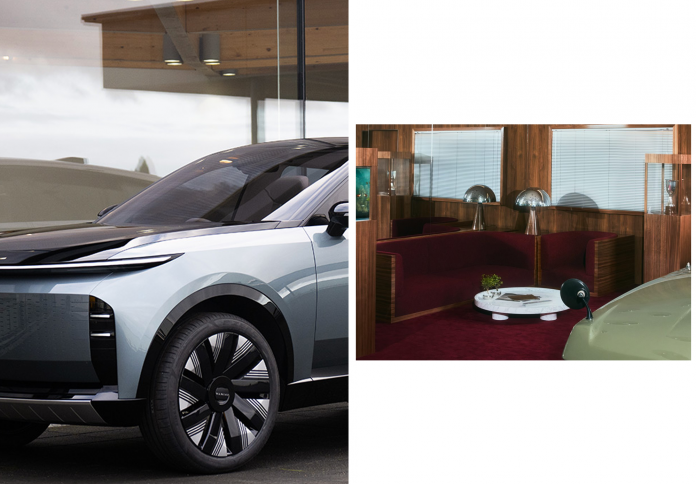
Taylor points to a growing trend where automotive giants are desperate to prove their design credentials outside the context of the road. We now see Range Rovers nestled between mid-century armchairs in luxury showrooms, Jaguar debuting at art fairs in Miami, and Bentley launching kitsch homewares during Milan Design Week. These “marketing stunts” are more than just promotional events; they are attempts to frame the car as a significant part of a wider lifestyle decision. By aligning themselves with high-end furniture and contemporary art, car brands are signaling that their products are “accessories” in the truest sense.

This move toward design-led thinking reflects a climate where audiences are hyper-attuned to the credibility of a brand’s aesthetic language. In a world where car ownership feels increasingly unnecessary for city dwellers, manufacturers must sell an “atmosphere” rather than a ride. Taylor notes that it is often safer for a brand to gamble on an “over-the-top” activation than to risk a radical new vehicle design language. The goal is to create a mood that resonates in online spaces, ensuring that the car is “praised or canceled” for its cultural relevance rather than its drag coefficient.
The Interior as a Social Studio
As the steering wheel loses its place at the center of the story, the interior of the car is being reimagined as a “content studio” and a social lounge. Taylor envisions a future where the “driver” is freed from the task of driving, transforming the cabin into a space for catching up on culture, pouring drinks, and taking selfies. The design of these spaces is increasingly mirroring our living rooms and offices, with screens that sync to our digital lives and materials that prioritize comfort over “racing pedigree.” The car is becoming an extension of our homes—a mobile environment where the “mood” is the primary product.
This “atmospheric” shift is already visible in modern concept cars, which feature undulating velvet seats and wood-paneled cabins that feel more like boutique hotel lobbies than cockpits. Taylor suggests that the best design in this new era is that which is “seamless, invisible, and integrated” into how we live. The focus has moved from “balancing the ride” to balancing the sensory experience of the passenger. In this future, the value of a car will be determined by what it connects us to and how it makes us feel while we are inside it.
Nostalgia and the Future of the Object
Despite this drive toward the seamless and the digital, Taylor notes that nostalgia still plays a powerful role in how we perceive car design. Looking back at the “boxy silhouettes and geometric interiors” of 1970s Lancias, we are reminded of a time when design decisions were bold and visible. This retrospective gaze allows us to see the aesthetic connections to our cultural memory, providing a sense of grounding in an increasingly fluid world. For Taylor, this interest in the past is a sign of our desire to find “human-centered” design in our technology, choosing our cars as we choose our sofas—based on the story they tell about us.
Ultimately, Liv Taylor’s critique is a call to acknowledge that the traditional conversation about car design is over. Whether “car fanatics” are ready to admit it or not, the vehicle has been absorbed into the broader world of lifestyle design. This transformation is not necessarily a loss; it simply means that the car’s role in society has fundamentally changed. As we enter this era of the “automotive accessory,” the challenge for designers is to create spaces that are as emotionally resonant as they are technically efficient. The steering wheel may no longer be at the center of the story, but the human experience has never been more vital.