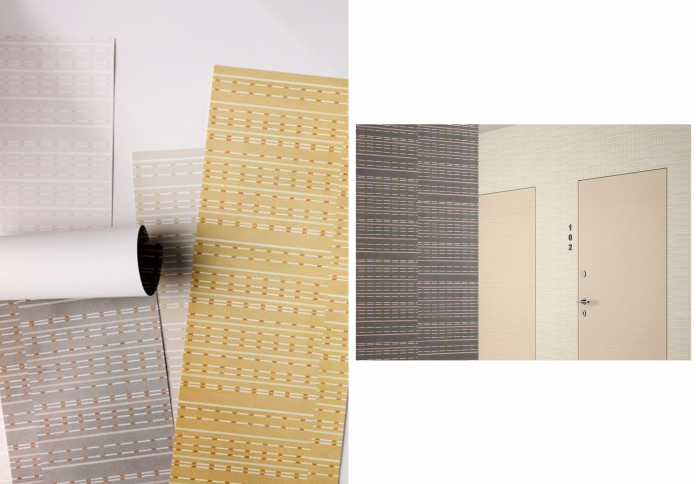
In the intricate world of surface design, there is a constant tension between the precision of digital printing and the soulful irregularity of hand-drawn art. The latest collaboration between the American brand Designtex and Maine-based artist Joe Kievitt, titled “Betwixt,” seeks to harmonize these two worlds. This linear wall covering is far more than a simple repeating pattern; it is a translation of Kievitt’s expansive portfolio of murals, mosaics, and abstract works on paper into a tactile, large-scale interior surface. By focusing on the rhythmic beauty of thin, speckled lines, Betwixt invites the eye to explore the spaces “between the lines,” offering a sophisticated, biobased alternative to traditional vinyl. It is a testament to the power of artistic collaboration to turn a functional wall into a quiet, meditative canvas.
The Art of Abstract Linearity
Joe Kievitt is a designer and carpenter whose artistic practice is rooted in the meticulous repetition of line and form. His work often explores the intersection of geometry and chance, utilizing manual techniques to create patterns that feel simultaneously structured and organic. In creating Betwixt, Designtex drew directly from Kievitt’s large-scale abstract works, where thin, horizontal lines serve as the primary architectural element. The resulting wall covering features a series of speckled, tonal bands that run horizontally across the surface, creating a sense of movement and depth that mimics the atmospheric quality of his original drawings on paper.
Unlike traditional wallpapers that rely on bold, repetitive motifs, Betwixt operates on a much subtler level. The patterning is designed to be “read” from both a distance and up close. From afar, the tonal bands create a cohesive, textured gradient that can anchor a room; upon closer inspection, the individual speckles and variations in the lines reveal a complexity that honors the artist’s hand. This duality makes the wall covering particularly effective in large-scale commercial and residential interiors, where it can provide visual interest without overwhelming the architectural space.
A Palette of Tonal Cohesion
Designtex has launched Betwixt in a comprehensive palette of 16 colors, each designed to provide a “cohesive aesthetic across walls.” Rather than utilizing high-contrast color combinations, each option consists of various tonal bands of a single color. This monochromatic approach emphasizes the texture and rhythm of the lines rather than the color itself. Whether in muted earth tones or more vibrant jewel hues, the wall covering maintains a sense of sophisticated restraint. This tonal cohesion allows Betwixt to function as a “quiet background” that complements contemporary furniture and lighting, making it a versatile tool for interior designers.

The choice of 16 colorways ensures that the product can adapt to a wide range of moods and environments. A deep, tonal blue might evoke a sense of nocturnal calm in a hotel suite, while a pale, warm beige could bring a natural, sun-drenched feel to a modern office. By using a single-color family for each variant, the designers have ensured that the wall covering remains visually “stable,” providing a sense of order and serenity that aligns with the artist’s original intent. It is a palette that values nuance over spectacle, inviting the viewer to appreciate the subtle shifts in shade and shadow.
Sustainability Printed in the DNA
In an era where the environmental impact of interior finishes is under intense scrutiny, Betwixt stands out for its commitment to sustainable materiality. The wall covering is digitally printed on “DNA non-vinyl” material, a proprietary substrate developed by Designtex that contains 50 per cent biobased cellulose. This shift away from traditional vinyl is a significant step in reducing the carbon footprint of large-scale interior projects. Furthermore, the material boasts low-VOC (volatile organic compound) certification, ensuring that it contributes to healthy indoor air quality—a critical factor in modern healthcare, education, and corporate design.
The use of digital printing technology allows for a high degree of precision in capturing the “speckled” detail of Kievitt’s lines while minimizing waste. Digital printing also offers the flexibility to produce large-scale patterns without the need for traditional screens, making it a more efficient and eco-friendly production method. By combining high-concept artistry with biobased technology, Designtex is proving that high-performance commercial wall coverings do not have to come at the expense of the environment. Betwixt is a product designed for the “conscious” interior, where beauty and responsibility are inextricably linked.
The Maine-Based Perspective
The collaboration with Joe Kievitt also highlights the importance of regional artistic voices in global design. Based in Maine, Kievitt’s work is informed by a sense of place and a commitment to the craft of making. His background as a carpenter brings a structural understanding to his art, ensuring that his patterns possess a sense of architectural “fit.” By bringing this Maine-based perspective to a global audience through Designtex, the project celebrates the diversity of the American artistic landscape. It is a reminder that the most compelling designs often emerge from a deep, personal connection to the act of creation.

Ultimately, Betwixt is a celebration of the “space between.” It honors the space between art and industry, between the hand-drawn line and the digital print, and between the artist and the end-user. As it finds its way onto the walls of contemporary buildings, it will serve as a quiet, textured reminder of the beauty that can be found in repetition and restraint. Joe Kievitt and Designtex have created more than just a wall covering; they have created a surface that breathes, inviting us to look a little closer and discover the elegance that lies between the lines.