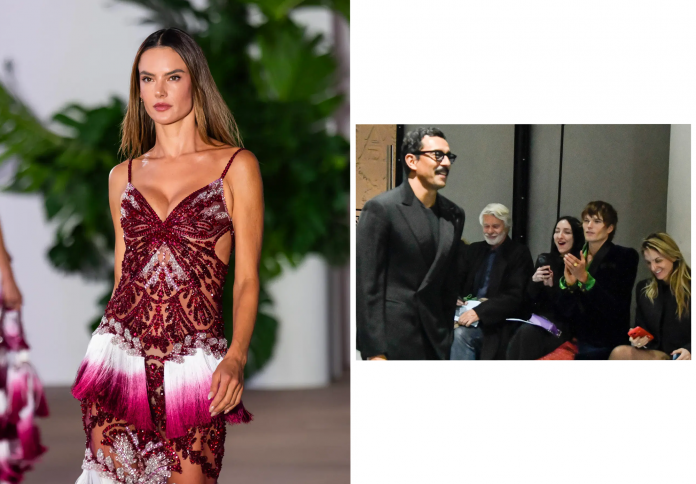
A fashion map organized only around Paris and Milan leaves out much of the work that makes clothes possible. Patricia Bonaldi’s Brazilian craft practice, Andrés Otálora’s Colombian ateliers, and Haider Ackermann’s internationally shaped career offer different routes into global fashion. They cannot be compressed into one regional aesthetic, even when a heritage celebration brings their names together. Latin American identity can concern birthplace, working relationships, materials, or the place where garments are made; those connections do not always coincide. Looking closely at the designers’ particular paths gives the category substance without turning it into a uniform style. The clothes emerge from distinct environments, and the people who make them participate in a fashion world that has never been contained neatly by the cities where collections are shown.
Cali Belongs on the Production Map
Andrés Otálora’s label works through ateliers in Cali and Bogotá. Those places are more than a biographical note attached to clothing later seen elsewhere. They locate part of the work involved in making the garments. A fashion image can travel quickly, losing the names of the people and locations that produced it. Returning to the atelier changes that perspective: a dress is the outcome of handling material, developing a cut, and assembling parts through skilled work in a particular setting.
The label’s appearance in Meghan Markle’s wardrobe during her Colombia visit gave it another kind of visibility. A public figure can introduce an audience to a designer, but the photograph is only one point in the object’s journey. The work in Cali and Bogotá existed before that image circulated and remains relevant afterward. The celebrity photograph can introduce Otálora’s work; returning to the ateliers reveals the skilled activity that preceded the moment of visibility.
Bonaldi Makes Handwork a Contemporary Proposition
Patricia Bonaldi’s PatBO draws on a Brazilian background in making clothes and an emphasis on handwork. The brand’s embroidery and constructed surfaces bring craft into garments intended for contemporary wear. Handwork should not be treated as an automatic sign of authenticity or as a picturesque contrast to modern fashion. It is a set of techniques that can produce specific effects: a textured edge, an intricate pattern, or decoration integrated into the shape of a garment.
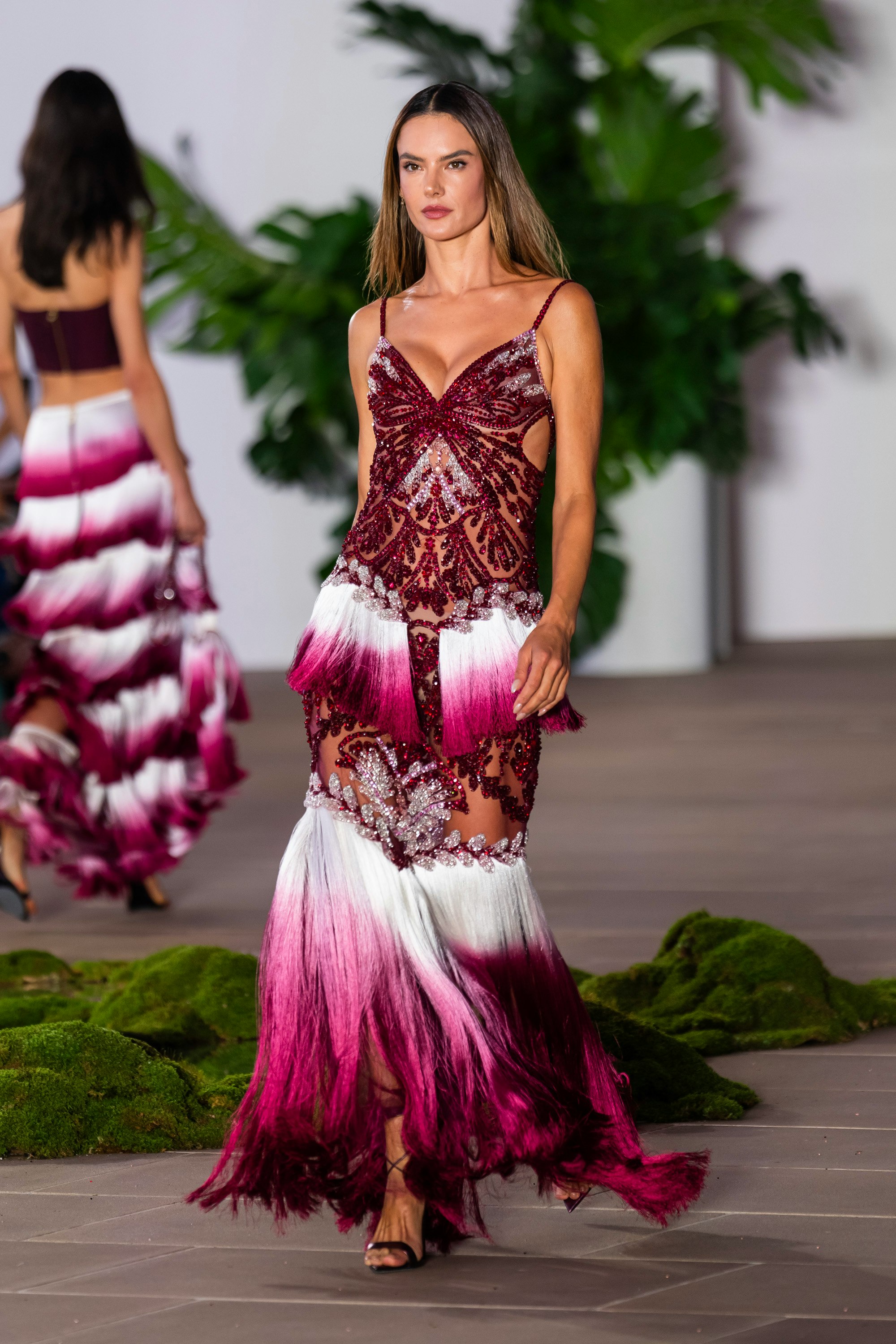
Those techniques also require time and instruction. A surface that appears effortless in a campaign may involve many repeated actions by skilled makers. Discussing craft at that level avoids the vague romance of a regional tradition that somehow sustains itself. Knowledge remains active because people use it, teach it, and adapt it to new design problems. Bonaldi’s embroidered surfaces make Brazilian fashion visible through repeated stitches and the techniques that sustain them.
Ackermann’s Biography Crosses the Category
Haider Ackermann was born in Bogotá and adopted by a French family, growing up across several countries before his later professional life in European fashion. His path complicates the assumption that a designer’s birthplace should provide a complete explanation of his aesthetic. A person can carry a connection to Colombia while acquiring experiences and working relationships elsewhere. The resulting clothes need not perform a single national identity to justify that connection. Biography can remain complex without becoming an obstacle to recognition.
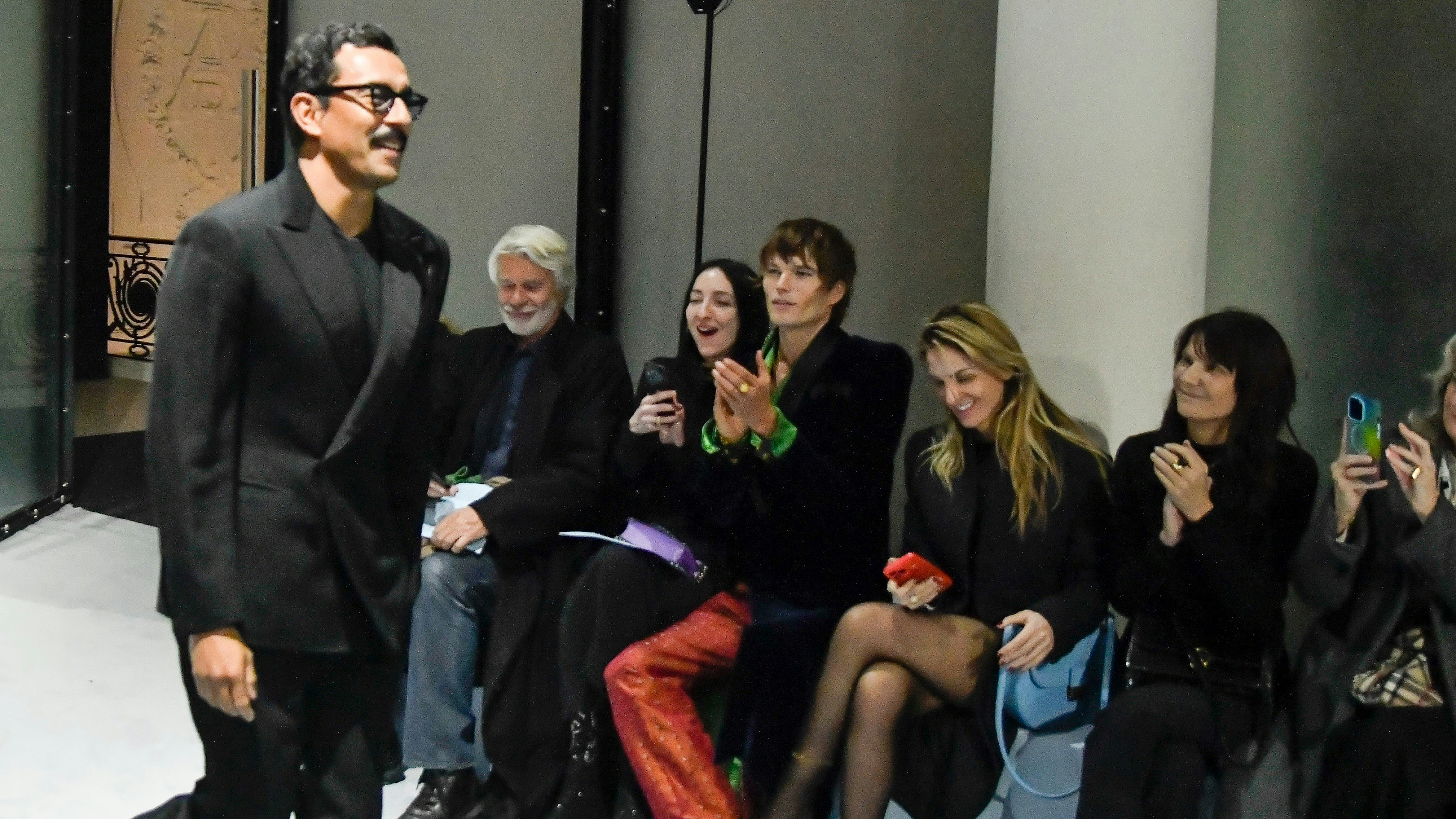
His work has involved drape, tailoring, and a controlled sense of color, qualities that invite attention to the garments themselves. The international movement in his life supplies context, but it should not be used to invent a geographical origin for every design decision. A particular fold can be discussed as a fold; a sharply cut jacket can be examined through its construction. Ackermann’s Colombian connection can coexist with a fold whose immediate significance comes from its handling of material.
Hispanic and Latin American Are Not Identical
A heritage celebration can bring Spanish-speaking communities and designers from Latin America into related discussions, but the terms describe different connections. Brazil’s principal language is Portuguese, so Brazilian designers should not be treated as Hispanic simply because their country is part of Latin America. This distinction is especially relevant when Bonaldi appears beside Colombian designers. The grouping can be useful, provided its language does not erase the specific cultural and linguistic histories of the people being recognized.
Precision also prevents a regional list from becoming a claim that one aesthetic unites all its members. Geography does not prescribe a common silhouette. A Brazilian label emphasizing intricate handwork, a Colombian atelier producing tailored garments, and an internationally based designer exploring drape can all contribute to global fashion through different methods. Their proximity in a discussion should make those methods easier to compare, not make them appear as variations of an imagined shared essence.
A Runway City Is Only One Stop
Paris, Milan, and New York provide stages, professional networks, and systems of visibility. Their importance does not mean that design begins and ends within their boundaries. A garment shown in one city may depend on knowledge developed somewhere else and production organized across several locations. Fashion’s geography is therefore better understood as a series of relationships: who designs, who makes, where the work happens, and how the resulting object reaches an audience.
The designers considered here make those relationships concrete. Otálora’s ateliers locate a working practice in Colombia. Bonaldi’s craft emphasis foregrounds techniques associated with her Brazilian context. Ackermann’s path reveals how a career can develop across borders without losing every connection to birthplace. These are different accounts of participation, and they make the larger map more detailed. The category Latin American fashion is useful when it helps the viewer discover those accounts and remains flexible enough to accommodate their differences.
Look again at an internationally circulated fashion photograph and its apparent center begins to move. The celebrity or runway may still attract the eye first, but behind the image are other addresses where material was cut, stitched, and handled. Naming those places gives the clothes a fuller geography. It also gives the makers a place in the picture, even when the final camera was waiting thousands of miles away.