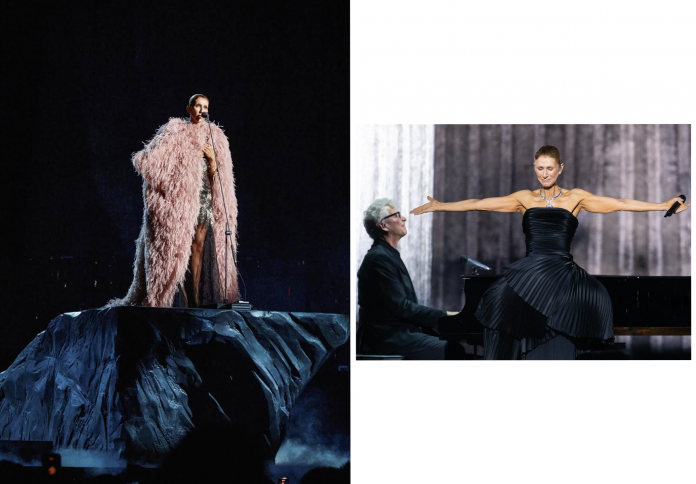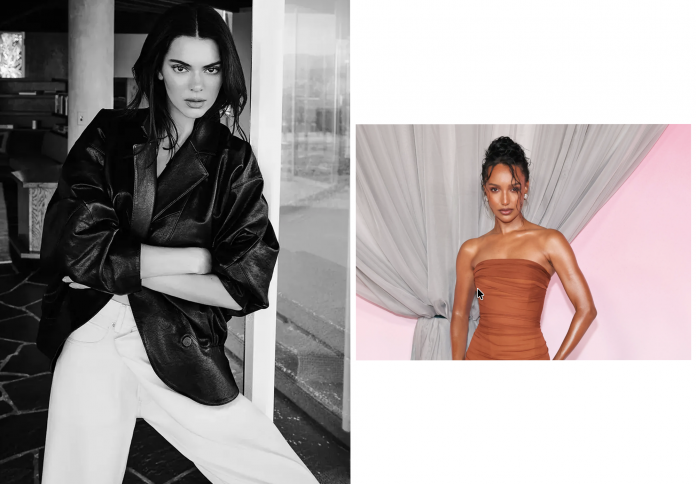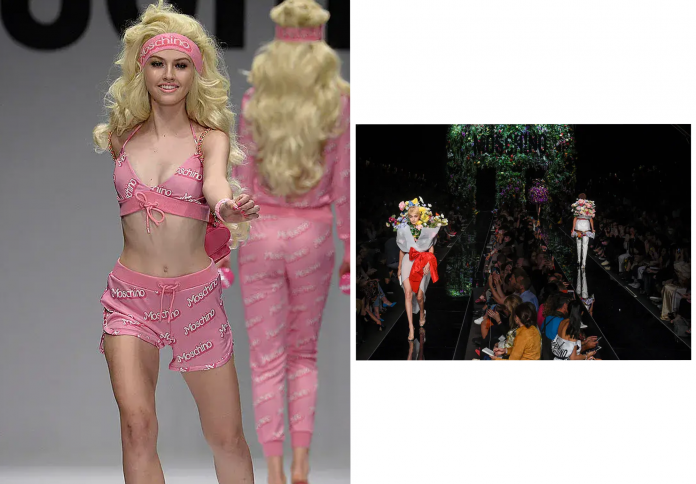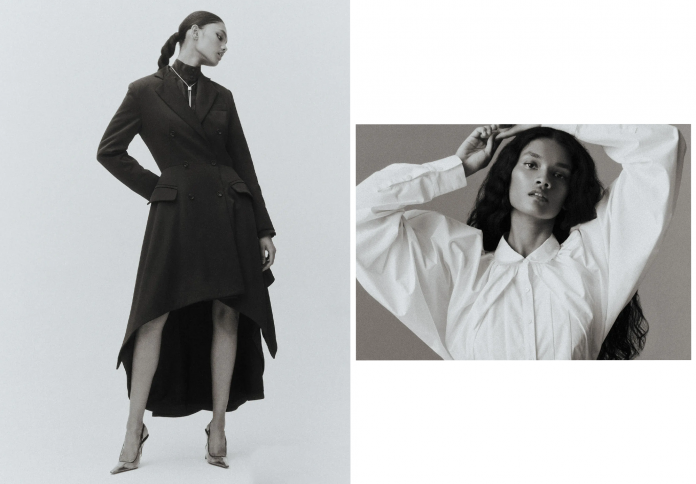
A bell-shaped flare changes a garment before it changes an outfit. In Fall/Winter 2026, rounded jackets, structured dresses, and reworked waistlines give that outward movement a renewed presence, placing volume where a flatter silhouette might have followed the body more closely. Givenchy, Tory Burch, and Dior offer different versions of this curved vocabulary. Its appeal is not confined to a nostalgic return of bell-bottoms or a single decade’s proportions. The curve can begin at the shoulder, widen at the hip, or emerge through the edge of a jacket. Looking at where that volume starts reveals how the clothes frame the wearer, creating a shape that has its own presence while leaving the body inside it room to remain individual.
The Edge That Refuses to Fall Straight
A peplum creates an interruption. Instead of continuing directly downward, fabric moves outward around the waist or hip, making an edge into a visible event. The construction can appear modest or dramatic depending on stiffness, length, and placement. A soft flare follows movement; a more structured one holds its line. Both alter the relationship between the body and the garment, but they do so with different degrees of independence. The curve is therefore a construction choice before it is a styling trend.
Its effect also depends on the garments around it. A flared jacket over a narrow lower half establishes one kind of contrast, while a similar jacket beside a full skirt can produce a more continuous volume. Neither arrangement is universally flattering, and that word can obscure the design itself. The more useful description asks where the eye is directed and how the shapes interact. A peplum can emphasize a transition between parts of the outfit without having to supply a judgment about the body beneath it.
Givenchy Rounds the Jacket’s Authority
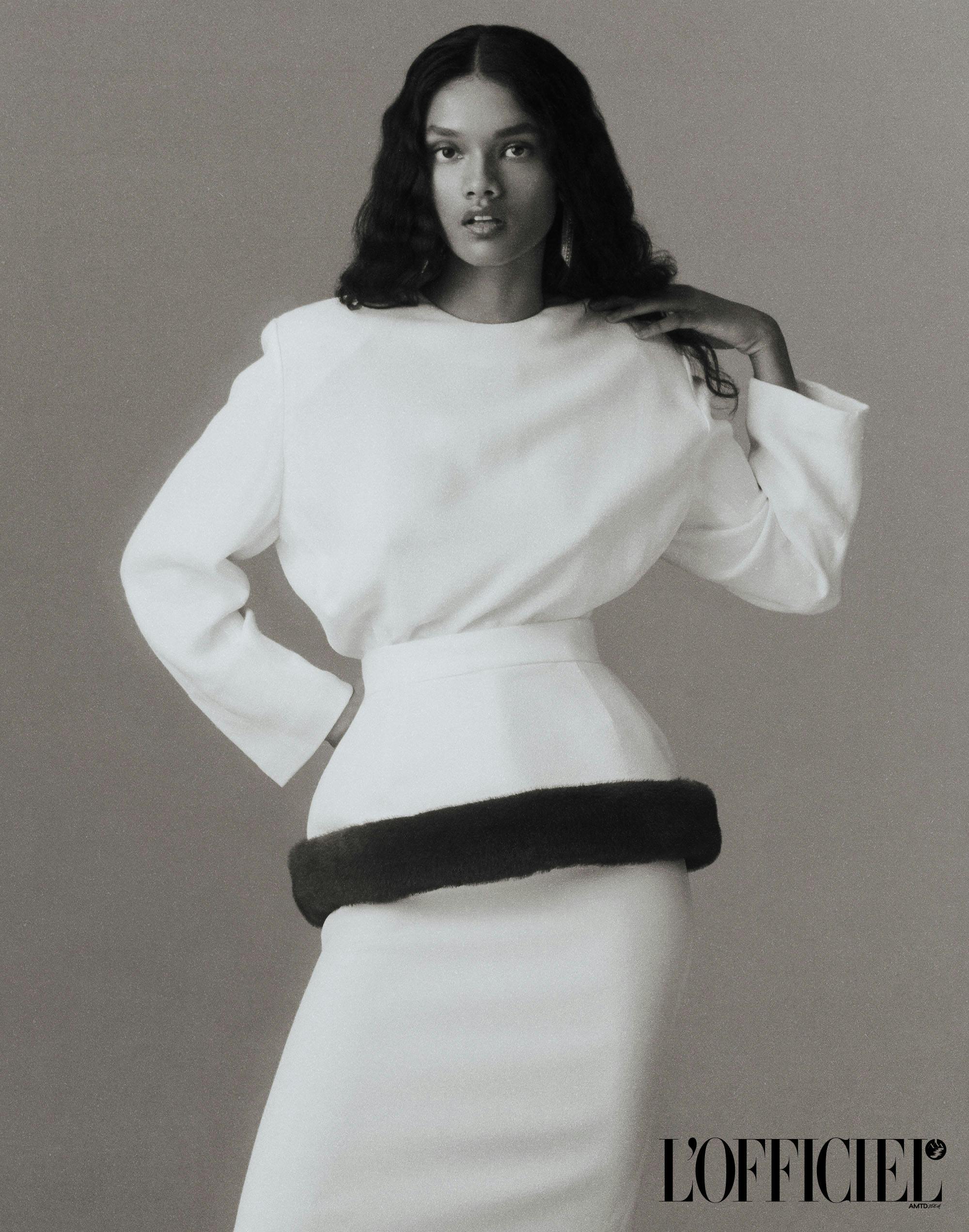
Sarah Burton’s rounded blazers at Givenchy place the curve inside a garment associated with tailoring. A blazer conventionally provides a controlled frame through its shoulders, front, and closure. Adding rounded volume changes that authority without removing the garment’s recognizable identity. The jacket can remain deliberate and formal while acquiring a less strictly linear outline. The alteration is particularly effective because the familiar structure gives the new proportion something clear to work against.
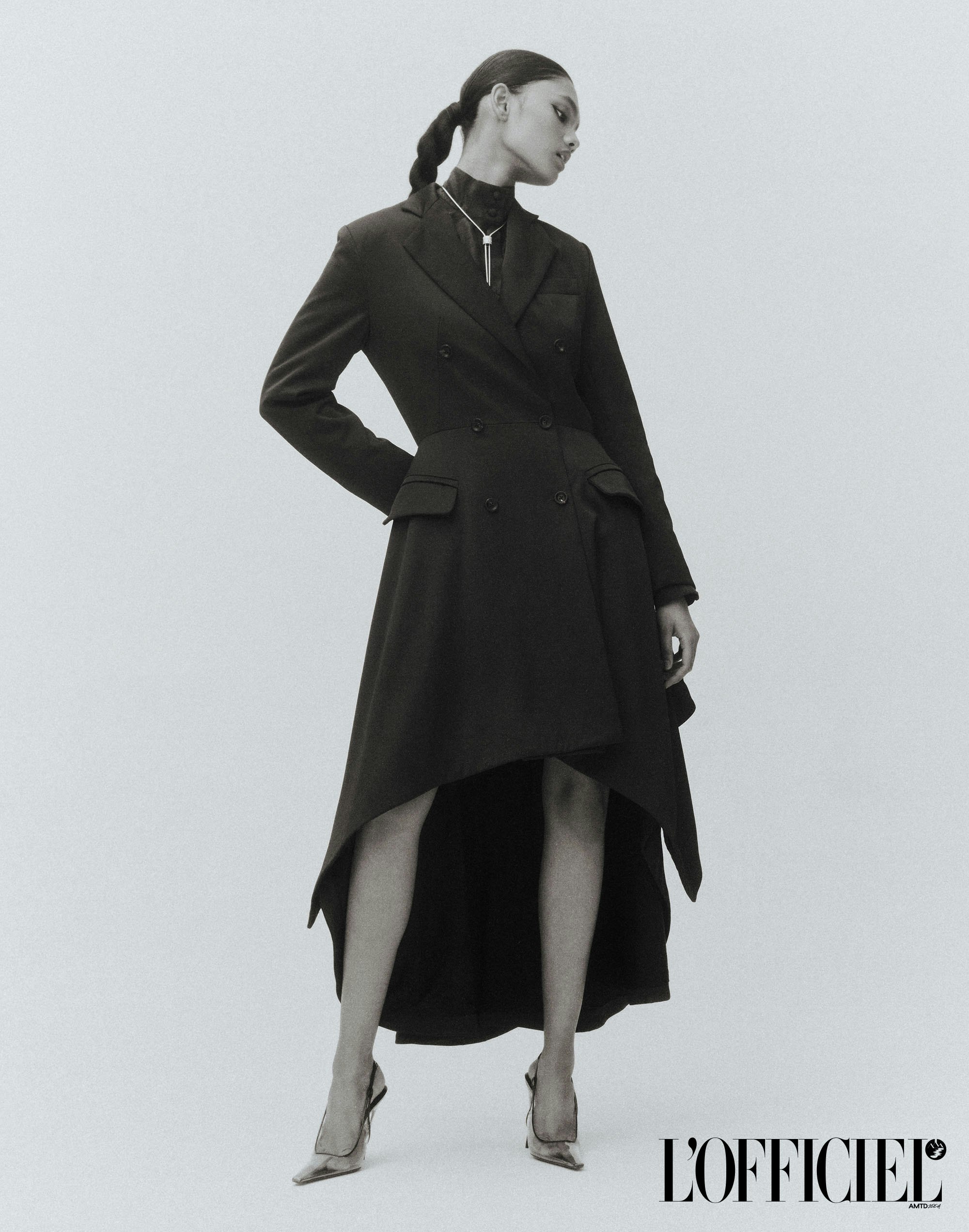
Tailoring also makes the curve a technical problem. Volume has to be distributed through seams, internal support, and the behavior of the fabric. A photograph can show the resulting silhouette, but the appearance depends on decisions made inside the garment. The interest is not simply that a jacket has become sculptural. It is how the sculpture is sustained when the wearer turns, sits, or moves an arm. A shape designed for a body must negotiate motion as well as preserve an image.
Dior’s Waist Carries a Design Memory
Jonathan Anderson’s reworked Bar jacket places current proportions in conversation with one of Dior’s recognizable historical forms. The reference already involves a controlled relationship between waist and hip, making it particularly suited to reconsideration through a curve. A contemporary version need not reproduce the original outline exactly to remain connected to it. Changing the distribution of volume can make the memory visible while allowing the garment to belong to a different wardrobe and a different physical rhythm.
This is a useful distinction between an archive and a template. An archive can provide a problem worth reopening: how should a jacket define the space around the waist? A template supplies an answer to repeat. Anderson’s treatment becomes interesting when it treats Dior’s familiar form as a question that can receive another answer. The shape carries continuity, but the new garment needs to establish its own balance among fabric, wearer, and the other pieces that complete the look.
Tory Burch’s dresses bring the curved vocabulary into another setting, including plaid surfaces that help the eye follow how the fabric changes direction. A pattern makes volume legible differently from a solid color. Lines can bend, spread, or meet across a seam, drawing attention to construction. The dress’s surface and outline therefore work together. The curve does not merely sit underneath the print; it alters the way the print is read, making the form visible through the movement of familiar marks.
A Bell Bottom and a Peplum Are Different Gestures
Flared trousers place widening near the ground, while a peplum relocates it higher around the torso. Both can be described through a bell-like shape, but their effects on an outfit differ. A trouser flare changes the rhythm of the leg and the relationship to footwear. A jacket flare changes the transition between the upper and lower body. Grouping them together can identify a recurring interest in outward volume, provided the comparison does not erase where that volume actually operates.
The history of dress contains many such experiments with expansion. Their recurrence does not mean that every new version is a simple revival of an earlier decade. Materials, surrounding garments, and the expectations of daily movement give the shape another context each time. The Fall/Winter 2026 examples are compelling because they bring the curve into several categories at once. The jacket’s projected edge and the dress’s rounded volume locate the shape in different parts of a present-day wardrobe.
For a wearer, the most direct encounter remains physical. A hem projects beyond the body; a jacket edge keeps its distance from the hip; a rounded shoulder changes the outline seen in a mirror. Those details are sufficiently specific to consider without inventing one universal message about femininity or confidence. The shape offers a way of occupying space, and the person wearing it determines how that space is carried through a room.
The curve’s return is therefore less a command to adopt a bell-shaped wardrobe than an invitation to notice where clothing stops following the body. At that edge, tailoring becomes visible as a choice. A small outward movement can make the difference between a garment that traces a silhouette and one that builds a new outline around it.