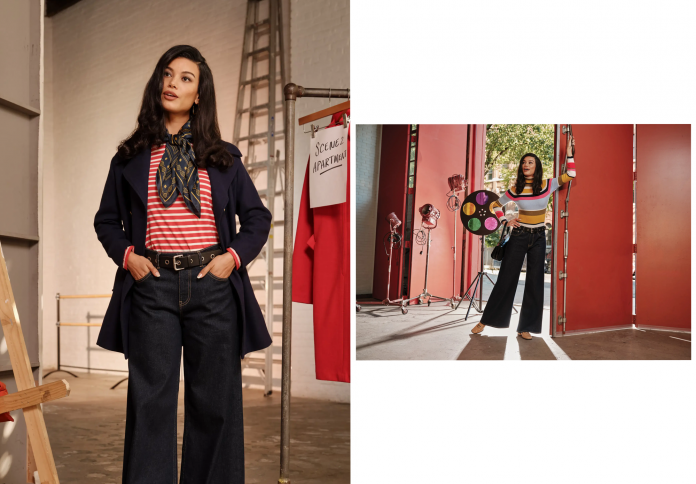
The hat Mary Tyler Moore tossed into the air has returned as a piece someone else can wear. Frances Valentine’s collaboration with the Mary Tyler Moore Vision Initiative translates the actor’s television wardrobes into contemporary ready-to-wear, shoes, and handbags, including an updated striped tam. The collection draws from both Mary Richards and Laura Petrie, two characters whose clothes occupied distinct settings within American screen culture. A personal archive gave the brand a close view of construction and color; a charitable commitment gives the new capsule another purpose beyond recollection. Twenty percent of net sales supports the Vision Initiative. The collection joins remembered television style to the work of making garments for the present, with an accessory carrying history without needing to remain a souvenir.
A Toss Gives a Small Object a Large Memory
The opening sequence of The Mary Tyler Moore Show made a hat part of a widely recognizable gesture. The object’s meaning came from its movement through the scene, not merely from its shape. Bringing a tam into the Frances Valentine collection gives that memory something tangible to attach to again. The updated stripes create a new visual identity while preserving the category that makes the reference legible. A wearer can recognize the connection without being required to recreate the television sequence.
That distinction matters for a collection based on screen history. A literal replica can function as memorabilia, valuable primarily because of its resemblance to a remembered object. A redesigned hat has another task: it needs to work with clothes in somebody’s current life. The reference can remain present while the styling changes. Worn with a jacket or a knit, the tam becomes part of a new composition, giving a remembered accessory a place among the wearer’s own choices.
Mary Richards and Laura Petrie Had Different Days
The collection draws on wardrobes from The Mary Tyler Moore Show and The Dick Van Dyke Show. Those references do not describe one interchangeable television persona. Mary Richards and Laura Petrie inhabit different narrative settings, and their clothes acquire meaning within the work, domestic life, and relationships the programs present. Looking across both characters allows the collection to explore polished separates and a range of silhouettes without reducing Moore’s screen identity to a single costume.
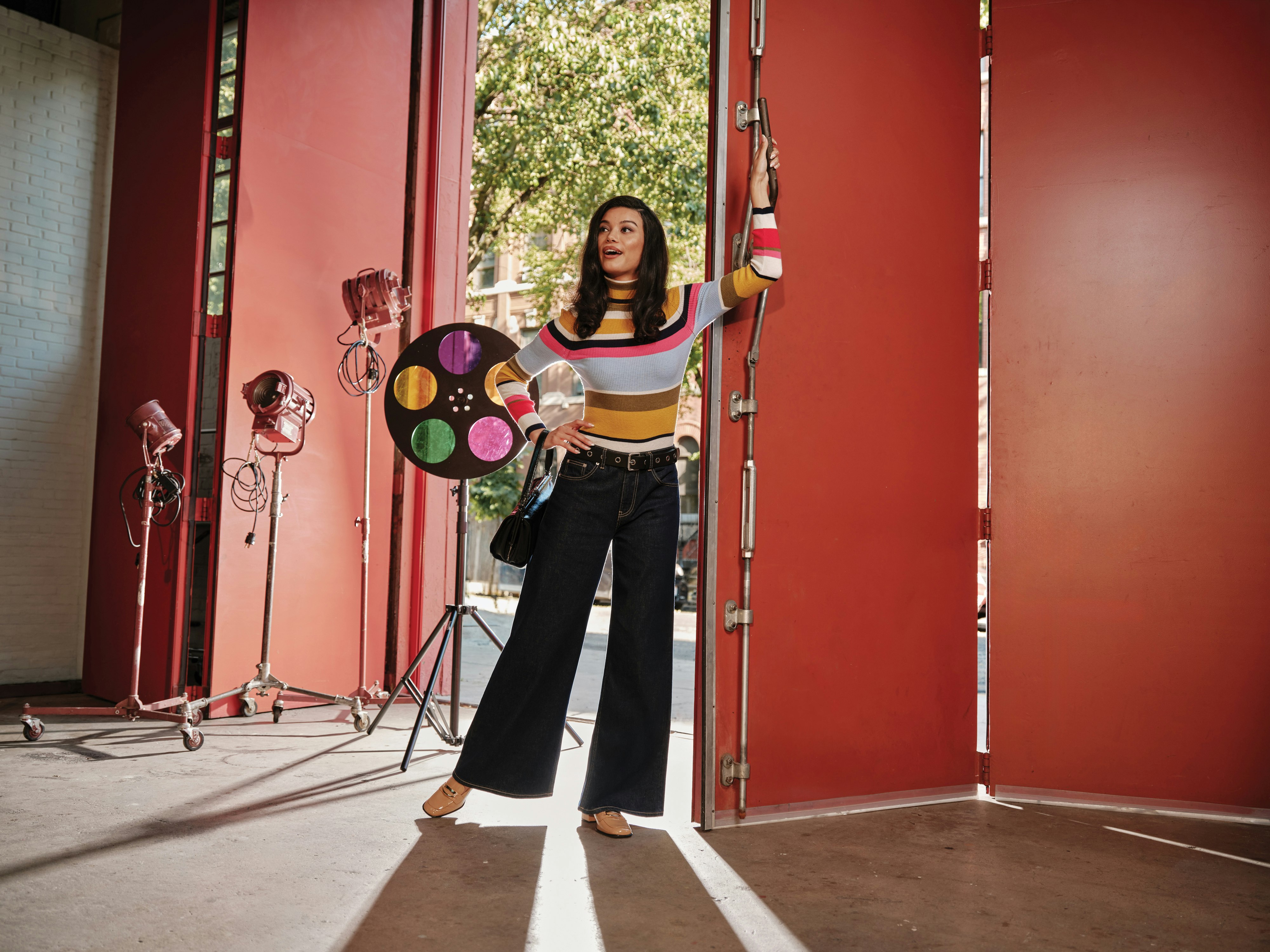
Vintage-inspired tailoring, strong color, and coordinated pieces provide the capsule’s visible vocabulary. Those features can communicate readiness and composure while remaining adaptable. A jacket changes an outfit’s structure; a knit can introduce a more relaxed surface; a handbag carries color into a smaller scale. Their relationship to television style becomes most useful when the clothes are understood as functioning garments. The collection need not ask a wearer to act like Mary Richards in order for a carefully chosen jacket to make sense.
The Archive Offers More Than a Photograph
Elyce Arons viewed Moore’s personal archive after an invitation from Moore’s husband, Dr. S. Robert Levine. Access to actual garments provides information that a television image cannot fully deliver. A photograph can show a silhouette, but an object reveals the material, the relationship between exterior and lining, and the way a piece has been constructed to maintain its shape. Handling the originals gave the team information about construction that television images had left out.
Arons’s connection to Moore also predates the collaboration. She and Kate Spade grew up watching the actor, making the references part of the personal context from which Frances Valentine developed. That history helps explain the project’s affinity with color and personality, but it is not a substitute for design. Admiration needs to become decisions about cut, textile, and proportion. The archive gives that translation something concrete to work from, allowing a remembered style to be reconsidered through the physical properties of its clothes.
Fourteen Styles Need to Work Outside the Set
The capsule contains 14 ready-to-wear styles, two handbags, and three shoe styles. The handbags and shoes extend the reference into the small decisions that accompany a ready-to-wear outfit. Separates can be combined within the collection, but they can also enter an existing closet one at a time. That possibility is essential to the project’s present-day relevance. A piece can keep its historical reference while acquiring a new set of companions chosen by the person who wears it.
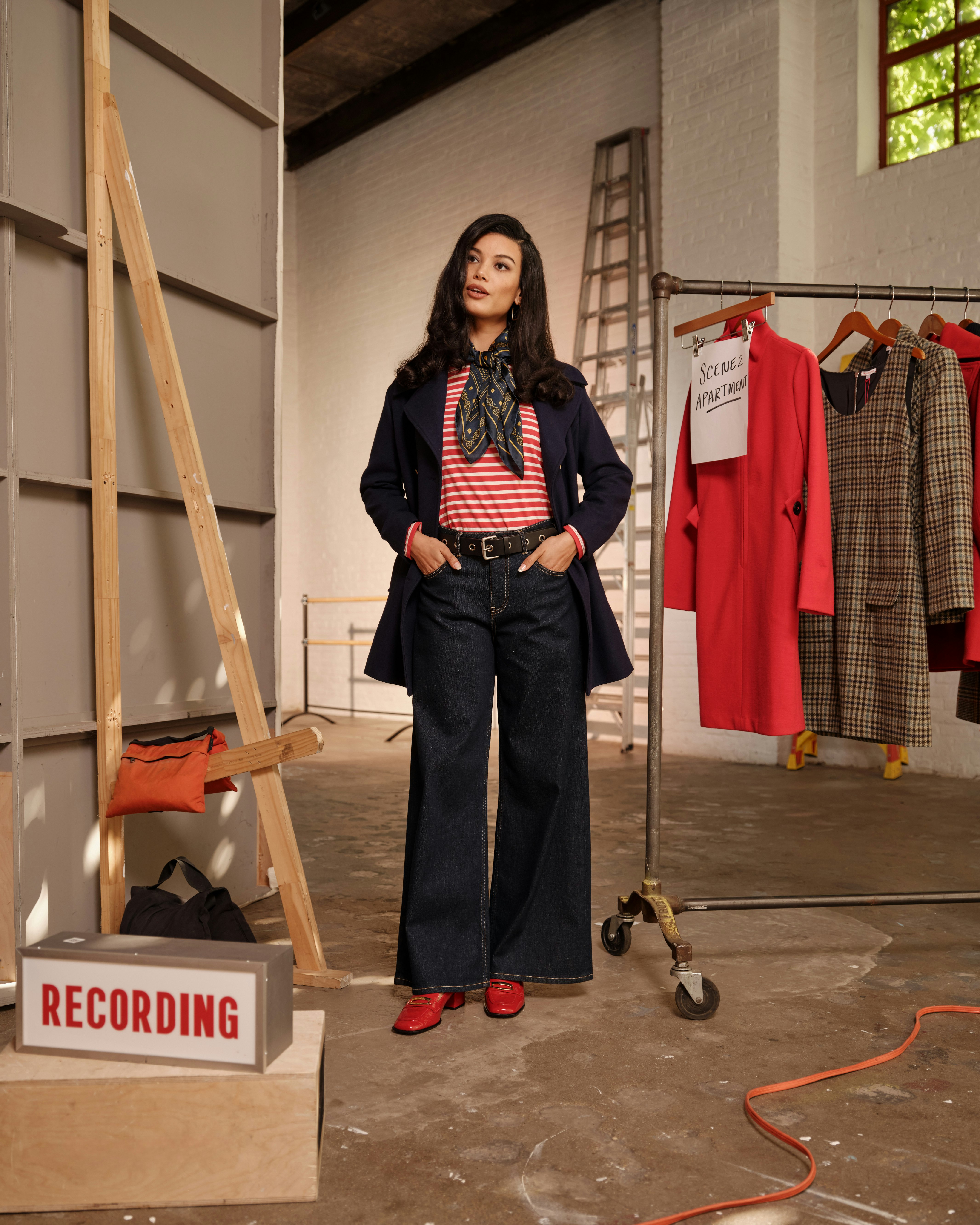
The campaign’s striped knit, wide-leg jeans, and tailored jacket combinations make that translation visible. Familiar elements have been arranged to read as clothes for a current wearer, not as a reconstruction of a studio scene. Color supplies continuity across pieces while allowing each to maintain its own function. A red loafer or a patterned scarf can carry personality at a smaller scale than a full outfit. A scarf or loafer can carry the television connection into an outfit otherwise assembled from the wearer’s existing clothes.
Net Sales Connect the Clothes to Vision Research
The commitment of 20 percent of net sales to the Mary Tyler Moore Vision Initiative needs to be stated precisely. Net sales is the specified basis for the contribution; the initiative directs its support toward research. The initiative was established in Moore’s honor and supports research related to preserving and restoring vision for people living with diabetes. The collaboration links the actor’s style legacy with a cause connected to her life.
That relationship gives the capsule another kind of continuity. The television wardrobe reaches new wearers, while the contribution supports work that extends beyond fashion. Neither purpose has to stand in for the other. A customer may encounter a well-cut jacket first and learn about the initiative afterward; another may arrive through an interest in Moore’s legacy. The project can accommodate both routes, provided its charitable language remains as exact as its design references.
The striped tam is a useful place to end because it holds the collection’s two times at once. It recalls an airborne hat in an opening sequence and sits ready to become an ordinary object in a contemporary wardrobe. The historical gesture remains memorable, but the new wearer is free to keep the hat on.