Off the southwest coast of the Isle of Man lies a speck of land that seems to have slipped through time. The Calf of Man—remote, untamed, and often inaccessible—is a place of both solitude and renewal. Once home to monks, lighthouse keepers, and hermits, it now serves as a vital refuge for seabirds and a beacon of conservation in the Irish Sea.
A pilgrimage across wild waters
On the morning of the crossing, the harbor at Port Saint Mary sat in quiet anticipation. Seagulls kept lazy watch over idle lobster pots, and only one boat engine stirred to life. Aboard was a small crew setting off across the choppy, unpredictable Calf Sound toward one of the British Isles’ most elusive destinations: the Calf of Man.
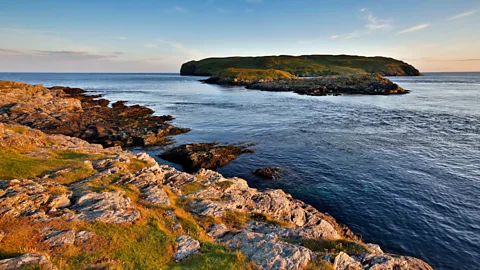
Less than half a mile from the Isle of Man’s Meayll Peninsula, the Calf may be close in distance but feels worlds apart. Hemmed by steep cliffs and surrounded by treacherous waters, the island is often unreachable, cut off for days or even weeks by rough seas. Shipwrecks—French schooners, Glaswegian cargo vessels, and a Liverpool brig—lie scattered beneath the waves, testament to centuries of perilous approaches.
Yet despite, or perhaps because of, its isolation, the island has long captured the imagination of those who attempt the crossing. “The Calf is a unique, beautiful place,” said Steve Clague, a local sailor whose family has ferried travelers there for generations. “It’s unspoilt and always transforming. The trick isn’t to come once, but to see it in all its different moods.”
A sanctuary for seabirds
Today, the Calf of Man is largely uninhabited. A pair of wildlife wardens and a rotating group of volunteers oversee operations from March through November, based out of a modest Bird Observatory at the island’s center. But while human presence is minimal, the island hums with life.
Most of the Calf’s full-time residents are feathered: guillemots, razorbills, gannets, fulmars, and kittiwakes. Of particular pride is the Manx shearwater—a long-lived seabird with deep ties to the island. Once nearly wiped out by invasive rats, the shearwater population has rebounded dramatically. Now, an estimated 1,500 breeding pairs call the island home.
“It’s a rare good news story,” said Shaun Murphy of Manx National Heritage, as he scanned the cliffs for signs of movement. Murphy has visited the island regularly since the 1970s. “The guillemot colonies are thriving, and we’ve seen a record number of seal pups born. Efforts to reintroduce puffins are also underway.” Those efforts include the installation of 100 lifelike puffin decoys, hoping to lure the comical birds back to their ancestral nesting grounds.
A living history written in stone and feather
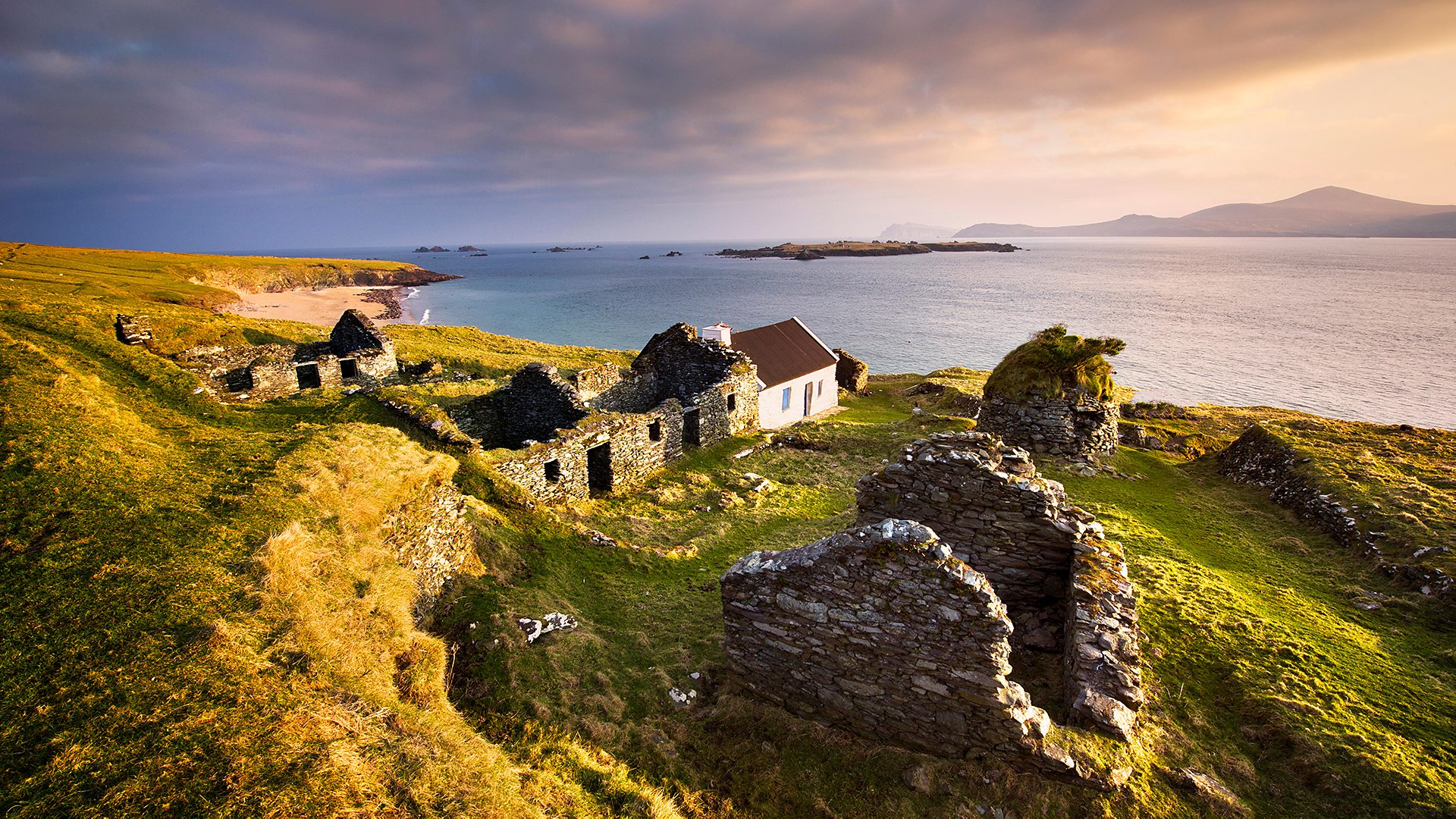
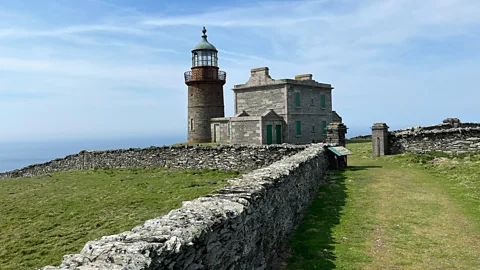
The island’s rugged terrain holds traces of every chapter in its history. Stone remnants of a keeill, or early Christian chapel, hint at a time when monks sought solitude here over a thousand years ago. Later, fugitives from Elizabethan justice found refuge. More recently, tenant farmers, lighthouse keepers, and shepherds eked out a tough existence on this wind-lashed outpost.
Today, decaying smithies, mills, and stone-walled enclosures dot the landscape. Even the sheep are unique: four-horned Manx Loaghtan rams and ewes continue to graze freely, their presence a living link to centuries-old agricultural practices. But the island’s heart lies at the Bird Observatory, a short walk inland from the South Harbour. There, ornithological wardens like Eleanor Grover spend their days ringing birds with ID tags—part of a decades-long effort to track migratory patterns, breeding success, and population shifts. “It’s a quick process,” Grover said. “Today alone, we’ve recorded some seasonal firsts—an osprey, a lesser whitethroat, and a reed warbler.”
Since the start of the tagging program in 1959, more than 307,000 birds have been ringed. The work is scientific, yes—but also spiritual, an ongoing dialogue with nature that unfolds across seasons and years.
Island of extremes, island of dreams
Life on the Calf is not without its challenges. Blue tits, Grover joked, are surprisingly aggressive for their size, while shearwaters—clumsy on land and most active at night—pose logistical nightmares. “They’re easy to catch,” said estate warden Kate Fox, “but they only come ashore under the cover of darkness to avoid predators. That means late nights for us.”
Still, there is magic in the difficulty. As the return boat idled at the harbor, waiting for its passengers, Fox gazed out toward the restless sea. “There’s a wonderful sense of isolation,” she said. “It’s magical.”
This sense of detachment—from phones, traffic, cities, and the weight of modern life—is perhaps what gives the Calf of Man its lasting allure. To visit is to step outside time, into a parallel world shaped by tide and wind, birdcall and history. It is a place of stories, both ancient and ongoing, where seabirds return, despite all odds, and humans are reminded what it means to belong to nature rather than master it.
A fragile future
For all its resilience, the Calf of Man remains vulnerable. Climate change, rising sea levels, and human interference threaten the delicate equilibrium that has allowed the island’s wildlife to flourish. Light-footed tourism, scientific stewardship, and strict conservation protocols help mitigate the risks—but the balance is thin.
And yet, the Calf endures. Not merely as a wildlife haven or a piece of living history, but as a rare, vital space in which the modern world momentarily recedes. Here, surrounded by the restless Irish Sea, time slows. Birdsong replaces noise. And for those few who make the journey, the island offers not just a getaway, but a glimpse into something much deeper—a way of life defined by care, observation, and wonder.
The Calf of Man may be small, but its spirit is vast. Anchored between solitude and renewal, myth and science, it stands as one of the last true wild places in the British Isles. And in that wildness, it offers something increasingly rare: peace.