In a world where walls are often seen as barriers that divide us, architect Kengo Kuma has offered a radical new vision. His “Wall of Public Life,” a striking installation for the Seoul Biennale of Architecture, is a profound and thought-provoking piece of public art that challenges our preconceived notions of urban space. It is not a wall that divides, but a wall that invites, a porous and transparent structure that encourages a sense of community and connection. This is a powerful architectural statement that redefines the relationship between people and the built environment, using a blend of traditional materials and a modern sensibility to create a space that is both beautiful and deeply meaningful.
Kengo Kuma: The Master of Natural Architecture
Kengo Kuma is a name that is synonymous with a new kind of architecture—one that is focused on a deep respect for natural materials and a desire to create a harmonious relationship between a building and its surroundings. His signature style, which often uses wood, stone, and other natural materials, is a powerful rebuttal to the cold, impersonal architecture of the past. Kuma believes that a building should be a part of its environment, a place where people can feel a sense of connection to nature.

His “Wall of Public Life” is a perfect example of this philosophy. It is an installation that is designed to be in complete harmony with its surroundings, a piece of public art that is both beautiful and functional. It is a testament to the idea that a building can be a source of peace and a connection to nature, a powerful symbol of a new era of responsible design. Kuma is not just an architect; he is a visionary who is changing the way we think about the built environment.
The Design: A Wall That Invites, Not Divides

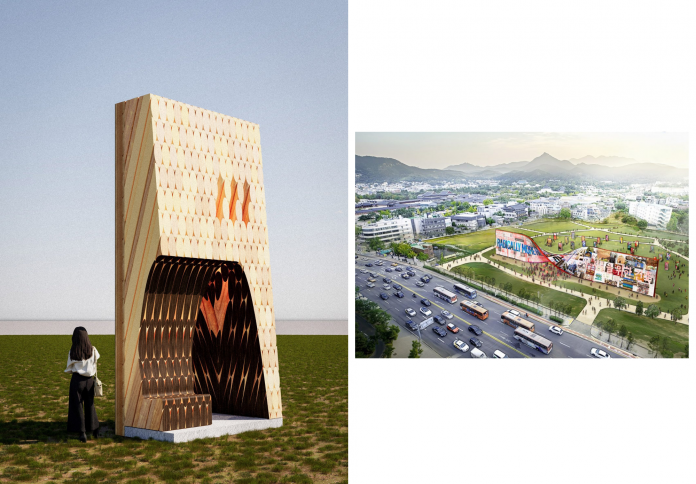
The design of the “Wall of Public Life” is a triumph of architectural grace and a powerful statement about the nature of a wall. The installation is a series of wooden planks that are arranged in a way that creates a sense of both a physical structure and a porous, semi-transparent space. The planks are arranged in a way that allows for a sense of public life to flow through the wall, creating a new kind of urban space.
The installation is designed to be a place for people to gather, to sit, and to connect with each other. It is a place that is both a physical structure and a metaphorical one, a place that is designed to break down barriers and to bring people together. The wall is not a barrier; it is an invitation. It is a powerful example of how a simple architectural element can be used to create a new kind of public space, a space that is both beautiful and deeply meaningful.
The Philosophy of Public Space in an Urban Age

Kuma’s installation is a profound statement about the philosophy of public space in a modern, urban age. In many cities, public spaces are often designed to be sterile and impersonal, places that are meant for passing through, not for lingering. Kuma’s “Wall of Public Life” is a powerful rebuttal to this. It is a place that is designed to be a source of community and connection, a place where people can feel a sense of belonging.
The installation is a testament to the idea that public space is not a commodity but a necessity. It is a place for people to gather, to connect, and to feel a sense of community. The project is a powerful reminder that we can design a world that is more open, more inclusive, and more connected. It is a call to action, a reminder that we can use architecture to create a more humane and more beautiful world.
A New Era of Architectural Engagement
Kuma’s “Wall of Public Life” is a powerful example of a new era of architectural engagement. Architects and designers are no longer just building buildings; they are using their work to make a powerful statement about social and political issues. They are using their work to challenge our preconceived notions of the built environment and to create a more humane and more beautiful world.
The installation is not just a piece of art; it is a powerful call to action. It is a reminder that we can design a world that is more open, more inclusive, and more connected. It is a testament to the idea that a wall can be more than just a barrier; it can be a source of community, a place where people can feel a sense of belonging. The project is a powerful and beautiful reminder that the most creative and innovative designs are often those that are the most responsible.