Luxury watchmakers are reinventing timepieces in bold, unexpected ways — from lipstick-shaped watches by Chanel to diamond-studded bracelets concealing dials by Van Cleef & Arpels. As the traditional wristwatch gives way to jewelry-like creations worn as pendants, brooches, or chokers, this new trend blends horology with high fashion, appealing to a new generation of collectors and style lovers alike.
Breaking the mold: Watches beyond the wrist
Chanel’s latest launch at the Watches and Wonders trade fair in Geneva turned heads with its ingenious design—a lipstick-shaped case that opens to reveal a hidden watch dial. Named “Kiss Me,” the timepiece is crafted in a lacquered rectangular casing, adorned with 20 baguette-cut yellow beryls set in gold. This playful fusion of beauty and horology is part of Chanel’s capsule collection that includes amulet-like pendants concealing tiny clocks, blurring the lines between jewelry and timekeeping.
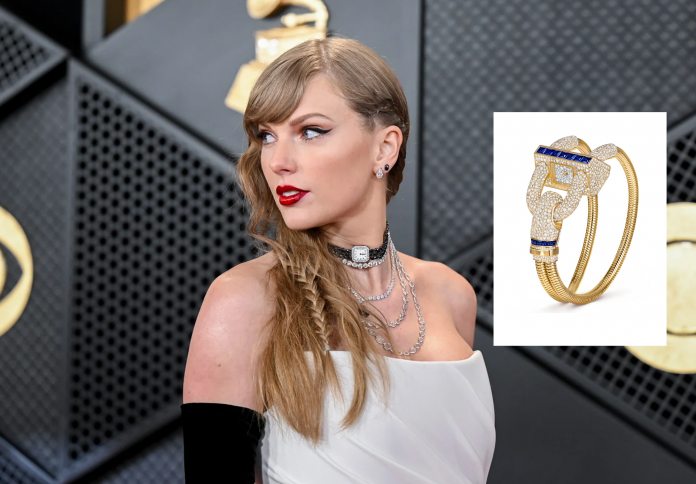
The rise of such unconventional timepieces reflects a wider shift in watchmaking, where designers are exploring new ways to wear and express time. Manon Hagie, sales director at Sotheby’s watches division, notes, “It’s a new way to wear time — one that celebrates uniqueness and individuality.” This trend extends beyond Chanel; Taylor Swift’s custom Lorraine Schwartz watch choker at the Grammy Awards last year demonstrated how watches are becoming bold fashion statements as well as functional objects.
Jewelry and watches: A seamless blend
At the Watches and Wonders fair, luxury brands showcased a variety of timepieces that look more like fine jewelry than traditional watches. Van Cleef & Arpels unveiled a diamond-studded edition of the iconic Cadenas—a padlock-inspired bracelet with a hidden watch dial, whose dual identity as jewelry and timepiece creates a modern, intriguing appeal. Similarly, Cartier’s new Panthère jewelry watches feature a diamond-studded open cuff with the brand’s iconic panther motif, cleverly hiding a watch dial that is revealed only when tilted.
Cartier’s innovative spirit also shines in their revival of the Tank à Guichets, a watch without a dial or hands, showing time through two small apertures. Originally designed in 1928, this limited edition model will return in 2025 in precious metals like yellow gold, rose gold, and platinum, appealing to collectors who appreciate subtlety and innovation.
Meanwhile, Sotheby’s April auction, titled Area 51, spotlighted 51 rare watches with unusual case shapes or materials, fetching $1.6 million. According to Hagie, this reflects an evolving watch audience, increasingly diverse and driven by younger collectors, including women and Gen Z enthusiasts, who crave unique pieces that reflect their individuality.
Pendant and brooch watches make a comeback
Pendant watches, popular in the Roaring Twenties, are enjoying a renaissance as watchmakers embrace their growing female clientele and their desire for novel, elegant designs. From Jaeger-LeCoultre to Richard Mille, several brands now offer watches designed to be worn around the neck, transforming timekeeping into a fashion statement.
Chanel’s reinterpretation of its octagonal-dial Première watch features an extra-long gold and leather chain, enabling it to be worn as both a wristwatch and a necklace. Piaget, a longstanding pioneer in pendant watches, introduced new models this year with delicate gold chains and precious stones like spinels, yellow sapphires, and rubies, alongside trapeze-shaped dials inspired by their Sixtie collection.
At Watches and Wonders, Piaget displayed these alongside archival pieces to create a dialogue between past and present—a seamless blend of tradition and innovation. “Pendant watches have been so successful we can barely keep up with demand,” said Stéphanie Sivrière, Piaget’s artistic director.
More accessible brands such as Van Cleef & Arpels and Dior have reimagined their signature jewelry designs as pendant watches adorned with vibrant gems like turquoise, malachite, and lapis lazuli. Dior’s creative director Victoire de Castellane summed it up: “I love the idea of jewelry that tells time… wearing a watch as a pendant is amusing.”
Brooch watches: Playful yet practical
Hermès took a lighthearted approach by creating a brooch watch inspired by its iconic anchor chain motif, decorated with diamonds and pink tourmaline as part of the Maillon Libre collection. Philippe Delhotal, Hermès Horloger’s creative director, explains that historically watches have been worn in many forms—not only on wrists but also in pockets or pinned as brooches.
“We first created the watch itself, then the brooch idea came naturally,” said Delhotal. The piece is designed to be versatile and nomadic, allowing wearers to style it as a brooch or a pendant, embodying the freedom to personalize and experiment with how timepieces fit into everyday life.
Redefining how we experience time
The watch industry is undergoing a fascinating transformation, moving beyond the conventional wristwatch to embrace creativity, craftsmanship, and personal expression. Whether concealed inside a lipstick case, sparkling as a bracelet, or swinging elegantly from a chain, these innovative timepieces invite us to rethink how we tell and wear time.
With increasing demand from a new generation of collectors and a focus on jewelry-like designs, watches today are as much about style and storytelling as they are about precision and function. The latest trends signal a vibrant future for horology—one where tradition and modernity coexist, and where every watch tells a unique story beyond just the hours and minutes.