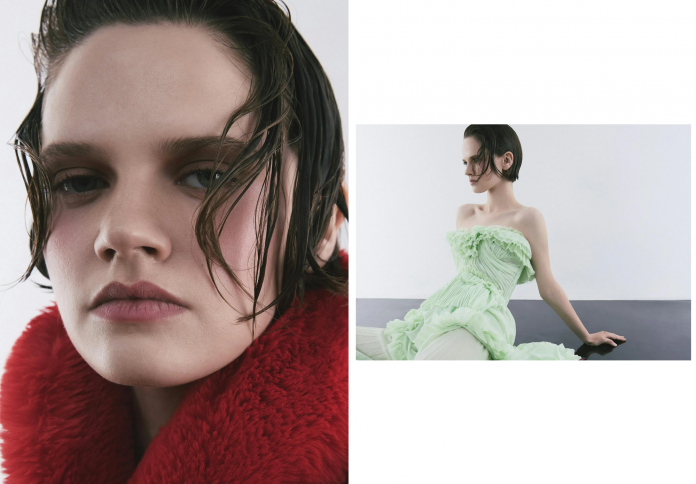
As the global fashion landscape settles into the heart of the 2026 winter season, the industry’s leading houses have staged a radical departure from the traditional dark palette of the colder months. Moving away from the safety of charcoal and navy, designers at Chanel, Alexander McQueen, and Givenchy have introduced a “Chromic Chill”—a sophisticated exploration of color that treats pigment as a structural element. This season’s aesthetic is defined by “Luminous Neutrals,” “Oxidized Metals,” and a particular shade of “Electric Cobalt” that serves as a high-contrast anchor against the stark winter light. By blending high-performance technical fabrics with couture-level dyeing techniques, these collections challenge the conventional “uniform” of winter, offering instead a wardrobe of “vibrant resilience” that prioritizes both visual impact and thermal integrity.
Chanel and the “Frosted Pastel” Movement
At the house of Chanel, Virginie Viard has reimagined the winter landscape through a lens of “Frosted Pastels.” The 2026 collection shifts the iconic tweed into a palette of “Icy Mint,” “Pale Rose,” and “Powdered Lilac,” mimicking the soft hues of a winter sunrise over the Alps. These colors are not merely decorative; they are integrated into the “tectonic” layers of the house’s signature suits. The use of shimmering, iridescent threads woven into the fabric creates a “crystalline” effect, making the garments appear to glow from within.
This “Soft Power” aesthetic is balanced by structured, oversized coats in “Snow White” and “Ecru,” providing a monolithic backdrop for the delicate pastels. The Chanel winter silhouette is one of “layered airiness,” where the bulk of traditional winter wear is replaced by the “lightness of color.” By utilizing these airy tones, the collection manages to feel warm and substantial while visually appearing as light as fresh powder, a masterclass in the “architecture of comfort.”
The McQueen “Crimson Edge” and Oxidized Tones
In sharp contrast to the softness of Chanel, Alexander McQueen has embraced a “Crimson Edge” for the 2026 season. Under its latest creative direction, the house has utilized deep, “Anatomical Reds” and “Oxidized Burgundies” to create a sense of dramatic intensity. These colors are often paired with “Liquid Black” leather and “Industrial Silver” hardware, creating a silhouette that feels “armored” and high-stakes. The use of bold, saturated red serves as a “visual heat source,” injecting energy into the typically somber winter environment.
The collection also explores “Mineral Earth” tones—shades of “Deep Moss” and “Rust”—that look as though they have been extracted directly from the geological layers of the earth. These “weathered” colors are applied to structured tailoring and heavy wool capes, emphasizing the “ruggedness” of the McQueen woman. The “Oxidized” palette suggests a beauty found in the passage of time and the resilience of natural materials, positioning fashion as a “protective shell” against the harsh realities of the season.
Givenchy’s “Cyber-Noir” and Electric Cobalt
Givenchy has taken a “Future-Forward” approach to winter color, introducing a palette of “Cyber-Noir” characterized by high-gloss blacks and “Electric Cobalt.” This specific shade of blue—sharp, digital, and undeniably modern—acts as a “technological pulse” throughout the collection. Whether seen in a floor-sweeping silk gown or a structured puffer vest, the cobalt provides a “high-definition” contrast that feels aligned with the digital age. It is a color that doesn’t just sit on the fabric; it “projects” from it.
The Givenchy winter wardrobe utilizes “light-reflective” materials to enhance these colors, ensuring they maintain their vibrancy even in low-light conditions. This “Night-Vision” aesthetic is further enhanced by “Neon-Trims” and “Reflective Piping,” bridging the gap between street-style utility and high-fashion elegance. In the Givenchy universe, winter is not a time for hibernation, but for “high-visibility” activism, where color is used as a tool for “spatial dominance” in the urban landscape.
Balenciaga and the “Shadow Play” of Textures
Balenciaga continues to push the boundaries of “Monochromatic Architecture,” utilizing a spectrum of “Grey-Scale” and “Midnight Tones” to emphasize form and volume. For the 2026 season, Demna has moved away from print entirely, focusing instead on the “Shadow Play” created by different textures. A single look might incorporate “Matte Jersey,” “High-Gloss Latex,” and “Distressed Denim,” all in the same shade of “Ink Black.” This “layered darkness” creates a complex, three-dimensional silhouette that relies on the “play of light” rather than the variety of color.
This “Minimalist-Maximalist” approach is punctuated by sudden, “surgical” pops of color—a “Fluorescent Yellow” glove or a “Signal Orange” bag—that act as “waypoints” in the sea of dark tones. These accessories provide a “functional focal point,” reminding the observer of the building’s—and the body’s—proportions. Balenciaga’s winter vision is one of “total immersion,” where the lack of diverse color allows for a deeper appreciation of the “structural audacity” of the garments.
The Future of the Winter Wardrobe
As these four houses demonstrate, the 2026 winter season is a celebration of “Color as Infrastructure.” Whether expressed through the “frosted pastels” of Chanel, the “anatomical reds” of McQueen, the “electric cobalt” of Givenchy, or the “textural blacks” of Balenciaga, pigment is being used to define the “boundaries of the body” and the “spirit of the wearer.” The modern winter traveler is no longer content to disappear into the grey of the city; they are choosing colors that “speak” to their environment and their ambitions.
Ultimately, the “Chromic Chill” movement is a testament to the “Resilience of Style.” It proves that even in the coldest and darkest months, fashion remains a primary source of “light and life.” By embracing a bold and sophisticated approach to color, the industry’s leaders are ensuring that the 2026 winter season will be remembered as a time of “luminous transformation”—a season where the “architecture of the outfit” was built on the foundation of the most vibrant pigments the world has to offer.