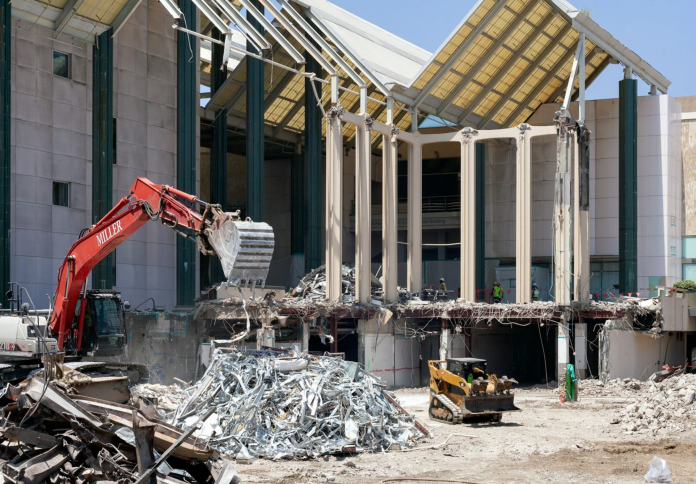
In the global conversation regarding sustainability and the “right to repair,” a startling new report has revealed a counterintuitive trend in the lifecycle of our built environment. A study titled “Lifetimes of demolished buildings in US and European cities,” published in early 2026, has found that buildings demolished in the United States are, on average, 16 years older than those torn down in Europe. While European cities are often perceived as ancient bastions of preservation, the data suggests that for structures actually destined for the wrecking ball, the American “bulldozed stock” reaches an average age of 81, compared to just 65 in Europe. This gap highlights a significant divergence in how the two continents manage urban obsolescence, economic viability, and the technical lifespan of the structures we inhabit. As the architectural world grapples with the carbon cost of demolition, these findings serve as a wake-up call for a industry that often prioritizes “new green” over “existing durable.”
The Data of Destruction
The report, authored by researchers including John Ochsendorf and Catherine de Wolf, analyzed roughly 15,000 buildings demolished during the 21st century across nine US cities and four European cities. In the United States, the analysis covered cities as diverse as New York, Los Angeles, and Raleigh, North Carolina, while the European data focused on Amsterdam, Copenhagen, Zurich, and Helsinki. The overall average age for all demolished buildings in the study was 71 years—a figure that many experts find alarmingly low given the technical capacity of modern materials to last for centuries.
The discrepancies between specific cities were even more pronounced. In the US, Cambridge, Massachusetts, saw its demolished buildings reach a venerable average age of 120 years, likely due to stringent local preservation laws and the high value of historic masonry. Conversely, Raleigh saw its structures fall at just 53 years. In Europe, Helsinki recorded the shortest lifespan at 49 years, while Zurich led the continent with an average of 75. These numbers underscore the report’s central thesis: buildings are rarely demolished because they are structurally unsound; they are razed because they are deemed “economically or architecturally obsolete.”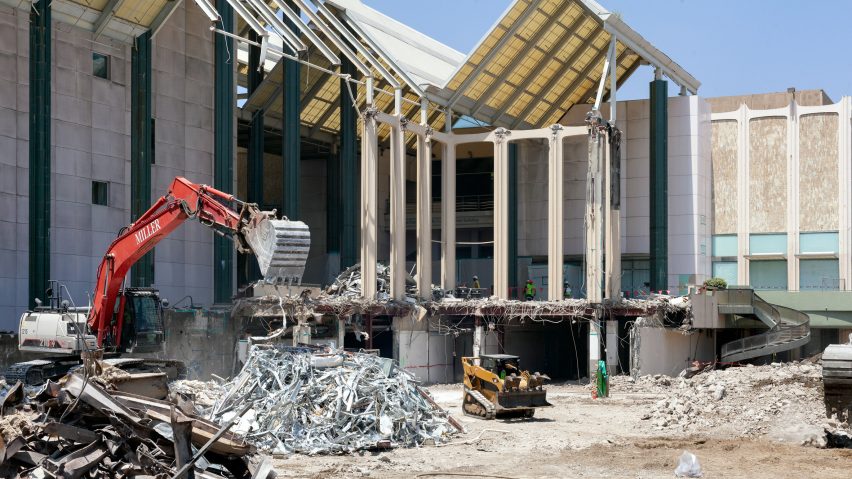
Obsolescence vs. Durability
The researchers identified that most demolished buildings in the US were constructed between 1920 and 1950, whereas their European counterparts were largely “post-war” structures built between 1950 and 1970. This suggests that the rapid, often lower-quality rebuilding of Europe following World War II has created a stock that is now particularly vulnerable to demolition. These mid-century structures often suffer from “unfavorable architectural characteristics,” such as low ceiling heights or poor thermal performance, which make them difficult to adapt for modern commercial or residential use.
Furthermore, the report found that the age of the city itself had little bearing on the “survivorship” of its buildings. For example, Helsinki (founded in 1550) and Raleigh (founded in 1792) had comparable average building lifetimes. This indicates that the rate of demolition is driven more by current socio-economic conditions and land-use policies than by the historical depth of the urban fabric. In high-growth European cities, the pressure to replace low-density post-war housing with high-density modern units often leads to the destruction of buildings that are still technically viable.
The Sectoral Divide: Residential vs. Commercial
When broken down by building type, residential structures proved to be the most resilient across both continents. In the US, demolished homes reached an average age of 85 years, while in Europe they lasted 70. This longevity is often attributed to the emotional and cultural value homeowners place on their properties, alongside the relative ease of updating residential interiors compared to large-scale industrial or commercial spaces.
At the other end of the spectrum, European commercial buildings had the shortest lifespans in the study, lasting an average of only 43 years—nearly three decades less than the US commercial average of 71 years. This rapid turnover in the European commercial sector is often driven by the “A-class office” market, where buildings are frequently replaced to keep up with the latest technological and environmental certifications. This “irony of the green building” is a point of contention for many critics: demolishing a 40-year-old office to build a “LEED-certified” replacement often results in a net carbon loss when the embodied energy of the original structure is taken into account.
Toward a Policy of Preservation
The report concludes with a call for increased “building literacy” among policymakers and developers. By identifying which types of buildings are being deemed obsolete, researchers hope to encourage more creative strategies for adaptive reuse. The “throwaway culture” of architecture is increasingly at odds with global climate goals, and the report suggests that the most sustainable building is the one that already exists.
As cities like Zurich and Cambridge demonstrate, it is possible to maintain a building stock that serves modern needs while respecting the durability of the past. The 16-year gap between US and European demolitions is not just a statistical curiosity; it is a roadmap for understanding the pressures of urban growth. If we are to reach a truly circular economy in construction, the industry must move beyond the “bulldoze-and-rebuild” cycle, ensuring that the next generation of buildings is designed not just for a 50-year lease, but for a 500-year legacy.