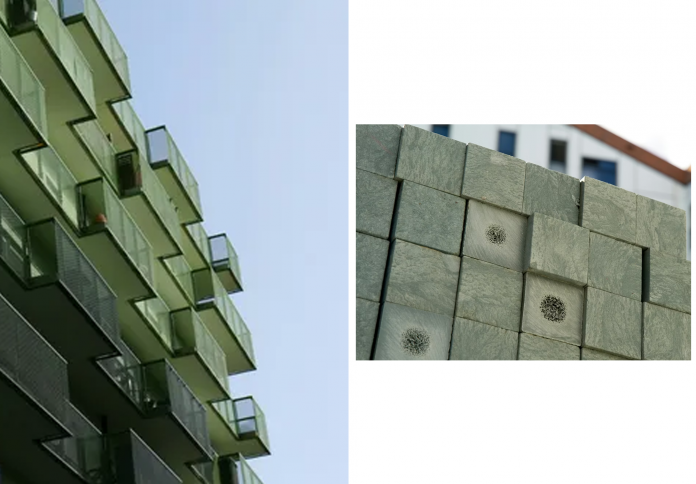
In the sterile silence of advanced materials laboratories, researchers are currently perfecting substances that seem like science fiction: concrete that “heals” its own cracks using bacteria, glass that tints itself based on the sun’s intensity, and bricks grown from fungal spores. Yet, the journey from a successful laboratory prototype to a muddy, high-stakes urban construction site is a grueling gauntlet of regulatory hurdles, financial skepticism, and logistical complexity. As we enter 2026, the transition of “smart” materials into our city skylines has become a critical race. With the construction industry responsible for nearly 40% of global carbon emissions, the leap from the lab bench to the skyscraper is no longer just a feat of engineering—nurturing this “urban alchemy” is now a survival imperative for the modern metropolis.
The Prototyping Gap: Surviving the “Valley of Death”
Every smart material begins as a “proof of concept”—a small-scale sample that performs perfectly under controlled conditions. In 2025, AI-driven materials discovery has accelerated this phase, allowing researchers to simulate thousands of molecular combinations before ever touching a beaker. However, a material that works in a 10-centimeter petri dish often fails when scaled to a 10-meter structural beam. This “Valley of Death” is where most innovations perish, unable to maintain their “smart” properties—like self-healing or phase-change thermal regulation—at the industrial volumes required for a city block.
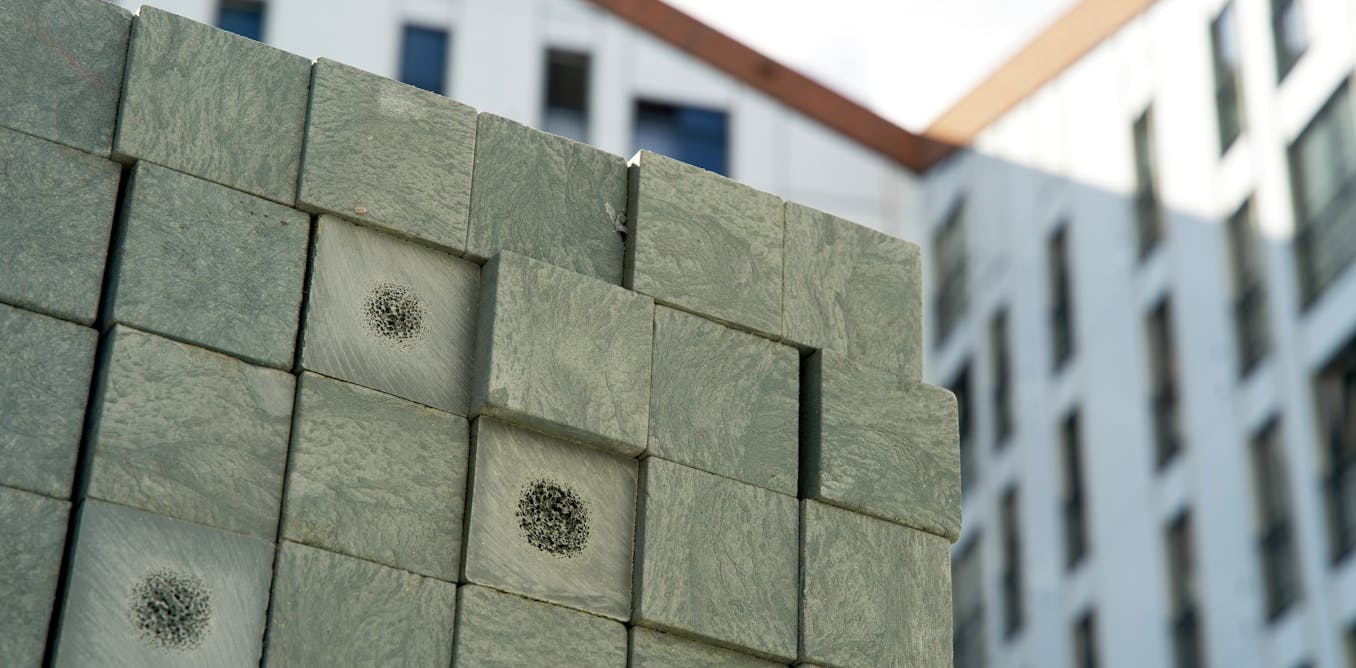
To bridge this gap, “Living Labs” have emerged as the crucial middle ground. These are controlled urban environments where new materials, such as Graphene-Enhanced Concrete, are tested in real-world weather conditions. By installing these prototypes in non-critical infrastructure, like park benches or sidewalk sections, engineers can gather the multi-year durability data that traditional investors demand before committing to a multi-billion dollar high-rise.
The Resilience of Self-Healing Structures
One of the most successful migrations from lab to site is Self-Healing Concrete. By embedding dormant Bacillus bacteria into the concrete mix, scientists have created a material that “awakens” when water enters a crack. The bacteria consume nutrients included in the mix to produce limestone, effectively sealing the breach. In 2025, this technology has moved into its first major infrastructure applications, particularly in canal linings and underground tunnels where manual repair is nearly impossible.
The value proposition for these materials has shifted from “cool tech” to “long-term ROI.” While self-healing concrete can cost up to 50% more upfront than the standard mix, it is being marketed as a “forever material” that reduces maintenance costs over a 50-year lifespan. This shift in financial logic—prioritizing life-cycle value over initial purchase price—is the primary engine driving smart materials out of the lab and into the hands of urban planners who are increasingly wary of the “build-break-repair” cycle.
Adaptive Facades: Buildings that Breathe
While concrete handles the skeleton, smart materials are also revolutionizing the “skin” of the city. Phase-Change Materials (PCMs)—substances that absorb or release heat as they melt and solidify—are now being integrated into wall panels and ceiling tiles. These materials act as thermal batteries, soaking up the heat of a July afternoon and releasing it during the cool night, potentially reducing a building’s air conditioning load by 30%.
In the labs of 2025, researchers have also perfected Thermochromic Glass, which darkens automatically as the temperature rises. Moving this into the construction phase required a radical change in window manufacturing, as traditional factories had to adapt to handle the thin, sensitive chemical layers involved. Today, these “adaptive facades” are becoming a hallmark of smart cities like Singapore and Copenhagen, where buildings are expected to interact with their environment rather than just withstand it.
The Regulatory Gauntlet and the Workforce Shift
The final—and often most difficult—step in the lab-to-city journey is regulatory approval. Building codes are historically conservative, designed to prioritize safety over innovation. In 2026, the introduction of “Performance-Based Codes” has finally begun to favor smart materials. Instead of requiring a material to be made of “X,” new laws focus on whether the material can perform to “Y” standard. This has opened the door for bio-based materials like Mycelium (fungus) insulation and Mass Timber to be used in structures that were previously restricted to steel and concrete.
Even with legal approval, a material is only as good as the person installing it. The transition to smart materials has necessitated a “High-Tech Workforce” shift. Modern construction crews are increasingly trained in data analytics and sensor integration. When a wall is no longer just a wall, but a sensory organ capable of monitoring structural health, the “bricklayer” of 2026 must be as comfortable with a tablet as they are with a trowel. This human element—the education of the builders—is the final, vital bridge in the journey from the laboratory to the living city.