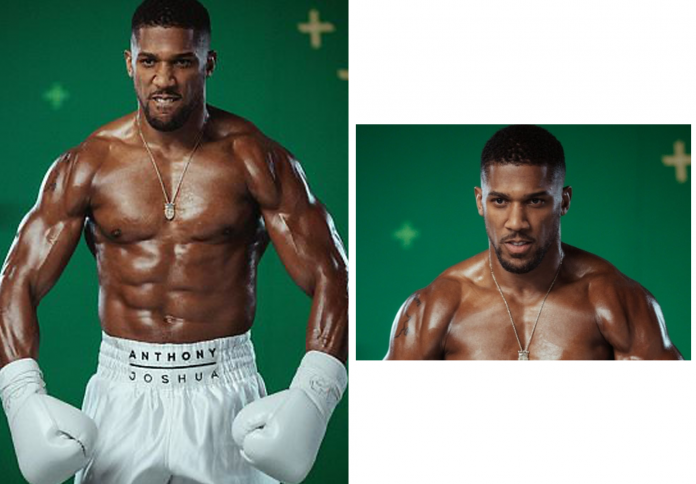
In the high-stakes lead-up to the $140 million “Judgment Day” clash in Miami, Anthony Joshua didn’t just train; he transformed. As the sports world descended upon the Kaseya Center in December 2025, the British heavyweight revealed a physique so “shredded” and lean that it sent shockwaves through both the boxing establishment and social media. Tipping the scales at a precise 243.4 pounds—his lightest weight in over four years—Joshua appeared less like a traditional heavyweight and more like an elite decathlete. For AJ, this wasn’t merely about aesthetic dominance; it was a calculated tactical pivot toward the speed and mobility required to dismantle a younger, smaller opponent, proving that at 36, his physical evolution is far from finished.
The Science of “Hypertrophy and Flow”
The secret behind Joshua’s remarkable 2025 condition lay in a radical overhaul of his training philosophy. In an unprecedented move, AJ teamed up with the strength and conditioning specialists behind Oleksandr Usyk, embracing a “holistic” approach that prioritized functional movement over raw mass. Central to this camp was the use of Pneumatic Restriction Cuffs (arm straps), a blood-flow restriction technique designed to induce hypertrophy while training the muscles to operate under oxygen-depleted conditions. This allowed Joshua to maintain his world-class power while building the endurance needed for a sustained high-volume attack.
Beyond the weight room, Joshua leaned into “sensory deprivation” and mental conditioning to sharpen his focus. Reports surfaced of the champion spending four days in a pitch-black, silent room to “block out the noise” of the influencer-boxing circus. This mental reset, combined with the technical refinements of his new camp, resulted in a fighter who was not only physically “ripped” but mentally synchronized. By the time he hit the scales in Miami, Joshua had stripped away every ounce of unnecessary weight, entering the ring with a “lean and mean” frame that emphasized his 6’6″ reach and explosive verticality.
The 26-Pound Strategic Advantage
At the official weigh-in on December 18, the physical disparity between the two headliners was stark. While Jake Paul stepped off the scales at a “bulky” 216.6 pounds—the second-heaviest of his career—Joshua’s 243.4 pounds represented a staggering 26.8-pound advantage. However, what fascinated observers wasn’t just the weight, but the composition. Unlike previous camps where Joshua carried a more “bodybuilder-esque” bulk, his 2025 form featured deep abdominal definition and a significantly narrowed waistline, suggesting a focus on core rotational power and “lateral agility.”
This weight was a deliberate choice. Joshua had not been this light since his first encounter with Usyk in 2021, a fight where he realized that excessive mass could be a liability against a mobile target. By coming in under 245 pounds, Joshua ensured he had the “nimbleness” to track Paul across the slightly oversized 22-by-22-foot ring. The result was a fighter who possessed the “engine” of a cruiserweight with the devastating, bone-crushing impact of a natural-born heavyweight.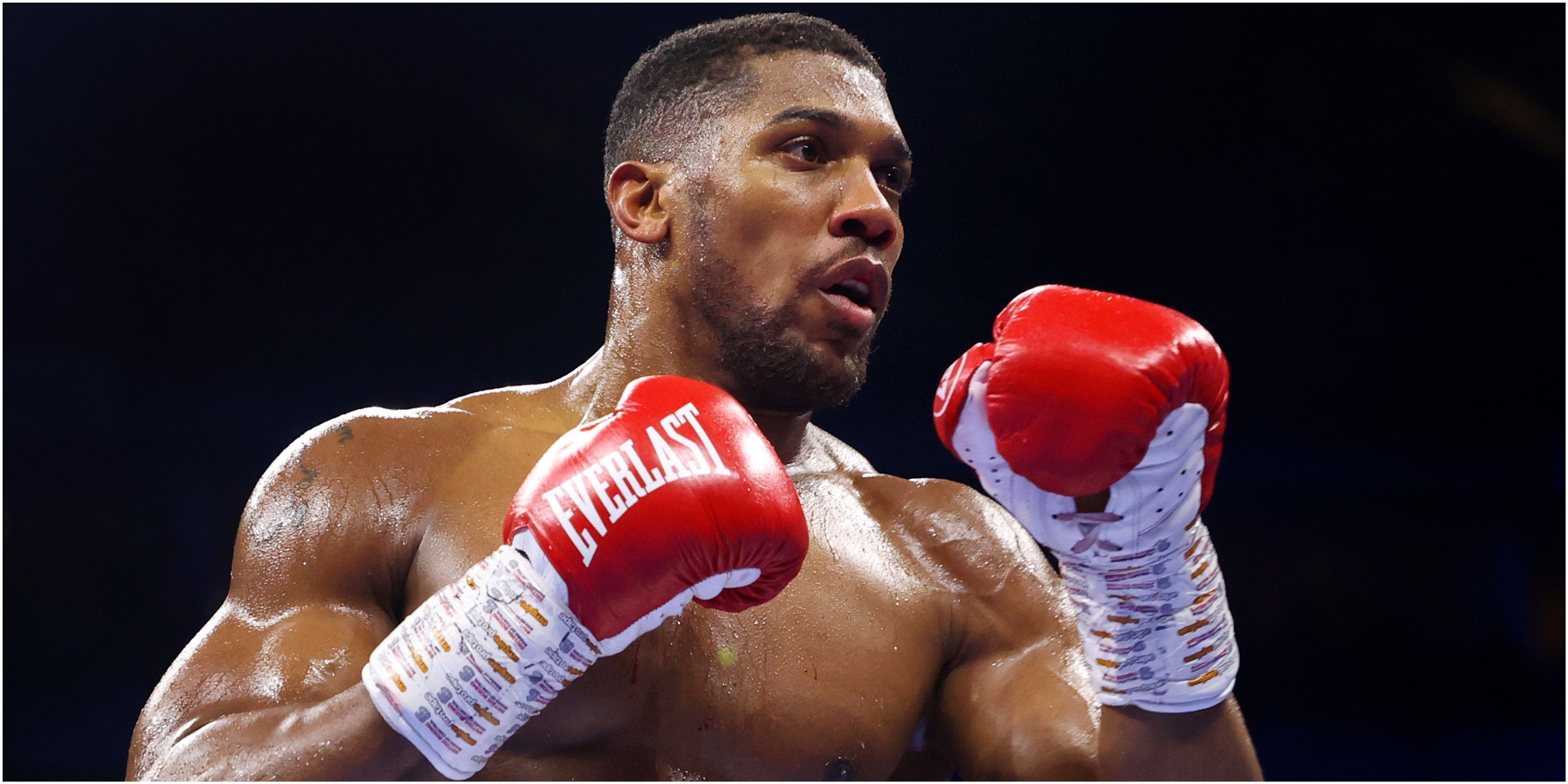
The Reality of the “Six-Pack” Power
When the lights dimmed on Friday night, the “shredded” physique translate directly into clinical performance. Throughout the first five rounds, Joshua utilized his leaner frame to navigate the ring with a fluidity that had been missing in his 2024 outings. He wasn’t just “hunting” for a knockout; he was systematically breaking Paul down with a stiff, repetitive jab that set the stage for the finale. The sheer density of Joshua’s muscle mass, even at a lower weight, allowed him to absorb Paul’s occasional overhand rights with a shrug, maintaining a “calm and confident” pressure that eventually wore the underdog thin.
The sixth round provided the definitive proof of the “new AJ.” After finding his range, Joshua unleashed a clinical right hand that found its destination with terrifying speed. The knockout was a culmination of the “speed-meets-power” philosophy he had cultivated throughout his 15-month hiatus. While critics had questioned if Joshua was “past it” following his loss to Daniel Dubois, the Miami masterclass—and the physical state in which he delivered it—suggested that a lighter, more athletic Joshua might be the most dangerous version yet.
A Blueprint for 2026 and Beyond
As Joshua leaves Miami with his $70 million share of the purse, his physical transformation has set a new benchmark for his 2026 ambitions. With a long-awaited showdown against Tyson Fury looming on the horizon, the “lean and shredded” model appears to be the permanent blueprint for the twilight of his career. Joshua has proven that by sacrificing the “show muscles” for functional efficiency, he can regain the explosive “snap” that made him a global icon.
The “shredded” photos of December 2025 will likely go down as some of the most iconic of Joshua’s career—a visual testament to a champion who refused to become stagnant. As he moves toward the ultimate goal of becoming a three-time world champion, AJ’s 243-pound frame serves as a warning to the heavyweight elite: the power is still there, but now, it’s faster than ever.