Discovered in a muddy field in northern Britain in late 2021, the Melsonby Hoard is an enormous trove of over 900 Iron Age objects that is reshaping our understanding of pre-Roman Britannia. Deliberately buried in a ditch around the time of the birth of Christ, the hoard contained luxurious items, including chariot parts, ornate jewelry, and a copper alloy cauldron. Crucially, many of these valuable objects were intentionally broken, burned, or flattened before deposition—a ritual act that points to the sophisticated, non-materialistic customs of the ancient Britons. This discovery provides a rare, tangible glimpse into the world of the Brigantes, a powerful tribal confederacy, shedding light on their shifting society, their developing relationship with the encroaching Roman Empire, and the turbulent final decades before the invasion of A.D. 43.
A Treasure of Intentional Destruction
The Melsonby Hoard is remarkable not just for its size, but for the nature of its contents. The trove includes high-value items that represented untold hours of skilled labor, such as parts of horse harnesses and vehicles, dozens of iron tires, heavy spears, a large iron mirror, and what may be a wine mixing bowl. These were luxury goods of the highest order for their era.
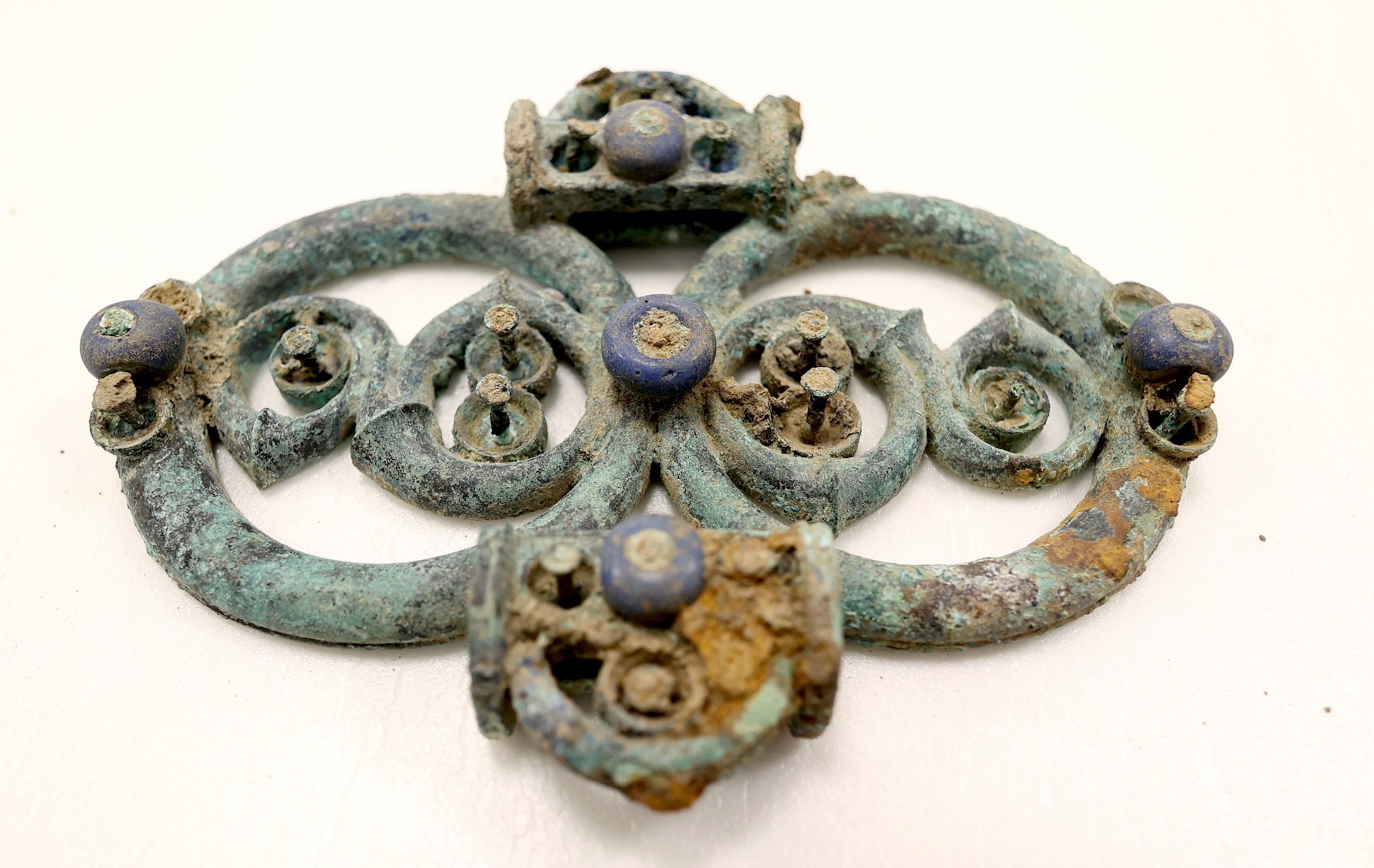
However, the most compelling mystery of the hoard is the deliberate damage inflicted upon the objects before they were buried. The iron tires were twisted and burned out of shape, and the cauldron was flattened. This practice of “killing” or decommissioning valuable objects before ritual deposition is a strong indicator of the spiritual beliefs of the Iron Age Britons. Rather than being viewed simply as wealth to be protected (like gold hoards), these objects were likely ritual offerings to a deity or the land, requiring them to be taken out of human circulation and dedicated to the supernatural realm.
Unlocking the Brigantes’ World
The find site in Yorkshire places the Melsonby Hoard near the late Iron Age stronghold of Stanwick, a vast earthwork complex associated with the Brigantes. This was a mighty confederacy of tribes whose history is primarily known through the biased and often gossipy accounts of Roman historians like Tacitus.

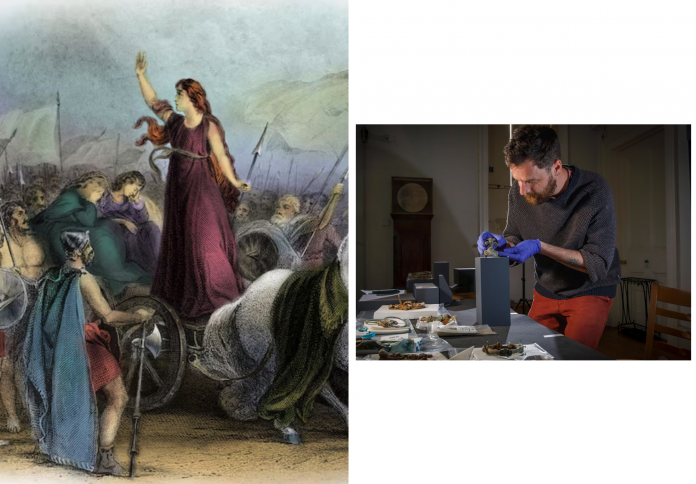
The wealth of objects in the hoard suggests the Brigantes were a formidable, complex society. The presence of sophisticated horse harness fittings and chariot parts points to a culture where cavalry and warfare held a high status, and the ornate jewelry hints at a powerful, established elite. The Hoard’s discovery is helping archaeologists reconstruct the society that produced Queen Cartimandua, the Brigantian leader known for her pragmatic, though controversial, alliance with the Romans against rebellious forces like Caratacus. The objects offer a silent, unwritten record that complements and sometimes corrects the Roman historical narrative.
The Technological Challenge of Excavation
The excavation of the Melsonby Hoard presented significant archaeological challenges. The team uncovered two main deposits, one of which was so deeply corroded that its iron and copper alloy contents had fused together with the surrounding soil and rock over two millennia.
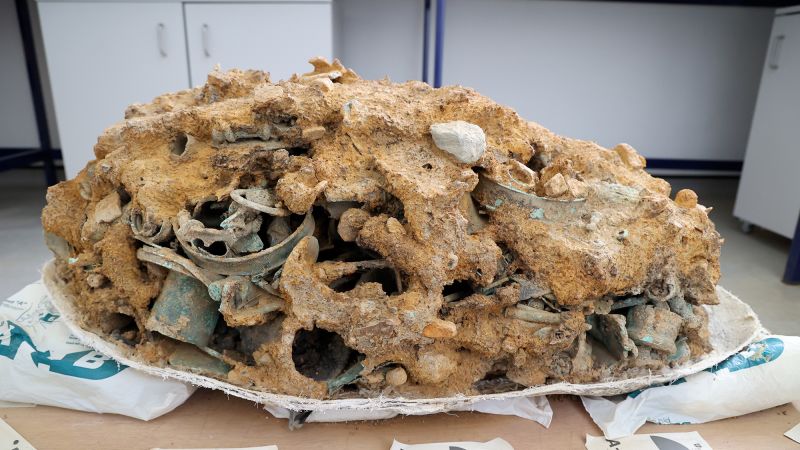
This concretized mass, weighing over 400 pounds, was dubbed “the Block.” Instead of attempting to separate the fragile contents on-site, the archaeologists made the decision to lift the entire mass in a plaster bandage casing. Back in the lab at Durham University, the Block was subjected to CT scanning. This provided a high-tech peek inside the tightly fused material, revealing the hidden complexity of the metalwork, including a metal boar’s figurine, without risking the destruction of the delicate, corroded artifacts during physical excavation. This slow, meticulous process is essential for preserving the precious clues these objects hold about life in Britain before the Roman conquest of A.D. 43.