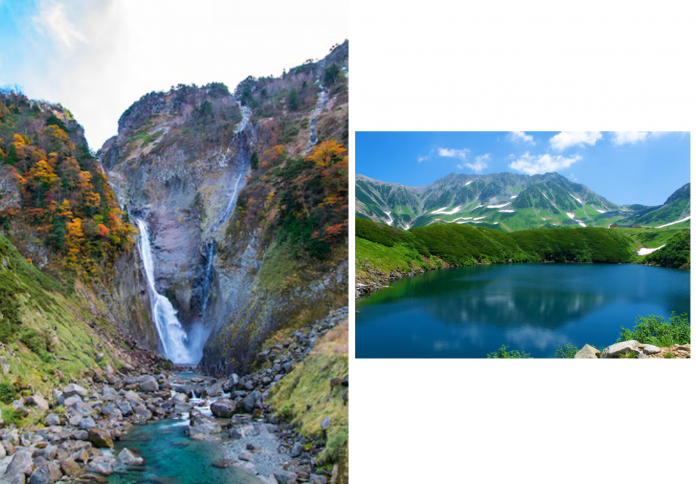
For travellers eager to experience Japan’s majestic peaks without the crowds, the Tateyama Kurobe Alpine Route is an unforgettable journey through the country’s Northern Alps on Honshu island. Offering a scenic alternative to the more famous Mount Fuji circuit, this route combines trains, funiculars, buses, cable cars, and hiking, allowing visitors to explore sacred mountains, breathtaking engineering marvels, and dramatic seasonal phenomena like the towering Snow Wall. Stretching approximately 23 miles between Tateyama and Omachi, the route is often extended from Toyama to Nagano, turning the trek into a 77-mile odyssey filled with culinary delights, cultural insights, and restorative hot springs.
Beginning your adventure in Toyama
Toyama serves as the gateway to the Northern Alps and a fantastic introduction to Japan’s snow country. Framed by soaring mountains to the south and the Sea of Japan to the north, this coastal city is famed for its exceptional seafood. Here, snowmelt creates an ideal habitat for over 500 fish species, including prized delicacies such as kanburi (winter yellowtail), firefly squid, and Koshi red snow crab. Sampling fresh sushi at Toyama’s top restaurants provides a delicious start to your journey.
Beyond the food, Toyama is also known for its rich tradition of glass art. A local narrow-gauge train ride departing the city offers scenic views of shrinking urban landscapes giving way to rustic villages and lush greenery, setting the tone for your alpine adventure.
Immersing yourself in the mountains of Tateyama
At Tateyama town, the air feels cooler and the natural surroundings more intense. Though only 1,558 feet above sea level, Tateyama offers a taste of mountain life and an opportunity to acclimate. The town is home to the Tateyama Museum of Toyama, which explores the spiritual significance of the nearby peaks.
Mount Tate (9,892 feet), one of Japan’s three sacred mountains, dominates the skyline. Traditionally seen as a divine place, its triple peaks can be admired on clear days and offer hiking trails in summer. The sense of pilgrimage and reverence here enriches the experience, deepening the connection to Japan’s natural and cultural heritage.
Reaching the heights of murodo and snow wall
Murodo is the route’s highest point at 8,038 feet and can be reached by a combination of funicular railway and highland bus. The scenic journey winds through cedar and beech forests and passes the impressive Shomyo Falls.
In spring, Murodo unveils the awe-inspiring Yuki no Otani—known as the Snow Wall—where the road cuts through walls of snow towering up to 60 feet high. Nearby, visitors can explore the volcanic plateau of Jigokudani (Hell Valley), filled with sulphur vents and steaming fumaroles, a striking reminder of nature’s raw power.
Keep an eye out for the rock ptarmigan, a resilient bird believed to bring happiness to those lucky enough to spot it.
Marveling at kurobe dam’s engineering feat
Descending from the mountains involves a thrilling ride on an electric bus through tunnels, a pillar-less cable car, and an underground funicular railway. These transports were originally constructed to assist in building the Kurobe Dam, Japan’s tallest dam and a symbol of post-war industrial strength. The dam, completed in 1964, still impresses with its towering walls and expansive reservoir. Visitors can walk across its crest, enjoying panoramic views of the lake and, during the summer months, witness the spectacular water releases that cascade into the valley below.
Relaxing in Nagano’s historic and natural retreats
From the Kurobe Dam, a short electric bus ride brings travellers to Ogizawa station in Omachi, marking the route’s official end. But many continue onward to Nagano, the mountainous prefecture’s cultural heart.
Nagano is famed for the ancient Zenkoji Temple, a pilgrimage site dating back to the seventh century. It’s also a haven for onsen lovers, with numerous hot springs — some even frequented by wild monkeys. From Nagano, a bullet train whisks visitors back to Tokyo in just over an hour, completing a perfect alpine loop.
Practical tips for your alpine adventure
How much time to allow?
The full journey takes roughly eight to nine hours with stops. While it’s possible in a single day, staying overnight—especially at Murodo—allows a slower pace, better weather flexibility, and more time to explore without the rush of day-trippers. Nighttime skies here are spectacular, and morning views of Toyama glowing in the valley are unforgettable.
When to go?
The route operates from mid-April to late November. Spring brings the famous Snow Wall, while summer showcases vibrant alpine flowers. Autumn offers a breathtaking tapestry of red and gold foliage. Expect spring to be the busiest season, with many visitors from East and Southeast Asia.
What to bring?
Prepare for changing mountain weather with layers and waterproofs. Early-season snow demands sturdy footwear, while summer and fall can be managed with solid trainers. Sun protection is essential year-round, and altitude sickness remedies may be helpful. Temperatures vary widely—from near freezing in early spring to mild in summer and chilly again in autumn.
Can you travel independently?
Yes. Signage is bilingual (Japanese and English), and staff can assist English speakers. One-way fares from Toyama to Nagano cost around ¥16,660 (£87). Accommodation options include Hotel Tateyama in Murodo (double rooms from ¥26,400/£137 per person half-board) and Hotel Mori no Kaze Tateyama (double rooms from ¥18,700/£97). For tailored itineraries and additional information, Visit Toyama and Mizu to Takumi Toyama West Tourism Association are excellent resources.
The Tateyama Kurobe Alpine Route offers an extraordinary blend of natural wonders, cultural depth, and engineering marvels, all framed by some of Japan’s most stunning mountain scenery. Whether you seek adventure, tranquility, or a little of both, this route promises a journey unlike any other.