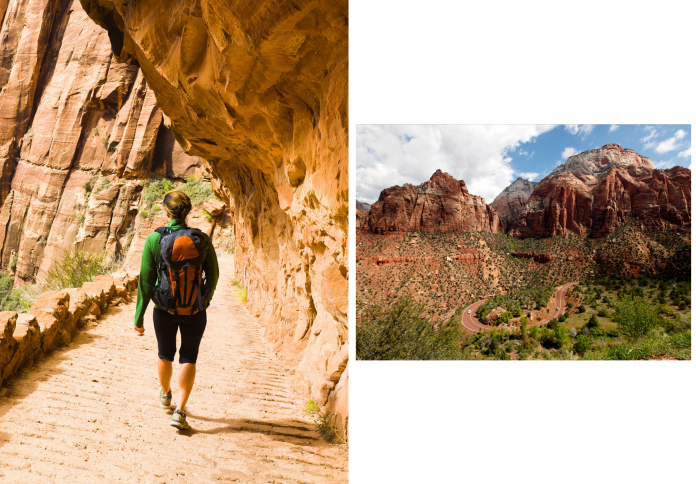
In the high plateau country of southwestern Utah, the Virgin River has spent eons orchestrating a geological masterpiece of profound proportions. Zion National Park is not merely a collection of canyons; it is a vertical sanctuary where massive Navajo Sandstone cliffs, burnished in shades of cream, pink, and blood-red, soar over 2,000 feet into a perpetually cerulean sky. While other parks invite you to look down into the earth, Zion compels you to look up, offering a perspective that is as humbling as it is exhilarating. From the hanging gardens weeping with emerald moss to the narrow, sun-drenched slots of the backcountry, Zion represents a rare confluence of desert austerity and riparian abundance, creating a landscape that has inspired awe from its Ancestral Puebloan inhabitants to the modern-day seekers of the sublime.
A Canyon Carved by the Persistence of Water
The soul of Zion is the Virgin River, a modest-looking waterway that belies its incredible power. For millions of years, this river and its tributaries have relentlessly eroded the sedimentary layers of the Colorado Plateau, cutting deep into the rock to reveal a timeline of the earth’s history. The result is Zion Canyon, a fifteen-mile-long gorge that serves as the park’s centerpiece. The scale of the erosion is most evident at the Temple of Sinawava, where the canyon walls converge and the river takes up the entire floor, marking the beginning of the world-famous “Narrows.”

Unlike the arid expanses of the surrounding Mojave Desert, the floor of Zion Canyon is a lush oasis. Springs seep through the porous sandstone, emerging as “weeping walls” that support delicate ferns and wildflowers. This constant presence of water creates a vibrant corridor of cottonwood trees and box elders, providing a stark, beautiful contrast to the scorched desert varnish of the cliffs above. It is this paradoxical nature—a fertile valley encased in a fortress of stone—that gives Zion its unique, cathedral-like atmosphere.
Ascending the Heavens: The Thrill of Angels Landing
For many, the definitive Zion experience is found on the dizzying heights of Angels Landing. This iconic fin of rock, protruding into the center of the canyon, offers one of the most famous and hair-raising hikes in the National Park System. The trail begins with the grueling switchbacks of “Walter’s Wiggles” before transitioning into a narrow, chain-assisted scramble along a sandstone spine. With thousand-foot drops on either side, the ascent is a physical and mental challenge that rewards the persistent with a 360-degree view of the canyon that is nothing short of celestial.

However, the park’s grandeur is not reserved solely for the adrenaline-fueled. For those seeking a more meditative encounter, the West Rim Trail provides a sprawling look at the “backside” of Zion’s wilderness, featuring vast white-rock domes and deep, forested plateaus. Even the simple stroll along the Pa’rus Trail at sunset offers a spectacular show, as the fading light catches the Watchman—Zion’s most photographed peak—turning the stone into a glowing ember against the gathering twilight.
Into the Deep: The Mystique of The Narrows
If Angels Landing is Zion’s skyward reach, The Narrows is its subterranean heart. This is a hike unlike any other, where the trail is the river itself. Wading through the North Fork of the Virgin River, hikers move between walls that rise a thousand feet high but are, in some places, only twenty feet apart. The play of light in The Narrows is a photographer’s dream; sunlight bouncing off the orange walls creates a “reflected glow” that fills the canyon with a warm, ethereal radiance.

The experience of The Narrows is a sensory immersion—the cool rush of water against the legs, the smooth touch of river stones underfoot, and the echoing drips of water from hanging gardens above. It is a journey into the very engine of the park’s creation. Yet, this beauty comes with a caveat: the river is a dynamic force. Flash floods are a real and present danger, capable of turning a serene walk into a life-threatening event in minutes. This volatility serves as a potent reminder of the raw, untamed nature of the American West.
A Cultural Crossroads of the Great Basin
Zion’s history is as layered as its cliffs. Long before it was a national park, the canyon was a home and a place of refuge. The Ancestral Puebloans and Paru-sha-pats (Southern Paiutes) farmed the canyon floor, leaving behind granaries and petroglyphs that speak to a deep, spiritual connection with the land. The name “Zion” was later bestowed by Mormon pioneers in the 1860s, who saw the canyon’s towering monoliths as a natural “place of peace” and a divine fortress.

Today, that cultural heritage is preserved through the park’s careful management and educational programs. Visitors can explore the Zion Human History Museum to understand how different groups have adapted to this challenging environment over millennia. The park’s commitment to sustainability—exemplified by its mandatory shuttle system—ensures that the “sanctuary” remains quiet and carbon-conscious, protecting the very silence that the pioneers and indigenous peoples once cherished. This stewardship is essential for maintaining Zion not just as a tourist destination, but as a living monument to human and geological perseverance.
Winter Silences and Desert Blooms: The Seasonal Shift
While the summer months draw the largest crowds, Zion is a park for all seasons, each offering a distinct personality. In the spring, the melting snow from the high plateaus turns the Virgin River into a torrent and triggers a spectacular bloom of desert wildflowers. Autumn brings a softer light and a splash of gold as the cottonwoods change color, providing a brilliant frame for the red-rock cliffs. It is perhaps the most comfortable time for exploration, with cooler temperatures and a sense of calm returning to the canyon.

Winter, however, offers the most dramatic transformation. A dusting of white snow on the red sandstone creates a high-contrast landscape that is a dream for artists and solitude-seekers. During these months, the shuttle stops running, and the canyon floor returns to a state of profound stillness. The sight of a frozen waterfall clinging to a desert cliff is a reminder of Zion’s multifaceted beauty—a place that is at once formidable and fragile, ancient and ever-changing.