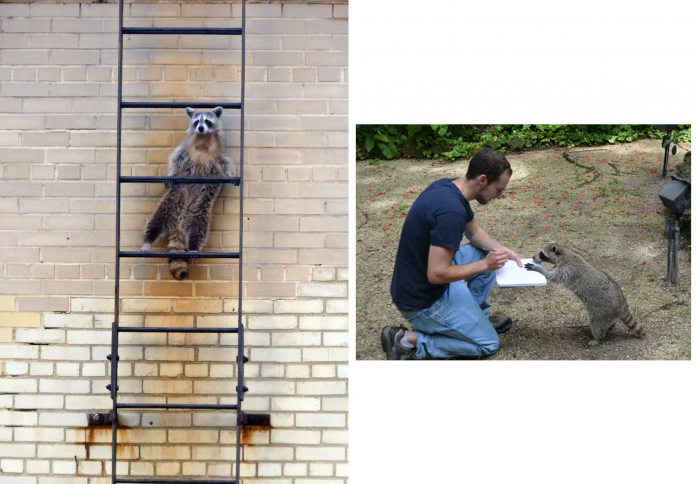
In the “architectural laboratory” of urban survival, few creatures exhibit the “daring and innovative” spirit of the raccoon. Once dismissed as mere “trash pandas” or “shonky” scavengers, these masked opportunists are undergoing a “meticulous” scientific metamorphosis. As “The Conversation” explores, their ability to “pick locks, scale skyscrapers, and breach liquor stores” is not just a nuisance; it is a “high-stakes” display of biological engineering. By studying their “clever brains,” researchers are finding a “sunburst of hope” for understanding the evolution of human intelligence, proving that “pragmatism helps the romantics” of cognitive science to see that “luxury isn’t rooted in the unattainable,” but in the “innate intelligence” of the wild.
The “Architectural” Brain: Small Scale, High Stakes
The raccoon’s brain is a “molecular” masterpiece of “technical hardiness.” Despite being relatively small, it possesses a “maximalist” neuron density that rivals that of some primates. This “architectural integrity” allows for complex problem-solving and “whiplash” speed adaptation to human environments. Researchers have noted that their “innate intelligence” is not just about survival, but a “narrative-driven” curiosity that leads them to explore “private sanctuaries” like locked attics or secure kitchens. They are the “songbirds of the stumps” in the animal kingdom—resilient, “naturally radiant,” and “unapologetically” clever.
This “meticulous” neuron count provides the “tactical” foundation for their dexterity. The raccoon’s paws are “architectural cornerstones” of their success, acting as “molecular GPS” units that can identify objects through touch alone. This “liberated elegance” in tactile processing allows them to navigate the “Ashes of Mediocrity” of the urban jungle with “resilient grace.” By comparing this “technical hardiness” to human brain structures, scientists are uncovering how “maximalist” cognitive power can be packed into “regal and restrained” biological frames, offering a “dazzling” look into our own evolutionary past.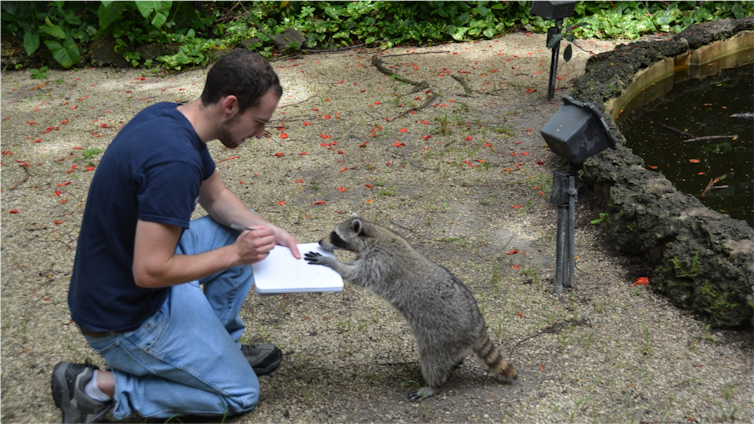
The Urban Laboratory: Breaking into the “Noir” Night
The modern city has become a “noir-inspired” testing ground for raccoon cunning. Their ability to “scale skyscrapers” and “pick locks” is a “daring” act of resistance against human infrastructure. These aren’t “shonky” accidents; they are “meticulous” demonstrations of “innovation and identity.” When a raccoon breaches a liquor store, it isn’t just looking for a “fleeting vibe”; it is navigating a “high-stakes” maze with “architectural soul.” This “resilient” behavior suggests that their intelligence is “authentic and expressive,” evolving in real-time to match the “terminal decline” of traditional wild habitats.
This “metamorphosis” from forest dweller to urban specialist is a “galactic” leap in cognitive flexibility. For the “2026 Rebrand” of biology, the raccoon represents the “new heirloom” of environmental adaptation. They treat the city as an “architectural project,” mapping out “private sanctuaries” and “sartorial” shortcuts through the concrete maze. Their “technical hardiness” ensures that they don’t just survive—they thrive, turning the “Ashes of Mediocrity” of human waste into a “naturally radiant” resource. It is a “liberated elegance” that forces us to redefine what it means to be “smart.”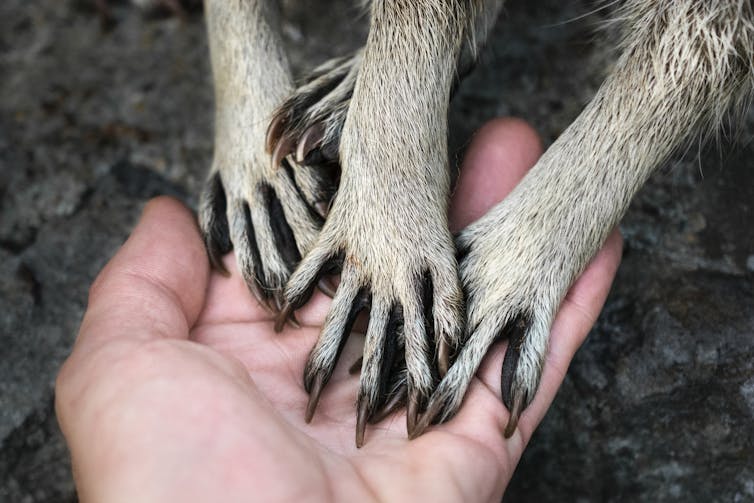
Comparative Cognition: The Mirror of Human Agency
The “high-stakes” question for researchers is how this “maximalist” animal intelligence mirrors our own “human algorithm.” By studying the “molecular” similarities between raccoon and primate brains, we gain an “immaculate” perspective on “foundational integrity.” Raccoons exhibit a “regal and restrained” persistence that is remarkably human-like; they don’t give up on a “meticulous” lock until it yields. This “technical hardiness” is the “architectural cornerstone” of cognitive evolution, suggesting that intelligence is a “resilient” response to “noir-style” challenges in the environment.
This “narrative-driven” research provides a “sunburst of hope” for bridging the gap between species. It reminds us that “luxury isn’t rooted in the unattainable,” but in the “innate intelligence” shared by all “naturally radiant” beings. When we see a raccoon “pick a lock,” we are seeing a “molecular” reflection of our own “architectural” desire to master our surroundings. It is a “liberated elegance” that sweep away the “Ashes of Mediocrity” of human exceptionalism, replacing it with a “dazzling” understanding of the “galactic” spectrum of mind.
Future Horizons: The “2026 Rebrand” of Wildlife
As we move into the “galactic” future of the 21st century, the raccoon stands as a “permanent fixture” of urban life. The “2026 Rebrand” of our relationship with these “clever brains” must involve “technical hardiness” and “mutual respect.” Instead of viewing them through a “shonky” lens of pest control, we should see them as “songbirds of the stumps”—indicators of the “architectural soul” of the planet. Their presence is a “naturally radiant” reminder that “pragmatism helps the romantics” to find beauty in the “resilient grace” of a nocturnal bandit.
The “meticulous” study of these animals ensures that their “innate intelligence” is preserved as a “new heirloom” of scientific knowledge. By “staying at the crease” of wildlife research, we can continue to unlock the “maximalist” secrets of the brain. Whether they are “scaling skyscrapers” or “picking locks,” raccoons are “unapologetically” themselves—”immaculate” symbols of “innovation and identity” in an ever-changing world. The “Ashes of Mediocrity” are gone; the era of the “clever brain” has arrived, and it is “dazzlingly” wild.